

More news on this day
Radisson Hotel Group is accelerating its global sustainability drive, expanding verified net zero operations, circular amenities programs and baseline green standards across both existing hotels and new developments in key markets worldwide.
Get the latest news straight to your inbox!
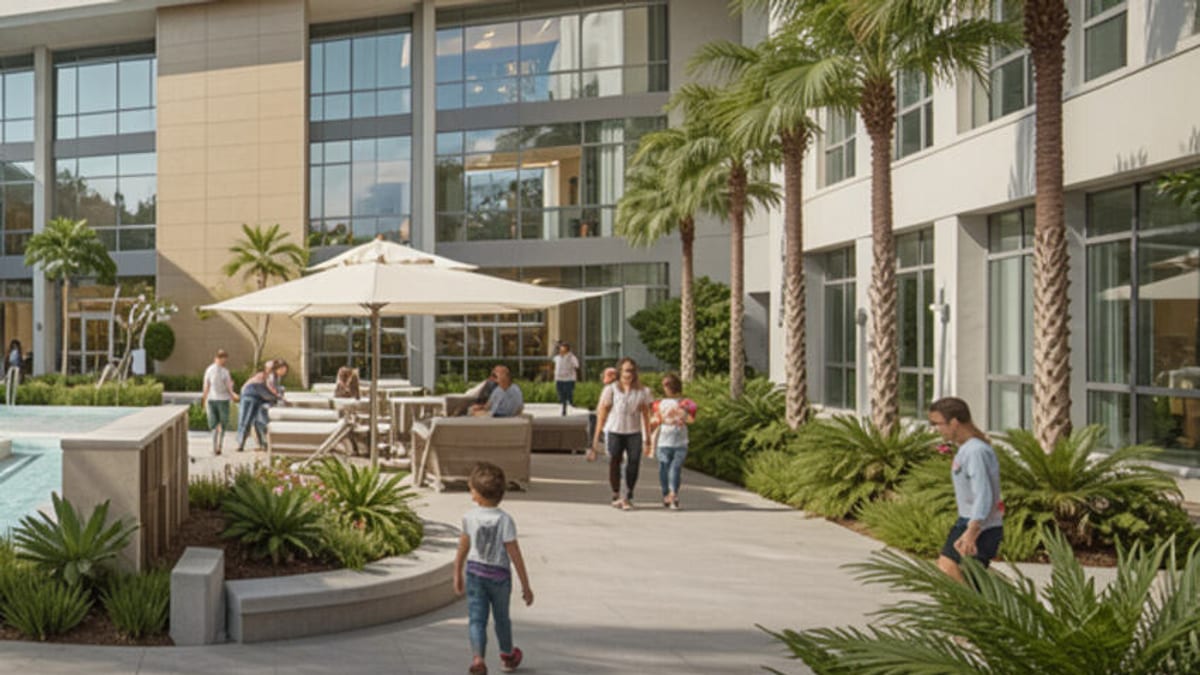
Image by International Hotels News, Hotel Industry & Hospitality News
Science-Based Net Zero Roadmap Gains Momentum
Radisson Hotel Group has positioned net zero emissions as a central pillar of its growth strategy, aligning its long-term decarbonization pathway with the Science Based Targets initiative. Publicly available information shows that the company is targeting net zero across its value chain by 2050, with interim goals focused on cutting direct and indirect energy emissions from hotel operations while addressing wider supply-chain impacts.
Recent sustainability reporting highlights a structured roadmap that includes efficiency upgrades, a shift to renewable energy and data-driven monitoring across the global portfolio. The group’s Responsible Business reports emphasize measurable reductions in greenhouse gas emissions per square meter and per room night, alongside parallel progress on water use and waste diversion.
Analysts following the hospitality sector note that Radisson’s net zero pathway mirrors broader travel industry commitments shaped by initiatives such as the Pathway to Net Positive Hospitality and the Glasgow climate agenda. By embedding its targets into both corporate strategy and property-level standards, the group is turning net zero from a marketing ambition into an operational framework for future growth.
Verified Net Zero Hotels Signal New Operational Standard
Radisson’s most visible step in 2025 has been the launch of its first hotels that meet third-party verified net zero criteria. Press material indicates that properties in Oslo and Manchester have been upgraded to operate with fully decarbonized energy systems, extensive efficiency measures and verified compensation of remaining residual emissions through nature-based solutions.
The net zero methodology applied at these flagship sites covers emissions from on-site combustion and purchased energy, as well as a significant portion of operational and supply chain impacts. This broader scope reflects an emerging industry view that guest stays and hotel services must be assessed across their entire lifecycle, not just the power used on-site.
The Oslo and Manchester hotels are being used as proof-of-concept properties intended to guide similar transitions elsewhere in the portfolio. Design choices ranging from full electrification of heating and hot water to optimized building envelopes and high-efficiency equipment are expected to inform performance benchmarks for future openings and renovation projects.
Upgrading Existing Properties With Circular Amenities and Basics
While new-build hotels can be designed around net zero from day one, Radisson is also accelerating sustainability upgrades in its existing estate. One of the most tangible changes is a closed-loop recycling system for bathroom amenities, rolled out across markets including India, Saudi Arabia and the United Arab Emirates. Under this model, bulk dispensers replace single-use plastic bottles, which are collected, the contents recovered and packaging materials recycled into new products.
Company disclosures indicate that more than nine out of ten hotels already use soap dispensers in public washrooms, with a target for reusable bulk dispensers across guest bathrooms by the end of 2025. Industry coverage suggests this shift could eliminate tens of millions of miniature bottles annually and cut plastic use by hundreds of tons, directly reducing the waste footprint of existing properties.
Radisson is also embedding the Hotel Sustainability Basics, a sector-wide framework developed with the World Travel & Tourism Council and other large hotel groups. The Basics set out core practices such as energy and water measurement, linen reuse programs, waste reduction and responsible sourcing. Publicly available information shows that Radisson has committed to implementing these essentials across all its hotels as a minimum standard, raising the sustainability baseline even in properties that have yet to undergo deep retrofits.
Embedding Net Zero Criteria Into New Developments
As the group expands in high-growth markets, sustainability considerations are increasingly being built into project design from the outset. Development information related to Radisson’s pipeline in regions such as India and the Middle East indicates that energy-efficient building envelopes, advanced HVAC systems and renewable energy integration are now key components of feasibility planning and brand standards.
Industry reports show a growing emphasis on electrification-ready infrastructure, on-site or contracted renewable power and low-carbon materials that can cut embodied emissions in new hotels. These measures are intended to position new properties on a clear net zero trajectory from opening, avoiding the need for more costly retrofits later in their life cycle.
For investors and owners, the integration of net zero design features is increasingly framed as a competitiveness issue rather than a purely environmental consideration. Hotels that meet emerging corporate procurement standards and sustainability preferences from guests stand to capture a larger share of meetings, events and corporate travel business, particularly in markets where carbon reporting has become part of standard tender processes.
Guest Demand and Corporate Buyers Drive Sustainability Uptake
Growing traveler awareness is reinforcing Radisson’s shift toward lower-emission operations. Surveys referenced in hospitality trade coverage suggest that a majority of global travelers actively seek more sustainable travel choices and expect hotels to demonstrate visible action on climate and plastic waste. Features such as refillable amenities, clear energy-saving measures and credible sustainability labeling are becoming part of the value proposition.
Radisson’s participation in programs that showcase hotel-level environmental performance to corporate travel buyers, including third-party green stay platforms, reflects this commercial dimension. By providing standardized data on emissions and sustainability measures, the group aims to appeal to companies that factor environmental criteria into their hotel selection and reporting.
As net zero operations become a differentiator across the hospitality landscape, Radisson’s combination of verified flagship properties, portfolio-wide minimum standards and transparent reporting is emerging as a template other hotel groups are watching closely. For travelers, the acceleration of these efforts signals that low-carbon stays are shifting from niche offering to mainstream expectation across both new and long-established properties.