

More news on this day
Unsettled weather across the United Arab Emirates on March 26 led to a patchy day of disruption for air passengers, as heavy rain and thunderstorms slowed operations at Dubai and Abu Dhabi airports and complicated journeys on waterlogged roads.
Get the latest news straight to your inbox!
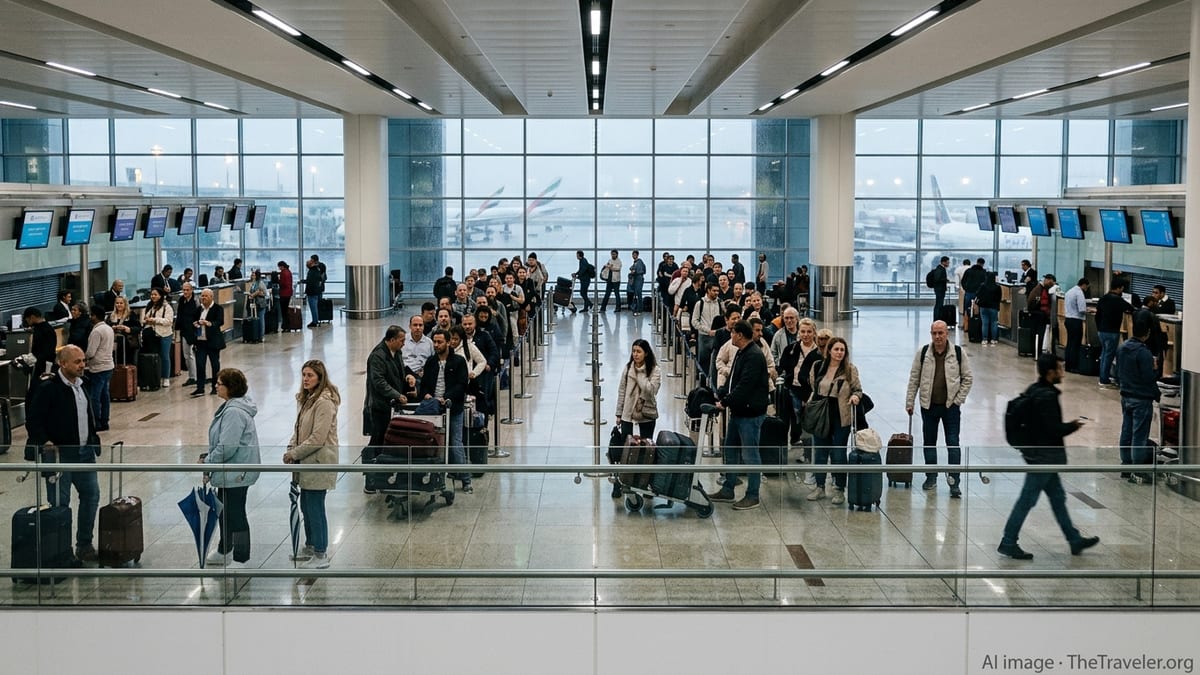
Rainstorms Slow Operations at Dubai International Airport
Persistent showers and embedded thunderstorms over Dubai on March 26 coincided with a busy travel period at Dubai International Airport, resulting in delays across sections of the flight schedule. Publicly available flight-tracking data and traveler accounts indicate that some services experienced extended holding patterns before landing, with aircraft circling over neighboring airspace while storm cells passed over the city.
Reports from passengers arriving in the early hours describe periods of heavy turbulence on approach and slower-than-usual taxi times once on the ground. While airport facilities continued to operate, wet conditions around the terminal and on access roads added to congestion, stretching the time needed for arrivals to clear formalities and secure onward transport.
Information published by airlines and regional travel advisories in recent weeks already highlighted a fragile operating environment in the Gulf, where earlier security-related airspace restrictions had reduced capacity. The March 26 rain did not trigger a complete shutdown of Dubai International, but it further tested an airport network still working to stabilize schedules after earlier disruptions.
Targeted Cancellations and Rerouting Affect Regional Links
The unstable weather produced a mixed impact on the day’s departures and arrivals, with most long-haul services continuing to operate but some regional connections facing cancellations or schedule changes. Passengers on short-haul routes into Dubai, particularly from nearby Gulf and Gulf of Oman cities, reported receiving notification that flights were canceled due to a combination of adverse weather and operational constraints.
In several cases, airlines moved passengers to later services or suggested alternative routings through other hubs, reflecting an effort to concentrate operations into time windows when rainfall intensity eased. Publicly accessible advisories emphasized that travelers with non-essential trips should closely monitor their booking status and consider flexible options, given that storm bands were forecast to linger over parts of the UAE into the following day.
These targeted cancellations added to ongoing rebooking activity from earlier in the month, when a wave of airspace restrictions and security concerns had already prompted large numbers of schedule adjustments. For some travelers, the March 26 weather became one more factor in a layered disruption picture, combining storm-related delays with wider regional capacity limits.
Abu Dhabi Sees Weather-Related Delays but Maintains Core Schedule
As the storm line edged inland across the Emirates, Abu Dhabi also came under periods of heavy rain and low cloud, with residents sharing images and commentary of the system moving toward the capital. Zayed International Airport, the main gateway for the city, continued to handle flights, but the same weather pattern that affected Dubai brought slower operations to parts of the schedule.
Travelers transiting Abu Dhabi on March 26 reported that boarding and taxi-out phases for some departures took longer than usual, as ground teams worked in wet, gusty conditions. Despite this, publicly available accounts from the terminal described a generally calm atmosphere, with shops and lounges open and many flights operating close to planned times, suggesting that the airport largely contained the impact to manageable delays rather than widespread cancellations.
Airlines based in Abu Dhabi had already adjusted networks earlier in March to account for regional security developments, and this prior restructuring appears to have given them some resilience during the weather episode. With fewer flights operating than in a typical high-season period, there was slightly more room to absorb schedule slippage caused by the rain, though passengers were still encouraged by published guidance to allow extra time for connections.
Road Flooding and Longer Transfers Add to Travel Strain
For many passengers, the most challenging element of March 26 travel involved reaching or leaving the airports rather than the flights themselves. Local commentary from residents in Dubai, Sharjah and Abu Dhabi pointed to flooded streets, waterlogged underpasses and slower traffic flows, all of which increased the risk of missed check-in deadlines or delayed arrivals at home and hotels.
Images and descriptions shared publicly from overnight arrivals into Dubai suggested long queues for taxis in the early hours, with limited vehicles available and demand compounded by rainy conditions. Some travelers reported waiting well over an hour in line before securing onward transport, a reminder that ground-side capacity can quickly become strained when weather discourages the use of public transport and ride-hailing drivers face difficult road conditions.
Similar concerns were raised by travelers with early-morning flights on March 27, who weighed whether key highways to the airports would remain passable if storms persisted. Local weather radar snapshots indicated that the heaviest rainfall was expected to ease gradually, but urban drainage systems and low-lying neighborhoods remained under pressure after repeated downpours during the week.
Travel Advice: Monitor Status and Build in Extra Time
Given the combination of unsettled weather, recent security-related airspace issues and continuing schedule adjustments by Gulf carriers, travel organizations and aviation commentators are urging passengers to remain cautious over the coming days. Public guidance emphasizes checking flight status frequently through airline channels, signing up for notifications and verifying terminal and gate information before setting out for the airport.
Travel risk briefings issued in March have also advised companies with staff transiting the UAE to build additional time into itineraries, particularly for itineraries that link through Dubai or Abu Dhabi on tight connections. The March 26 episode reinforced that even when airports remain open, factors such as air traffic flow management, runway surface conditions and congestion at security checkpoints can lengthen the total journey.
Passengers already holding tickets for travel in the final days of March have been encouraged, where possible, to maintain flexibility in their plans. For some, that might mean opting for longer connection windows, while others may consider travel insurance products that explicitly cover weather-related delays and missed onward flights. With forecasters still watching residual instability in regional weather patterns, the experience of March 26 serves as a timely reminder that travelers through the UAE should stay alert to fast-changing conditions.