

More news on this day
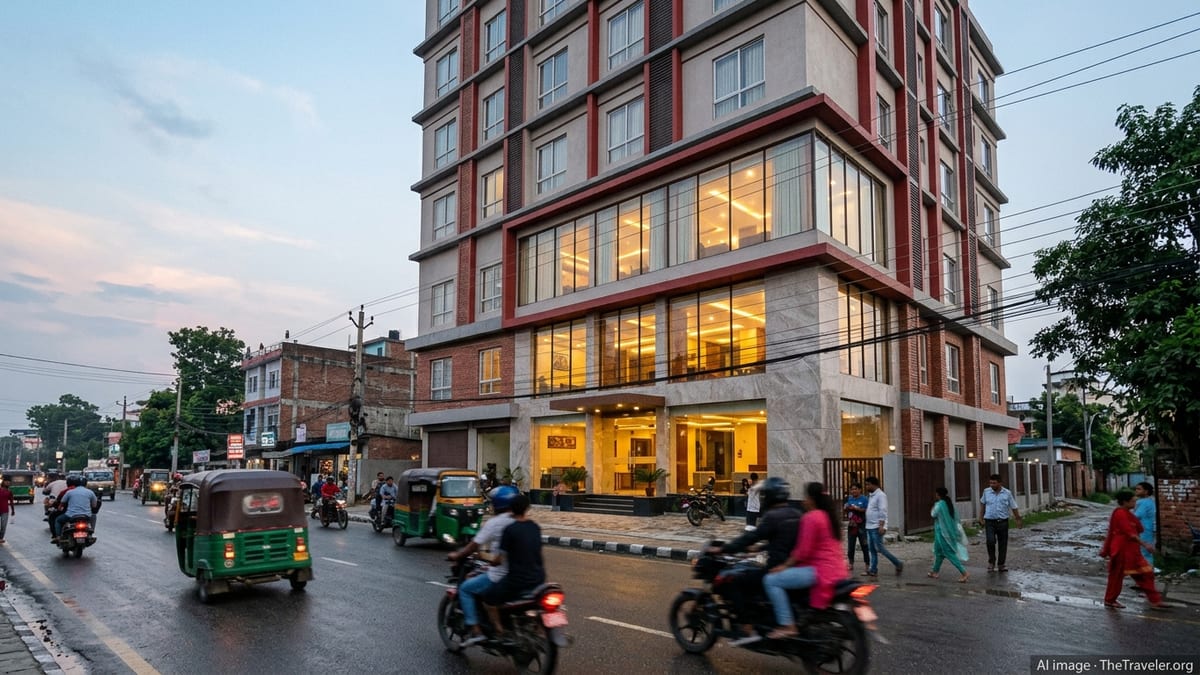
Itahari, one of eastern Nepal’s fastest-growing commercial centers, is preparing to welcome a new Ramada by Wyndham hotel, marking the arrival of a major international hospitality brand in the sub-metropolitan city’s expanding urban core.
Get the latest news straight to your inbox!
International Brand Enters Eastern Nepal’s Business Hub
According to publicly available company and ratings documents, the upcoming property will operate under the name Ramada by Wyndham Itahari Pashupati Marg and is being developed as a full-service hotel positioned to serve both business and leisure travelers. The project adds Itahari to the growing list of Nepali cities attracting globally recognized hotel brands, a trend that has accelerated beyond Kathmandu into key regional hubs.
Reports indicate that the Ramada by Wyndham flag in Itahari is being introduced through a licensing agreement with Wyndham’s Asia Pacific division. Similar agreements in Nepal have typically covered brand standards, access to global distribution systems, and marketing support, integrating local properties into Wyndham’s worldwide reservations and loyalty network. For Itahari, that alignment is expected to raise the city’s visibility among international and regional travelers planning routes across eastern Nepal and the wider South Asian corridor.
Ramada by Wyndham is promoted as a midscale, full-service brand featuring on-site dining, meeting facilities, and fitness amenities, designed to appeal to practical business travelers and domestic tourists. Industry observers note that such features are increasingly sought after in secondary cities like Itahari, where expanding corporate, logistics, and education sectors are generating year-round demand for standardized accommodation and event space.
Hospitality analysts following the project describe the Ramada by Wyndham launch as a signal that international operators view eastern Nepal’s urban centers as viable markets for branded hotels. With more travelers using road and air links between India, Biratnagar, Dharan, and the hill districts, Itahari’s new hotel is expected to play a role in capturing stopover and meeting traffic that previously flowed almost exclusively to Kathmandu or Biratnagar.
Grand Central Hotel Project Takes Shape on Pashupati Marg
The new Ramada by Wyndham Itahari Pashupati Marg is promoted by Grand Central Hotel Private Limited, a special-purpose vehicle created to develop and operate the property. Credit rating summaries on the project describe it as an 80-room, five-star-category hotel in Sunsari District, with construction progress reportedly surpassing the halfway mark by mid-April 2024. The development is planned with bank-financed term loans and working capital lines dedicated to both completion and early-stage operations.
Public filings show that the Grand Central Hotel scheme is designed around a contemporary tower-style property with a focus on guest rooms, food and beverage outlets, and curated event spaces suitable for corporate meetings, weddings, and social gatherings. The hotel is expected to incorporate international brand-mandated features such as consistent room layouts, modern bathrooms, and technology-ready workspaces, alongside service elements tailored to regional traveler expectations.
The project timeline set out in rating notes suggests that the hotel is targeted to be fully operational by the beginning of the 2025 to 2026 financial year, subject to construction, fit-out, and regulatory milestones. Once operational, the hotel is expected to create new local jobs across front office, housekeeping, food and beverage, engineering, and administration, with additional indirect employment in suppliers, transport, and tourism services.
Observers of Nepal’s credit and infrastructure market point to the Ramada by Wyndham Itahari project as part of a wider pattern of hospitality investments backed by structured bank financing and international brand affiliations. This model is increasingly visible in provincial cities, where domestic investors are pairing local market knowledge with the marketing reach and operational frameworks of multinational hotel systems.
Itahari’s Rise as a Strategic Transport and Trade Junction
Itahari has emerged as one of eastern Nepal’s most important transport and trade junctions, positioned at the crossroads of the east–west Mahendra Highway and the north–south Koshi Highway. Public records describe the city as a sub-metropolitan municipality with a population approaching 200,000, serving as a connector between Biratnagar to the south, Dharan to the north, and fast-growing towns such as Biratchowk along the regional highway network.
Over the past decade, Itahari has evolved from a highway town into a recognized commercial hub, hosting a mix of wholesale markets, retail centers, educational institutions, and service businesses. Real estate development has followed this growth, with new residential enclaves, mixed-use complexes, and small hotels clustering around major intersections like Itahari Chowk and key arterial roads. The arrival of a branded, upper-tier hotel is seen by local business watchers as a natural extension of this urban transformation.
Travelers moving between the Indian border, Biratnagar’s industrial belt, and the hill districts increasingly use Itahari as a staging point, particularly as tourism circuits diversify beyond traditional destinations. The city’s location on major road corridors gives it catchment not only from business travelers and civil servants but also from visiting families, migrant workers returning home, and cross-border traders. A hotel aligned with an international bookings platform is expected to help consolidate that demand, offering more predictable standards for guests unfamiliar with the local market.
Regional planning discussions around the broader Birat urban area, which links Biratnagar, Itahari, Gothgau, Biratchowk, and Dharan, further underscore Itahari’s centrality. As infrastructure projects proceed across the Koshi Province, including ongoing highway upgrades that affect routes to Jhapa and the border points, observers note that nodes like Itahari are likely to become even more pivotal for logistics, passenger transport, and services such as hospitality.
Implications for Tourism, Meetings, and Local Businesses
Hospitality and tourism analysts suggest that Ramada by Wyndham’s entry into Itahari could catalyze a shift in how the city positions itself to domestic and regional travelers. While Itahari has historically been viewed primarily as a junction town for onward travel, the addition of a branded hotel with meeting and banquet facilities may encourage more multi-night stays for conferences, training programs, and social events.
For local businesses, the new hotel is expected to provide additional venues for product launches, corporate gatherings, and community functions that previously might have moved to larger cities. Suppliers of agricultural produce, construction materials, furnishings, and professional services in Sunsari and neighboring districts are also likely to find new opportunities as the hotel progresses from construction to operational phases.
Within Nepal’s broader tourism strategy, the Itahari development offers another example of how regional centers can complement established destinations. With travelers increasingly seeking multi-stop itineraries that combine religious sites, nature experiences, and urban visits, the presence of internationally branded accommodation in a city like Itahari may make it easier to package eastern Nepal as a cohesive circuit.
Industry observers will be watching how the Ramada by Wyndham Itahari Pashupati Marg ramps up once it opens, including how it balances international brand standards with local expectations on pricing, cuisine, and service culture. Performance of the property could influence further decisions by global hotel systems evaluating other provincial cities in Nepal for potential expansion.