

More news on this day
As Dubai prepares for Ramadan 2026, the city is rolling out an expanded calendar of iftars, cultural nights and seasonal markets that are expected to keep destinations from Downtown to Dubai Creek and Expo City lively well past midnight in the run-up to Eid Al Fitr.
Get the latest news straight to your inbox!
Key Ramadan 2026 Dates and What Visitors Can Expect
Ramadan in the UAE in 2026 is forecast to fall broadly between mid-February and mid-March, with public information from astronomy groups and local coverage pointing to Eid Al Fitr likely around Friday, March 20. While the precise date will depend on the moon sighting, the UAE has already confirmed a multi-day Eid Al Fitr public holiday from March 19 to March 22 for federal entities, with the private sector expected to follow a similar pattern. For visitors, that timing means the final 10 nights of Ramadan and the Eid weekend are set to be among the busiest periods for late-night activity in Dubai.
Travel and hospitality reports indicate that Dubai’s traditional Ramadan rhythm is expected to hold: quiet, reflective days with shorter working hours, followed by an energetic after-iftar surge in malls, beachfront districts and heritage neighbourhoods. Many hotels are tailoring 2026 offers around suhoor-friendly check-out, family-focused iftar packages and stay-and-dine bundles that extend into the Eid holiday, reflecting strong demand from GCC travellers and residents planning “staycations” around the long weekend.
Industry analysis ahead of the season suggests that hotel occupancy could spike particularly in Downtown Dubai, Dubai Marina and the emerging cultural districts south of the city, as visitors look to combine late-night Ramadan experiences with proximity to major attractions. Travel planners are advising early bookings for the final week of Ramadan, especially for properties close to large iftar venues and popular night markets.
Lavish Iftars Across Hotels, Mosques and Waterfront Venues
Iftar, the evening meal that breaks the fast at sunset, remains the centrepiece of Dubai’s Ramadan hospitality. For 2026, leading hotels along Sheikh Zayed Road, in Palm Jumeirah resorts and at Dubai Creek waterfront properties are promoting large-scale iftar tents and ballrooms, often featuring Emirati and wider Middle Eastern dishes alongside international cuisine. Many venues are expected to revive live oudh music, calligraphy corners and henna stations, underscoring the blend of dining and cultural programming that has become a hallmark of Dubai’s Ramadan evenings.
Community iftars near major mosques and labour accommodation areas are also likely to draw attention, with charities and volunteer groups typically serving thousands of meals nightly during the month. Publicly available information from previous years indicates that these large-scale operations tend to be concentrated around Al Quoz, Al Satwa and Deira, reinforcing the social and charitable dimension of Ramadan that many visitors notice when they step away from the hotel circuit.
On the waterfront, Dubai Creek and the newer Dubai Canal promenades are preparing for a familiar pattern of after-maghrib crowds. Many creekside restaurants are aligning their 2026 menus with Ramadan timings, offering set iftar courses at sunset followed by lighter à la carte options for those who come later in the evening. Travel platforms are already flagging dhow cruises with special Ramadan menus as one of the more atmospheric ways to experience iftar, with views of historic trading houses in Deira on one side and the modern skyline on the other.
Night Markets, Souqs and Expo City’s Expanding Ramadan Scene
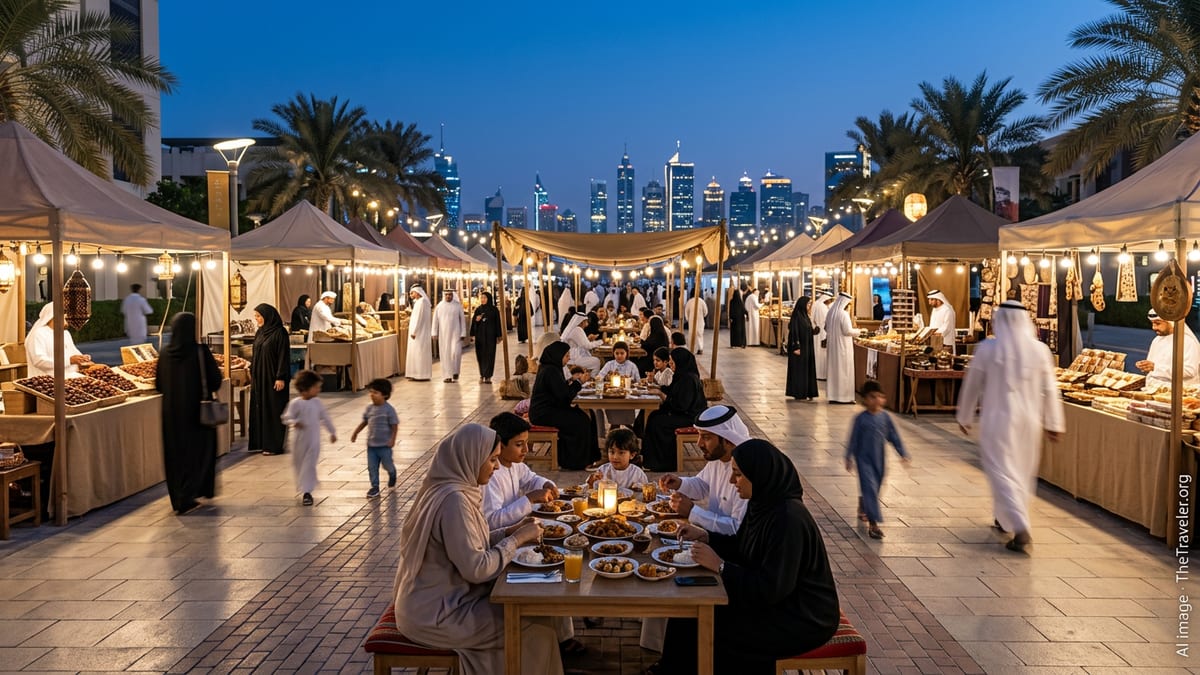
In the last few years, Dubai’s Ramadan night markets have become a destination in their own right, and 2026 is set to continue that trajectory. Seasonal bazaars in older districts such as Deira and Bur Dubai typically stay open into the early hours, selling modest fashion, oud, dates and lanterns while families stroll and children play. Organisers have signalled plans to expand food-truck offerings and interactive workshops, positioning these markets as both shopping and cultural-learning spaces for visitors.
Expo City Dubai, which has hosted a large-scale Ramadan festival in recent seasons under banners such as “Hai Ramadan,” is again expected to be a focal point. Recent coverage of 2026 programming points to a mix of storytelling performances, open-air street food, children’s play zones and craft stalls spread across pedestrian-friendly avenues. The area’s architecture, with pavilions lit softly at night, has helped it emerge as a photogenic backdrop for Ramadan evenings, and event planners are preparing for strong family attendance during weekends and in the nights leading into Eid.
Elsewhere in the city, newer venues such as outdoor lifestyle hubs and beachfront destinations are incorporating Ramadan concepts into their line-ups, often blending traditional elements with contemporary design. Visitors can expect pop-up suhoor lounges with low seating and tented canopies, boutique stalls featuring regional designers and regular live performances that maintain a relaxed, community-oriented atmosphere rather than a festival feel.
Late-Night Suhoor, City Skylines and Quiet Corners
Suhoor, the pre-dawn meal before the daily fast begins, is increasingly shaping Dubai’s late-night hospitality. For Ramadan 2026, rooftop lounges in Business Bay and Downtown, as well as terrace venues on Palm Jumeirah, are promoting extended suhoor menus that often continue until shortly before sunrise. The combination of cooler night-time temperatures and illuminated skylines makes these spaces particularly attractive to young residents and visitors seeking a social but unhurried way to experience the city at night.
Many hotels are arranging suhoor-friendly room service timings and in-room menus geared toward guests who are fasting, alongside options for non-fasting visitors who simply want to observe the city’s nocturnal Ramadan rhythm. Public guidance from tourism bodies continues to highlight that restaurants in major hotels and some licensed venues remain open during daylight hours, catering to international travellers while respecting local customs, and then shift to a more visibly festive mood from sunset onward.
For those looking for quieter moments, Dubai’s parks and waterfront promenades offer calmer pockets after midnight. Reports from previous seasons show that spots such as Jumeirah Beach, Al Safa Park and Al Seef along Dubai Creek often attract small groups picnicking or walking after iftar and taraweeh prayers. With Ramadan 2026 falling in late winter, relatively mild evening temperatures are expected to support longer outdoor stays compared with summer Ramadan years.
Planning Around Eid Al Fitr: Fireworks, Shopping and Travel
As Ramadan draws to a close, attention in Dubai typically shifts rapidly to Eid Al Fitr, bringing with it a surge in shopping, family visits and domestic travel. For 2026, with Eid anticipated around March 20 and a confirmed holiday window from March 19 to March 22 for many sectors, malls and retail districts are preparing for longer trading hours, seasonal sales and themed entertainment. Past years have seen coordinated fireworks displays at key landmarks, and early indications suggest similar large-scale celebrations will be planned across waterfront destinations and family attractions.
Dubai Festivals and commerce reports highlight that Eid remains one of the city’s peak shopping periods, as residents and visitors look for gifts, fashion and sweets. Gold and jewellery souqs in Deira, along with modern luxury boutiques in Downtown and Dubai Marina, typically experience heavy footfall in the days just before and after Eid. Travel agencies anticipate strong outbound and inbound traffic around the long weekend, with some residents flying out immediately after Eid prayers and regional visitors arriving specifically to combine the holiday with Dubai’s shopping and leisure offerings.
For travellers considering a visit in 2026, current guidance suggests arriving in the second half of Ramadan to experience the full spectrum of iftars, suhoors, night markets and cultural programmes, then staying through the first days of Eid Al Fitr to catch fireworks and citywide celebrations. With confirmed holiday dates and a growing portfolio of after-dark experiences, Dubai is positioning Ramadan 2026 as both a spiritually significant period and a compelling window for visitors to see the emirate in a different light.