

More news on this day
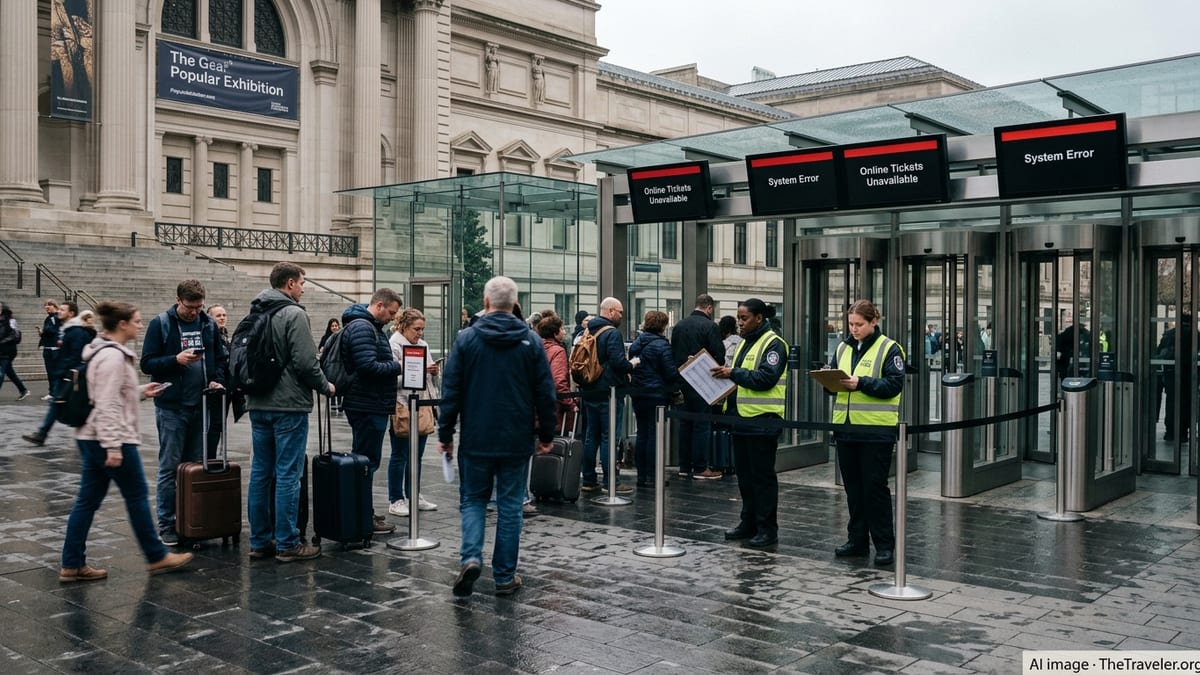
A ransomware attack against a major online ticketing provider has disrupted bookings for prominent museums and theme parks, stranding visitors in digital queues and highlighting how dependent the global travel and attractions industry has become on a small number of shared technology platforms.
Get the latest news straight to your inbox!
Attack on Shared Ticketing Platform Ripples Across Attractions
Publicly available information indicates that an online ticketing service used by major cultural institutions and leisure venues was recently hit by ransomware, encrypting core systems that manage reservations, timed entry, and access control. The incident has triggered outages and error messages for travelers attempting to prebook visits to high-profile sites, with some venues temporarily reverting to in-person sales or reduced capacity.
Recent reports on cyber events in the cultural sector describe a similar pattern: centralized providers serving dozens or even hundreds of clients are struck by ransomware, forcing museums, galleries, and attractions to disable or limit their online booking tools while backups are restored. In several cases, providers have acknowledged that servers underpinning online ticket storefronts and back-office tools were locked, interrupting operations for institutions across multiple countries.
According to coverage from cybersecurity analysts, affected platforms support a mix of services that go beyond simple ticket sales, including membership systems, online collection access, and integrated point-of-sale. When these shared systems are taken offline, even briefly, the fallout can stretch from gallery doors to gift shops and cafes, and can be felt by travelers planning trips months in advance.
While investigation into the latest attack is ongoing, early statements from the ticketing provider and impacted institutions suggest that backup restoration is under way and that there is no indication of compromised payment card data. However, as in other recent cultural-sector incidents, contact details, purchase history, and limited account information for some customers may have been exposed.
Impact on Museums, Monuments, and Theme Parks
The disruption is being felt most immediately at headline attractions that depend on advance reservations to manage crowds. In Europe, recent cyber incidents have already affected major museum networks and national monument operators, forcing them to publish advisories about temporary outages in their online booking journeys and, in some cases, to cap daily visitor numbers while systems are stabilized.
Cybersecurity briefings over the past year also describe ransomware incidents that have rippled into the theme park sector, temporarily knocking out park management systems, hotel reservation tools, and premium line-skipping services. In one widely cited case, an attack on backend servers that coordinated digital access passes and point-of-sale functions left visitors facing long queues at physical ticket windows while staff implemented manual workarounds.
For travelers, the practical consequences vary by destination. Some museums and parks have been able to keep gates open by honoring previously issued tickets and allowing limited walk-up sales. Others have warned visitors that certain time slots are unavailable, booking engines may fail at the payment step, or membership benefits might not be recognized while integrations remain offline. Tour operators that bundle popular museums and parks into city passes are also monitoring availability closely, as a sustained outage at one flagship venue can affect the value of an entire package.
Industry observers note that even when core attractions stay open, a compromised ticketing system can reduce ancillary revenue. If digital gift vouchers, exhibition surcharges, or special event bookings are disabled, cultural institutions lose important income streams at a time when many are still rebuilding finances after the pandemic.
Visitor Data Exposure and Privacy Concerns
The ransomware attack has renewed attention on how much personal information is stored in travel and attractions ticketing platforms. Public statements following similar incidents at museum software providers and cultural institutions show that, while full bank card numbers are often handled by separate payment processors, ticketing databases routinely contain names, email addresses, purchase records, and in some cases encrypted passwords and postal codes.
Privacy experts point out that even limited datasets can be valuable to cybercriminals. Detailed logs of when and where people visit can feed targeted phishing campaigns, impersonation attempts, or broader identity fraud if combined with information from other breaches. In recent cultural-sector cases, attackers have threatened to leak personnel records and internal documents when institutions refused to pay ransom demands.
Regulators in several regions, including national data protection authorities in Europe, have opened inquiries into museum and monument cyber incidents, focusing on whether institutions and their vendors applied appropriate safeguards, logged access properly, and notified affected individuals in a timely manner. Travel organizations that rely on shared ticketing platforms are watching these investigations closely, aware that any findings on security obligations or disclosure timelines could resonate across the wider tourism ecosystem.
For visitors, the latest attack serves as a reminder to reuse passwords cautiously, especially on accounts that combine identity details with travel history. Security advisers recommend changing passwords on affected platforms once services are restored and being skeptical of unsolicited messages that reference recent museum or theme park visits.
Stress Test for Travel-Sector Cyber Resilience
The incident underscores a broader shift in cyber risk for travel, tourism, and culture. Rather than targeting a single venue, ransomware operators increasingly focus on service providers that sit at the center of digital infrastructure, from ticketing and booking engines to customer relationship tools. Industry threat reports describe these firms as high-leverage targets, since one successful intrusion can disrupt dozens of brands and millions of customer interactions.
For museums and theme parks, this creates a complex dependency challenge. Many do not have the budget or expertise to build and maintain their own ticketing stacks, yet they bear the reputational and operational fallout when a vendor is compromised. Recent guidance from cyber insurers and specialist brokers urges cultural organizations to scrutinize how ticketing partners segment networks, encrypt stored data, and conduct incident response drills.
Some operators are responding by diversifying providers, maintaining limited on-premises ticketing capabilities, or designing contingency plans that let them switch quickly to manual or alternative digital workflows if a cloud platform fails. Others are investing in cyber coverage tailored to business interruption, recognizing that even a short outage during peak holiday periods can translate into significant lost revenue and visitor dissatisfaction.
Travel planners and city tourism boards are also taking note. As more destinations rely on mandatory timed-entry systems for crowd control at iconic sites, from historic monuments to blockbuster exhibitions, the resilience of the underlying ticketing technology has become an essential part of visitor experience, not just a back-office concern.
What Travelers Should Know Before Booking
For travelers with upcoming museum or theme park visits, experts suggest checking official communications from attractions shortly before departure, particularly when tickets are tied to strict time windows or security vetting. If online booking portals are unstable, some venues may advise arriving earlier, using authorized resellers, or purchasing on site where capacity allows.
Travel insurance rarely covers the inconvenience of a failed online booking platform, but some policies may compensate for missed time slots or prepaid experiences if an attraction closes or significantly reduces capacity. Policyholders are encouraged to read the fine print and keep documentation of any disruptions linked to ticketing outages.
It is also prudent to monitor financial statements in the weeks following any widely reported cyber incident involving a ticketing provider. Even when payment processors say bank card data was not stored in the affected environment, security specialists advise watching for unusual charges and enabling alerts and two-factor authentication where available.
Ultimately, the latest ransomware attack illustrates how a single technical failure upstream can alter the rhythm of a city break or family vacation. As cultural institutions and theme parks race to restore full digital service, the episode is likely to intensify calls for stronger security standards, clearer contractual obligations with technology vendors, and more transparent communication with the traveling public when critical ticketing systems go dark.