

More news on this day
The missile attack on Qatar’s Ras Laffan liquefied natural gas hub is reverberating across the Gulf, with Al Hosn Gas in the United Arab Emirates and other regional producers moving to tighten security as global markets and travelers brace for prolonged disruption.
Get the latest news straight to your inbox!
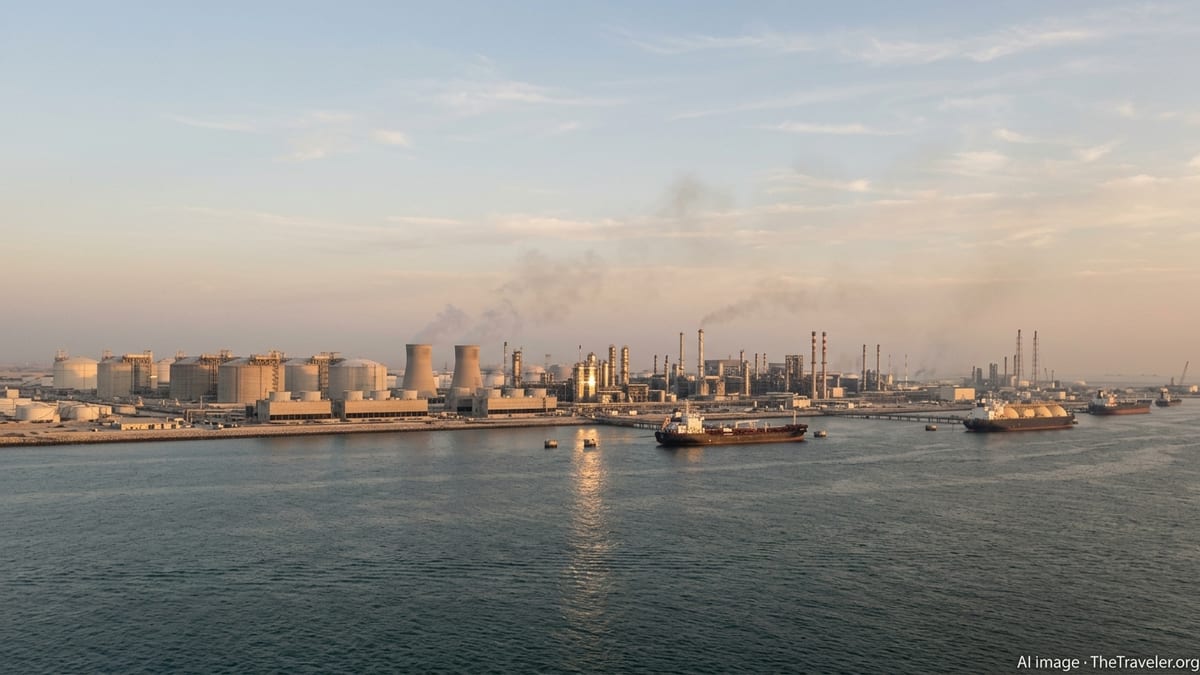
Gulf Energy Producers Move in Lockstep After Ras Laffan Strike
Publicly available information indicates that Al Hosn Gas in the United Arab Emirates has aligned itself with a growing group of Gulf and Levant energy operators reassessing risk after the strike on Qatar’s Ras Laffan complex. Regional reports describe coordinated security reviews and contingency planning across Qatar, Saudi Arabia, Bahrain, Kuwait, Lebanon, Jordan and Oman as authorities and companies react to a rapidly evolving threat landscape.
Analysis published in late February and early March set out how Ras Laffan, one of the world’s most important liquefied natural gas export hubs, had already gone offline following earlier Iranian drone attacks. The latest missile damage, reported on March 18, has intensified concerns that any additional disruption to Qatar’s output could force neighboring producers, including operators in the UAE, to reconsider export schedules and maintenance windows in order to protect personnel and critical infrastructure.
Market commentary notes that the alignment of companies such as Al Hosn Gas with wider regional risk responses is aimed at signaling continuity of supply where possible, while acknowledging that the safety of on-site workforces and the integrity of processing plants now dominate planning. Industry observers describe a fragmented but increasingly cooperative security posture, with operators sharing lessons on hardening coastal facilities, export terminals and offshore approaches.
Despite the heightened alert, publicly available shipping and port advisories suggest that most Gulf export terminals remain technically operational, although more vessels are adjusting routes, accepting delays or staying clear of high-risk zones. For energy firms across the UAE and wider Gulf, the immediate challenge lies in balancing contractual obligations with an environment in which individual facilities can be taken offline at short notice.
Global Gas Markets Face Renewed Supply Shock
The sudden escalation at Ras Laffan has amplified a supply shock that began when Qatar first halted LNG and helium production earlier in March. Analysts tracking the crisis highlight that the facility accounts for a significant share of global LNG flows, and a prolonged outage could redraw trade patterns between Asia and Europe and intensify competition for spot cargoes.
Benchmark gas prices in Europe and parts of Asia have already experienced sharp intraday swings since the initial Ras Laffan shutdown, according to energy market coverage. The latest reports of extensive physical damage at the complex have reinforced expectations that full capacity may not return quickly, prompting utilities and importers to seek replacement volumes from the United States, Africa and other Middle Eastern exporters.
For producers such as Al Hosn Gas in the UAE, the turmoil presents both opportunity and risk. Higher prices and increased demand for alternative supply routes could support revenues, but any perception that Gulf infrastructure as a whole is vulnerable may complicate long-term contract negotiations and insurance costs. Some observers warn that if more facilities across Saudi Arabia, Kuwait or the UAE were forced to curtail exports, the combined effect could trigger a broader energy crunch.
Downstream sectors are also feeling the strain. Qatar’s helium halt at Ras Laffan has already filtered into semiconductor and medical imaging supply chains, illustrating how a single industrial city can affect industries far beyond the Gulf. The latest attack deepens uncertainty over when those flows may resume at scale.
Airspace Restrictions and Flight Cancellations Ripple Across the Region
The attack on Ras Laffan comes against the backdrop of earlier Iranian strikes and airspace closures that have disrupted aviation across the Gulf. Publicly available aviation notices and media reports show that Qatar’s airspace was closed at the end of February, triggering cancellations and diversions at Doha’s main international airport and forcing carriers to reroute long-haul services between Europe, Asia and Africa.
Other states, including the United Arab Emirates and Saudi Arabia, have imposed varying levels of airspace restrictions and operational changes at major hubs in Abu Dhabi, Dubai and Riyadh since the wider conflict with Iran escalated. Airlines have parked aircraft, adjusted schedules and consolidated frequencies in response to fluctuating security assessments and crew safety considerations.
For passengers, the result has been growing uncertainty around departures, longer flight times due to detours around sensitive air corridors, and more frequent last-minute changes. Travel industry trackers note that some global carriers have temporarily suspended stopovers at key Gulf hubs, opting instead for more northerly or southerly routings that bypass the Strait of Hormuz and northern Gulf waters.
The alignment of energy companies such as Al Hosn Gas with regional security measures underscores the link between critical infrastructure and aviation stability. Any further strikes on export terminals or industrial cities could prompt renewed waves of airspace closures, especially where flight paths intersect with coastal energy zones.
Maritime Routes, Cruise Calls and Business Travel Under Pressure
Port circulars and maritime advisories issued in early March already described a sharp reduction in commercial traffic through the Strait of Hormuz, even in the absence of a formal closure. Many cargo and tanker operators have chosen to delay sailings, reroute around higher-risk waters or adopt slower speeds and altered coastal approaches until the situation stabilizes.
While several Gulf ports, including Ras Laffan’s export terminals, initially reported that cargo handling and marine services remained available, the combination of energy infrastructure strikes and elevated insurance premiums has tested the appetite of shipowners and charterers. Industry assessments suggest that the Ras Laffan missile damage may accelerate decisions to divert vessels toward ports in Oman or the Red Sea, lengthening voyage times and complicating delivery schedules.
The travel sector is feeling parallel effects. Cruise lines, which in recent years added Gulf itineraries linking Doha, Abu Dhabi, Dubai and ports in Oman and Bahrain, are reassessing calls in the northern Gulf in light of shifting risk maps. Conference organizers and corporate travel planners with events in Doha, Dubai and other regional business hubs are reviewing contingency plans, including hybrid formats and alternative venues.
For regional tourism boards that had positioned the Gulf as a seamless multi-country destination, the combination of energy strikes, shipping reroutes and intermittent airspace restrictions presents a significant short-term setback. Travel booking platforms report rising interest in flexible tickets and refundable hotel rates as visitors seek to hedge against potential last-minute disruptions.
Travelers Weigh Routes, Insurance and Alternative Hubs
As the Ras Laffan crisis unfolds, travelers are increasingly factoring energy-related security risks into route choices. Public guidance from airlines, airports and tour operators emphasizes the importance of checking flight status frequently, allowing extra time for connections and monitoring local advisories for any rapid changes to airport operations or curfew rules.
International booking data discussed in recent travel industry analysis indicates a modest but noticeable shift toward itineraries that use alternative hubs in Istanbul, Cairo, Muscat and European gateway cities instead of connecting through Qatar or the most exposed Gulf airports. At the same time, premium demand for non-stop links between Europe and Asia that avoid the Gulf altogether appears to be strengthening.
Travel insurance providers are updating policy language in response to the evolving security environment. Some products continue to treat war-related disruptions and government-imposed closures as exclusions, while others now highlight specific cover for travel delays, missed connections and emergency re-routing in regions affected by conflict. Prospective visitors to Qatar, the UAE, Saudi Arabia, Bahrain, Kuwait, Lebanon, Jordan and Oman are being encouraged in public-facing materials to read the fine print closely.
For now, the full extent of the Ras Laffan attack’s impact on both global energy supplies and international mobility remains uncertain. What is clear from market analysis and transport data is that a strike on a single industrial complex has widened into a regional test of resilience for fuel markets, airlines, ports and travelers across the Gulf and beyond.