

More news on this day
Travelers at Raleigh–Durham International Airport faced another morning of uncertainty as four flights operated by Icelandair, Delta Air Lines, and Republic Airlines were canceled and numerous others delayed, disrupting key links to Keflavik, Toronto, Frankfurt, Albany, and Atlanta.
Get the latest news straight to your inbox!
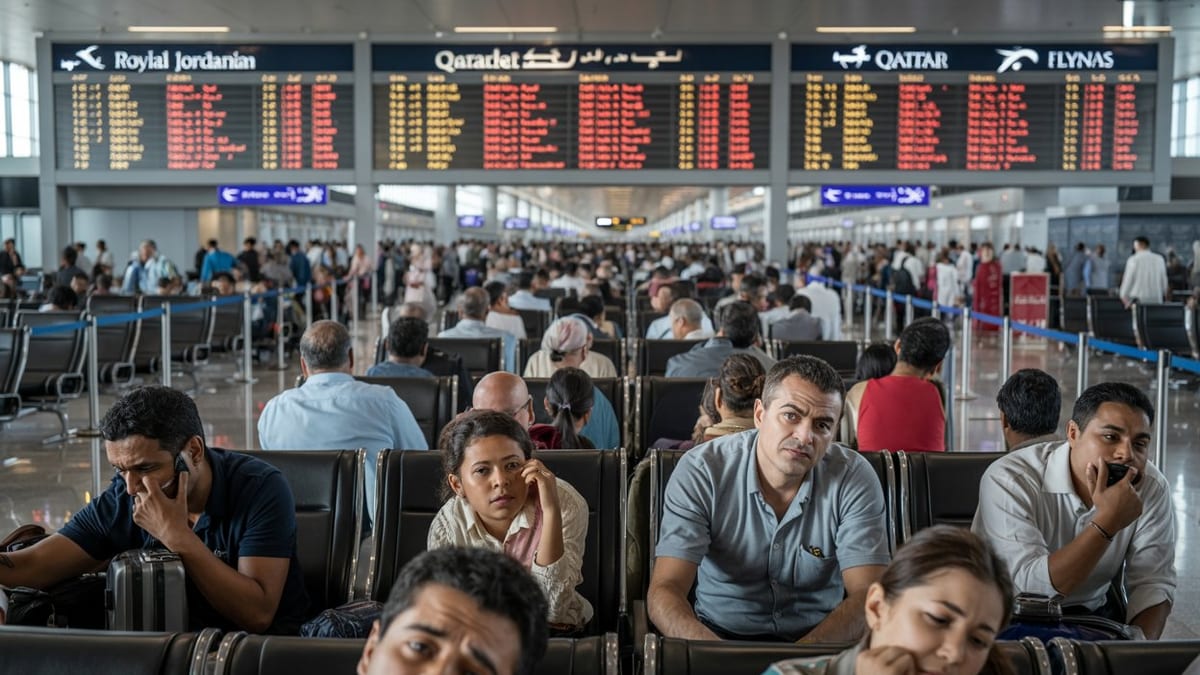
Targeted Cancellations Hit Key International and Regional Routes
The latest disruption at Raleigh–Durham International Airport centers on a small but strategically important cluster of four cancellations, concentrated on routes that connect the Triangle region to major international hubs and regional feeders. Publicly available flight-status boards and industry tracking summaries for early April point to Icelandair, Delta, and Republic among the affected operators, with service to Keflavik, Toronto, Frankfurt, Albany, and Atlanta bearing the brunt of the disruption.
Data collated from national delay and cancellation tallies show Raleigh–Durham listed among U.S. airports reporting multiple cancellations and elevated delays, even as larger hubs such as Atlanta and New York absorb a higher absolute number of impacted flights. Within that broader pattern, the four canceled departures from Raleigh–Durham stand out because they are concentrated among carriers that provide the airport’s most critical international and connecting traffic.
The cancellation pattern has effectively thinned out some of the airport’s newest and most high-profile routes. Keflavik, Toronto, and Frankfurt have emerged in recent seasons as cornerstone long-haul and transborder links for Raleigh–Durham, while Albany and Atlanta serve as vital domestic connectors feeding traffic into wider North American and global networks.
For passengers, the impact has gone beyond the raw number of grounded aircraft. With limited daily frequencies on several of these international routes, a single cancellation can translate into lost connections for a full day’s worth of onward journeys, increasing reliance on rebooking through alternative hubs or carriers.
Keflavik and Frankfurt Disruptions Underscore Europe Link Vulnerability
Keflavik and Frankfurt, the two European gateways implicated in the latest Raleigh–Durham disruption, illustrate how sensitive newer long-haul markets can be to even modest operational turbulence. Statistics published in recent international disruption roundups show Keflavik recording some of the highest cancellation rates in Europe, with Icelandair prominently featured among affected airlines. In parallel, Frankfurt has appeared in pan-European tallies as one of several major hubs coping with waves of scrubbed and late-running flights.
Raleigh–Durham’s connection to Keflavik, launched by Icelandair as part of the airport’s expanding transatlantic portfolio, has been a notable success story, offering Triangle travelers a direct bridge to Iceland and onward connections across northern Europe. When that single daily flight is canceled, however, there is often no same-day alternative from Raleigh–Durham, forcing passengers into circuitous routings via other U.S. gateways.
Frankfurt, served from Raleigh–Durham by a transatlantic partner carrier, plays a similar role at the heart of continental Europe. The hub’s own congestion and weather-related strain have periodically spilled over into U.S. schedules, and reports from European aviation trackers this week again highlight Frankfurt among airports experiencing cascading delays and cancellations.
The combined effect for travelers departing or arriving via Raleigh–Durham is a fragile chain in which disruption at either end of the route can leave passengers facing missed tours, rescheduled business meetings, or overnight stays while they await the next available transatlantic seat.
Toronto, Albany, and Atlanta Feel Knock-On Effects
Across North America, Toronto, Albany, and Atlanta are all featuring in nationwide disruption dashboards, with delays and cancellations tied to a mixture of spring weather, congestion, and scheduling pressures. Within that context, the four cancellations touching Raleigh–Durham represent a small but visible part of a much larger pattern of strain on airline networks.
Toronto Pearson, a key Canadian hub, has appeared in Canadian-focused aviation updates noting moderate but persistent disruption over the Easter travel period. When a Raleigh–Durham to Toronto departure is canceled or heavily delayed, it can sever connections to onward domestic Canadian services as well as transatlantic flights routed through Toronto’s extensive long-haul network.
Albany, a smaller but strategically important market for regional connectors like Republic, has been referenced in airline schedule notices as a seasonal and sometimes low-frequency route. That makes any single cancellation more consequential: passengers may have to pivot to itineraries via New York, Boston, or Washington to complete their journeys if the next direct Raleigh–Durham to Albany option is days away.
Atlanta, one of the world’s busiest hubs and a cornerstone of Delta’s network, continues to rank high in U.S. disruption summaries, with dozens of cancellations and a large number of delayed departures and arrivals recorded nationally. When Raleigh–Durham flights into Atlanta are canceled or delayed, the result can be a ripple through multiple onward connections to Latin America, Europe, and the U.S. West Coast that depend on tight banked schedules at Atlanta.
Airlines Juggle Recovery While Travelers Scramble for Options
According to nationwide operational overviews for early April, Delta is among the carriers reporting the largest number of cancellations and delays across the United States, reflecting its outsized presence at hub airports such as Atlanta. Icelandair, by contrast, has seen its disruption concentrated in Iceland and Europe, where published data show a significant share of its schedule into and out of Keflavik affected. Republic’s footprint appears in U.S. statistics primarily through regional routes that feed major airline partners.
Raleigh–Durham’s latest cluster of four cancellations sits at the intersection of those broader trends. With Delta managing widespread challenges at major hubs, Icelandair contending with a stressed operation in Iceland, and Republic navigating regional constraints, the Triangle’s connectivity has inevitably felt some aftershocks. The pattern, while limited in scale, aligns with a season in which carriers across North America and Europe are still working through tight staffing and aircraft availability alongside volatile weather.
For affected customers, publicly available guidance from airlines and consumer advocates continues to emphasize the same core strategies. Passengers are encouraged to monitor flight status before leaving home, use airline apps to request same-day changes where available, and explore rerouting through alternative hubs such as New York, Washington, or Boston if direct links from Raleigh–Durham remain constrained.
In many cases, travelers stranded by a canceled Icelandair, Delta, or Republic flight out of Raleigh–Durham have been rebooked on later departures or alternate routings, though options can be limited on niche international routes. Longer connection times, overnight hotel stays at hubs, and last-minute changes to itineraries remain common side effects of this week’s disruption.
RDU’s Growing International Profile Meets Operational Reality
The turbulence comes as Raleigh–Durham continues to evolve from a primarily domestic airport into a growing international gateway. Over the past several seasons, new and expanded links to Europe, Canada, Mexico, and the Caribbean have broadened the airport’s reach beyond traditional domestic mainstays, with cities such as Frankfurt, Toronto, and Keflavik now featuring prominently in its marketing and schedule announcements.
Recent airport development reports and route announcements highlight how Icelandair’s Keflavik service and transatlantic connections via major European hubs have become part of a wider push to position the Triangle as a viable alternative to larger coastal gateways. Planned launches of additional European routes in 2026 underscore the long-term strategy of deepening international connectivity.
The latest round of cancellations and delays, while modest in number, illustrates how vulnerable that strategy can be to events far beyond the control of Raleigh–Durham itself. Disruption analytics compiled this week show that many of the pressures originate at large hubs in the United States and Europe, or at weather-affected airports where operational constraints ripple through the global network.
As airlines and airports move through the busy spring period, industry observers suggest that the Raleigh–Durham market will remain sensitive to these broader patterns. Travelers using the airport’s growing portfolio of international and regional routes are likely to continue balancing the convenience of local departures with the possibility that a single canceled flight may have outsized consequences for their onward journeys.