

More news on this day
Air travelers across the Triangle region faced a fresh wave of disruption on April 5 as Endeavor Air, Delta Air Lines, and Jazz scrubbed multiple departures and logged extensive delays at Raleigh–Durham International Airport, affecting high‑demand domestic and transatlantic routes.
Get the latest news straight to your inbox!
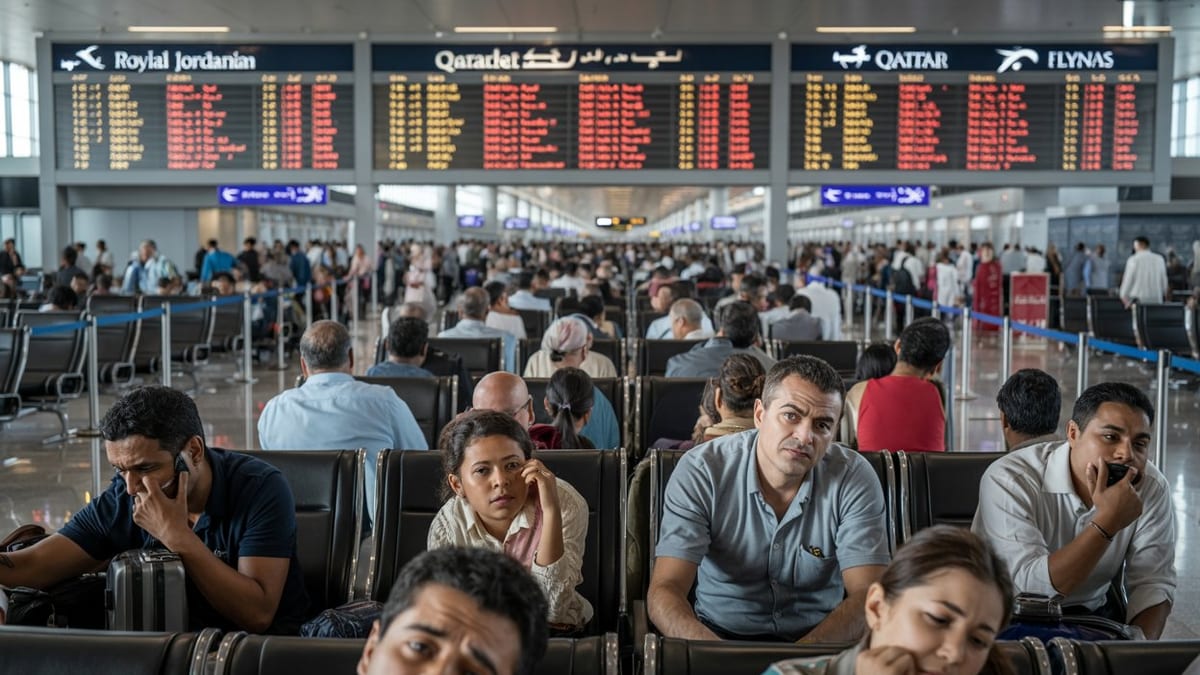
Targeted Cancellations Hit Regional and Long-Haul Links
Publicly available flight-status boards and industry tracking data for April 5 indicate that five departures operated by Endeavor Air, Delta Air Lines, and Jazz from Raleigh–Durham International Airport were canceled outright, with knock-on delays spreading across the rest of the schedule. The affected services spanned both short-haul and long-haul routes, underscoring how even a small number of cancellations can ripple through an interconnected network.
Regional services marketed by Delta and flown by Endeavor Air bore a significant share of the disruption. These flights typically link Raleigh–Durham with Delta’s core hubs such as New York’s LaGuardia Airport and Hartsfield-Jackson Atlanta International Airport, where operational strains have been widely reported on April 5. When these regional connectors are removed from the schedule, passengers not only lose nonstop options but also risk missing onward connections on larger jets bound for national and international destinations.
Jazz, a key regional partner in the Air Canada network, also appears in national disruption tallies, with cancellation rates elevated on April 5. While Jazz’s operations at Raleigh–Durham are limited compared with Delta’s footprint, the removal of even a single flight can sever a key link for travelers connecting through larger Canadian and transatlantic gateways, compounding frustration for those attempting to reach Europe or other long-haul markets.
The combination of these targeted cancellations at Raleigh–Durham and parallel disruption at other major airports created an environment in which travelers faced a mix of outright flight loss, prolonged waits, and missed connections, despite many long-haul services technically remaining on the departure boards.
Major Hubs Feel the Strain From LaGuardia to Hartsfield-Jackson
The impact of Raleigh–Durham’s cancellations was magnified by conditions at the very hubs it feeds. Published same-day disruption summaries for April 5 show flight operations under pressure at LaGuardia in New York and Hartsfield-Jackson Atlanta, two of Delta’s most important connecting points and frequent destinations for Endeavor-operated routes.
Reports tracking national air travel performance on April 5 describe dozens of cancellations and delays centered on New York and Georgia, with Delta among the most affected large carriers. When flights into LaGuardia or Atlanta depart late or are canceled, regional feeders in and out of Raleigh–Durham can quickly become misaligned with their intended banks of onward departures, forcing airlines to consolidate services, roll passengers to later flights, or abandon certain rotations entirely.
This dynamic can be particularly painful for travelers who selected early departures from Raleigh–Durham to protect crucial connections at LaGuardia or Hartsfield-Jackson. If morning or midday flights into those hubs are canceled or substantially delayed, options to re-accommodate passengers onto later departures may be limited by already-high load factors and broader national disruption.
The situation on April 5 illustrates how pressure at hub airports can cascade into regional markets. Even where weather at Raleigh–Durham itself is not the primary issue, the airport’s role as a spoke in multi-airport networks means that operational challenges hundreds of miles away can still determine whether a given flight operates on time, late, or not at all.
Ripple Effects on Transatlantic Routes to Frankfurt and London
Bottlenecks at feeder hubs also created challenges for passengers booked on transatlantic services that rely on smooth connections from Raleigh–Durham. Published coverage of April 5 flight performance notes disruptions on routes into major European gateways such as London Heathrow and Frankfurt, both of which are vital transfer points for travelers from North Carolina heading to destinations across Europe, the Middle East, and beyond.
Even where nonstop services from U.S. hubs to London or Frankfurt continued to operate, delays in the domestic segments feeding those departures meant that some Raleigh–Durham passengers did not reach their gateway airports in time. In other cases, extended delays in Europe reverberated backward into the U.S. schedule, forcing rescheduling of inbound aircraft and crew and limiting flexibility for airlines to recover on-time performance later in the day.
The pattern highlights the vulnerability of long-haul itineraries to seemingly localized disruptions. A canceled or substantially delayed regional flight into LaGuardia or Atlanta can strand passengers who had meticulously planned connections to overnight flights to London or Frankfurt. For those travelers, the loss of a single short-haul segment often means an unexpected overnight stay, additional rebooking negotiations, and a domino effect on hotel and ground-transportation plans overseas.
Raleigh–Durham’s growing portfolio of direct international links, including recently launched and upcoming transatlantic services, makes operational reliability on its domestic feeder network even more critical. Any sustained period of cancellations or heavy delay on regional partners such as Endeavor and Jazz risks undercutting confidence in the airport as a convenient gateway to Europe.
Domestic Connectivity to Nashville and Other Cities Disrupted
Beyond the dense corridors to New York and Atlanta, travelers on secondary domestic routes also felt the effects of April 5’s cancellations and delays. Nashville, a key southeastern destination with strong business and leisure ties to the Triangle region, appeared in same-day routing analyses as one of the city pairs touched by disruption. Publicly available airport and airline data show that Nashville remains a popular connection point for reaching other parts of the central United States.
When cancellations remove options between Raleigh–Durham and cities like Nashville, passengers lose both point-to-point connectivity and the ability to leverage those airports as alternate routings when hubs such as Atlanta or New York become congested. That lack of redundancy can exacerbate the impact of any single cancellation, particularly on busy travel days when seats on alternative flights are scarce.
Other domestic markets beyond Nashville also saw schedules stretched on April 5 as delays cascaded through aircraft rotations. Flights that departed Raleigh–Durham late in the morning or early afternoon faced challenges in maintaining their later segments, especially where aircraft were scheduled for multiple short hops in a single day. Once early flights fell behind, it became harder for airlines to reset their operations without resorting to additional cancellations or extended ground holds.
For local travelers, the result was a patchwork of disruptions: some flights operated close to schedule, others left hours late, and a subset disappeared from departure boards altogether. This variability made it difficult for passengers to gauge the reliability of their particular route in real time, even when broader national data signaled an elevated risk of disruption.
Broader National Context of April 5 Flight Disruptions
The problems at Raleigh–Durham fit into a wider national pattern reported on April 5, with more than one hundred cancellations and several hundred delays logged across the United States. Major hubs including Atlanta, Dallas, Houston, Los Angeles, San Francisco, and Newark all recorded double-digit cancellations and substantial delay totals, according to compiled data from flight-tracking platforms and travel-industry coverage.
Within this broader picture, Delta Air Lines featured prominently among carriers reporting elevated disruption levels, alongside United Airlines, American Airlines, and significant regional operators. Endeavor Air and Jazz appeared in airline-specific tables with measurable percentages of canceled flights, reflecting how regional partners absorb some of the operational strain when large networks face schedule pressure.
Analysts reviewing the April 5 data point to a familiar combination of factors, including tight staffing margins, congested airspace around major hubs, and aircraft and crew positioning challenges that accumulate throughout the day as minor delays compound. While no single weather event or system outage appears to account for all the disruption, the figures suggest that U.S. flight operations remain vulnerable when routine pressures and peak travel demand intersect.
For Raleigh–Durham and its passengers, the episode serves as another reminder that even a modest number of cancellations at a mid-sized airport can signal far broader turbulence across national and international networks. Travelers connecting to LaGuardia, Hartsfield-Jackson, Frankfurt, London, Nashville, and other key destinations may need to factor this volatility into their planning, building in extra time for connections and closely monitoring flight status in the hours before departure.