

More news on this day
Travelers at Raleigh–Durham International Airport faced fresh disruption as four flights operated by Icelandair, Delta Air Lines and regional carrier Republic Airlines were canceled, with additional delays rippling across routes to Keflavik, Toronto, Frankfurt, Albany and Atlanta.
Get the latest news straight to your inbox!
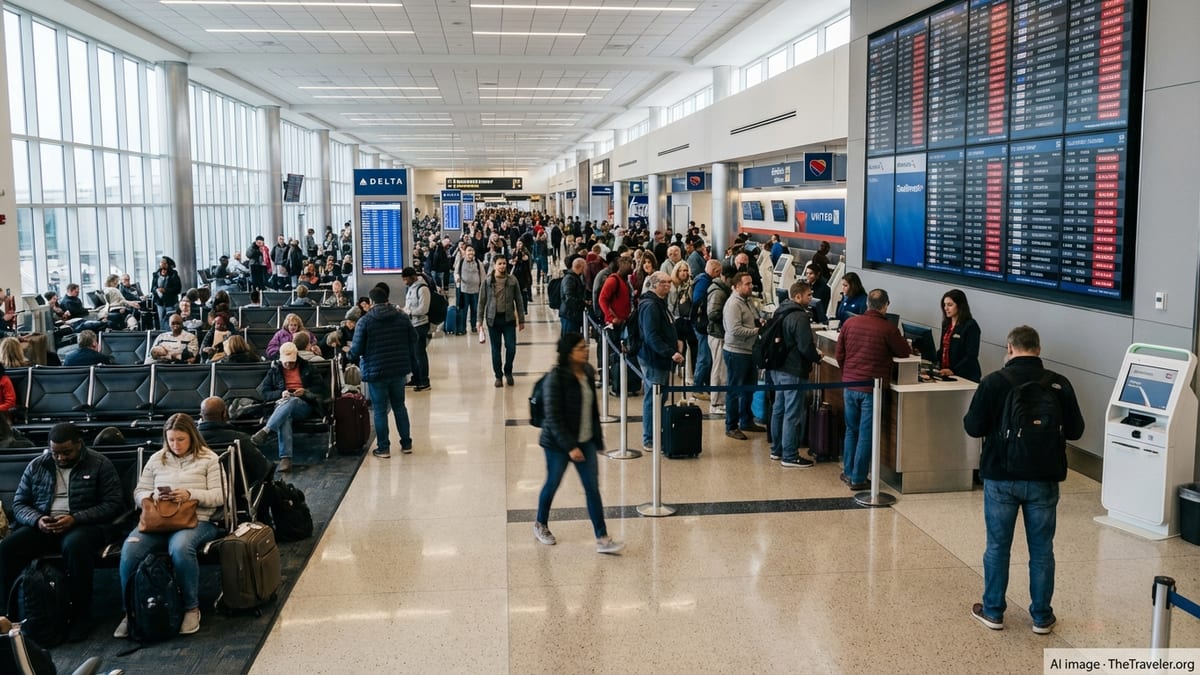
Cluster of Cancellations Strands Passengers at RDU
Publicly available flight-status data for the latest operational day show that Raleigh–Durham International Airport recorded four cancellations affecting services linked to Icelandair, Delta and Republic Airlines. While the affected flights represent a small portion of the day’s overall schedule, their concentration on a handful of key routes meant a disproportionate impact for connecting travelers.
Travel-focused outlets reviewing the data report that the cancellations were spread across international and domestic departures, leaving some travelers facing unexpected overnight stays and rebookings. With popular destinations such as Keflavik in Iceland and major hubs in the United States and Canada involved, the disruption created complications for long-haul itineraries and onward connections.
The cancellations occurred against the backdrop of a busy early-spring travel period for RDU, which has been expanding its network of transatlantic and North American routes. That growth has increased the airport’s role as a regional gateway, but it also means that irregular operations can quickly cascade beyond North Carolina.
International Links to Keflavik, Toronto and Frankfurt Affected
Among the most closely watched disruptions were services connecting Raleigh–Durham with Keflavik, Toronto and Frankfurt, three of the airport’s prominent international gateways. Published coverage on recent disruption patterns notes that Keflavik recorded a 100 percent cancellation rate within the relevant data sample, indicating that one or more targeted flights rather than the wider airport operation were involved.
The RDU–Keflavik route, operated by Icelandair, has grown in visibility as a key link between North Carolina and both Iceland and onward European destinations. A complete cancellation of a scheduled service on this corridor forces travelers to be rerouted through other hubs, often via Boston, New York or the Midwest, adding considerable time and uncertainty to journeys.
Connections to Toronto and Frankfurt have also become strategically important for RDU, serving as gateways into the broader Air Canada and European networks. Disruptions on these long-haul and cross-border routes can affect not only leisure travelers but also corporate passengers who rely on tight schedules to reach meetings and events across Europe and Canada.
Industry data suggest that even a small number of cancellations on such international trunk routes can strain rebooking options, as there are comparatively fewer daily frequencies compared with domestic services. This leaves airlines with less flexibility to absorb stranded passengers onto later flights.
Domestic Networks to Albany and Atlanta See Knock-On Delays
While international routes drew much of the attention, domestic connectivity from RDU also came under pressure. Routes serving Atlanta, one of Delta’s primary hubs, experienced a mix of delays and cancellations, according to flight-tracking tallies, affecting both mainline and regional feeder operations. These services play a critical role in distributing passengers from Raleigh–Durham to a wider national network.
Disruptions on the RDU–Atlanta corridor can quickly spread across the southeastern United States as missed connections cascade into later departures. Travelers heading onward to the Caribbean, the US West Coast or secondary markets in the Midwest often rely on timely arrivals in Atlanta to maintain their itineraries.
Albany, another destination linked to RDU’s domestic map, also felt the effects of schedule changes. Regional routes such as those to upstate New York tend to operate with smaller aircraft and fewer frequencies, meaning that a canceled flight can remove an entire day’s direct connectivity for some passengers. Reaccommodation may require backtracking through larger hubs, further lengthening travel days.
For business travelers commuting between North Carolina’s Research Triangle and government or corporate centers in the Northeast, such interruptions can have outsized consequences, from missed meetings to added overnight stays.
Role of Republic Airlines and Regional Feeders
Republic Airlines, a major regional operator that flies under branding for larger network carriers, featured among the most delayed operators in the disruption snapshot. National statistics cited by travel-industry reports show that Republic regularly appears in delay tallies because of its central role in feeding passengers into the networks of legacy airlines.
At RDU, Republic’s operations are intertwined with those of its mainline partners, meaning that any irregular operations can quickly ripple into schedules across multiple brands. When a regional flight is canceled, passengers often lose not just a short hop but the first leg of a complex multi-segment trip.
The reliance on regional partners has long been a feature of the US aviation system, particularly at mid-sized airports like Raleigh–Durham. While this model allows airlines to offer a wider range of destinations with smaller aircraft, it also adds complexity when weather, crew availability or technical issues affect a particular operator.
In the latest episode of disruptions, the combination of mainline and regional interruptions underscored how sensitive hub-and-spoke systems can be to even a handful of disrupted flights in a single market.
Broader Context of Reliability at RDU and Across Networks
The latest cancellations at RDU come as airlines across North America continue to balance strong demand with ongoing operational challenges. Independent on-time performance reports for recent months highlight variable reliability for both carriers and airports, with hubs such as Atlanta and Keflavik periodically seeing shifts in punctuality and cancellation rates.
Raleigh–Durham has been actively expanding its list of nonstop destinations, including new international links that increase its exposure to weather patterns and operational issues across multiple regions. When disruptions occur simultaneously at partner hubs abroad and in the United States, mid-sized gateways like RDU can feel the combined effect in the form of clustered cancellations and rolling delays.
Travel analysts note that, for passengers, the key takeaway is the growing importance of monitoring flight status closely and allowing additional buffer time for connections, particularly when itineraries pass through weather-prone or congestion-prone hubs. The events around the most recent four cancellations at RDU illustrate how quickly a localized issue can become a multi-city disruption spanning Keflavik, Toronto, Frankfurt, Albany and Atlanta.
As schedules normalize in the days ahead, airlines are expected to work through backlogs and reposition aircraft and crew. However, with RDU’s role as a growing international and domestic gateway, similar episodes of concentrated disruption are likely to remain a recurring feature of peak travel periods.