

More news on this day
A new reader complaint about a suspected scam at Phuket International Airport is reigniting concern among travelers about how vulnerable newly arrived visitors remain to overcharging and fraud inside the terminal precinct.
Get the latest news straight to your inbox!
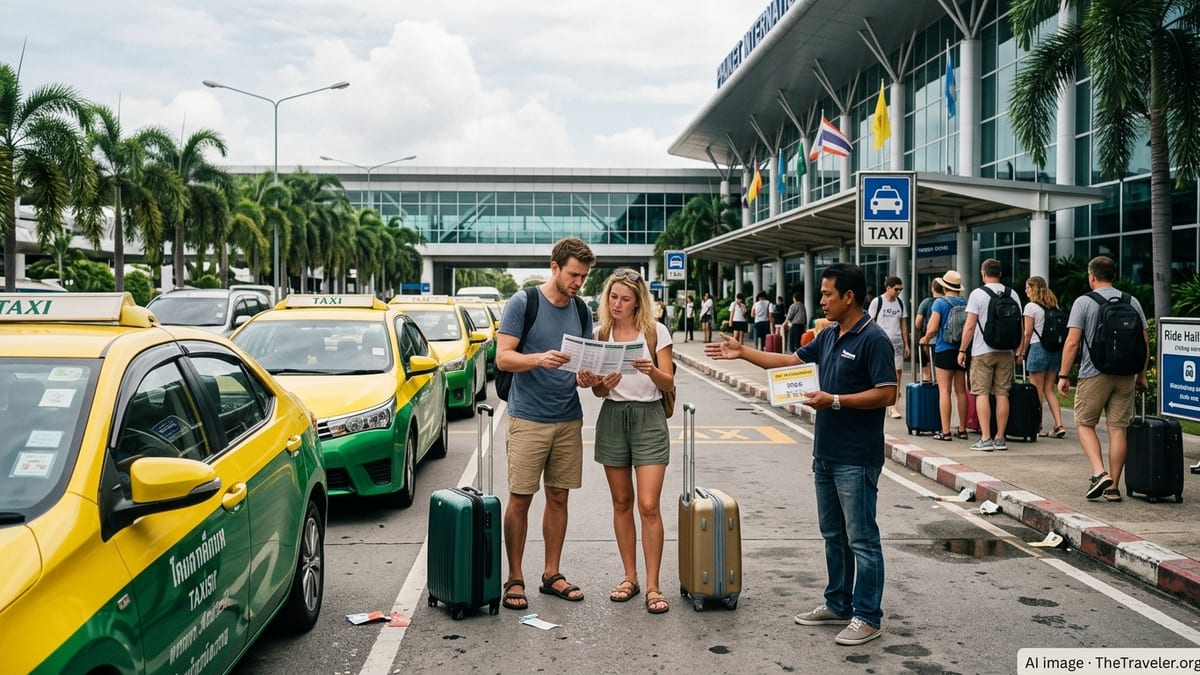
Longstanding Concerns Over Transport From the Terminal
Phuket International Airport has been a focal point of traveler frustration for years, particularly around the cost and conduct of ground transport. Reports indicate that visitors continue to face aggressive touting, confusing pricing and uneven enforcement of posted fares as soon as they leave the arrivals hall.
Commentary on travel forums and social platforms frequently points to what many visitors describe as a de facto taxi monopoly, with limited metered options and a reliance on flat fares that are often far higher than ride-hailing prices for similar distances into Patong, Karon or Kata. In several widely shared posts, travelers described being quoted one price at the counter and then confronted with extra charges for luggage, tolls or late-night service once they were already on the road.
Regional media coverage in recent years has also documented complaints from tourists who said they were charged several thousand baht for routine airport-to-hotel transfers, turning what should be a standard 50-kilometer journey into an unexpectedly costly start to a holiday. Although reported reforms and the gradual introduction of app-based ride services at the airport have helped in some cases, anecdotal evidence suggests that inconsistent implementation leaves gaps that opportunistic operators can still exploit.
New Reader Comment Echoes Wider Patterns
The latest reader comment referencing a “scam at Phuket Airport” fits into a recognizable pattern for frequent Thailand visitors. While details vary from story to story, many accounts share common elements: an official-looking counter inside the terminal, a promise of a fixed, hassle-free transfer, and surprise extra fees or unclear terms presented only after payment has been processed.
Some travelers writing about Phuket describe being steered toward particular minibus or taxi desks while attempting to compare prices, with staff emphasizing urgency and hinting that other options are unsafe or unavailable. In more serious complaints, visitors have claimed that card payments taken at airport transport counters were later followed by unauthorized transactions, raising fears of credit card skimming and prompting some experienced travelers to recommend cash-only payments or prebooked transfers.
These narratives are difficult for outsiders to verify in every instance, yet the consistency of themes across multiple independent reports suggests that certain practices at and around the airport remain problematic. For first-time visitors with long-haul flights behind them and luggage in tow, the combination of fatigue, unfamiliar currency and pressure to move quickly can make it unusually hard to spot irregularities or insist on written fare confirmations.
Newer Scam Variations Targeting Digital Travelers
Recent developments in Thailand’s entry procedures have opened fresh avenues for fraud attempts aimed at passengers heading to Phuket and other gateways. Publicly available information shows that scammers have created unofficial websites imitating Thailand’s digital arrival systems and visa information pages, attempting to charge fees for forms that are officially free or to harvest passport and payment data.
Travel community posts in late 2025 and early 2026 describe travelers arriving in Phuket and being asked whether they completed an online arrival form, only to discover later that the site they used was not connected to the official immigration system. In some cases, users reported paying service fees to third parties with no clear role in the actual border process, leading to confusion at passport control and concern about where their personal data had gone.
These online scams extend the risk window beyond the physical airport. Prospective visitors researching “Phuket airport arrival form” or similar terms may encounter paid search results and polished landing pages that closely mimic official branding. Once in the arrivals hall, confusing or incomplete signage about digital forms and QR codes can add to uncertainty, reinforcing the need for travelers to rely only on information from primary government channels and airlines when completing pre-arrival documentation.
Balancing Crackdowns With Persistent Complaints
Thai authorities have periodically announced measures intended to curb scams and overcharging, including in Phuket. According to published coverage in national and regional outlets, local tourism and business groups have pushed for clearer rules around airport taxi operations, greater acceptance of licensed ride-hailing services at terminals, and more transparent posting of standard fares on official boards.
Reports from business media in 2025 noted that Phuket tourism representatives credited app-based ride platforms with easing some of the worst taxi fare disputes by giving travelers more choice and price visibility. At the same time, commentary from tourism watchdogs across Thailand highlighted a broader rise in complaints ranging from inflated taxi and minibus charges to fake villa listings and misleading excursion sales, reinforcing that enforcement remains uneven from province to province.
Scam-related headlines have prompted worries about reputational damage for a destination that relies heavily on international arrivals. Industry analyses frequently emphasize that even a relatively small number of bad experiences, amplified across social media and review sites, can influence travel planning decisions far beyond the immediate victims. Reader comments such as the one now circulating about Phuket Airport therefore play a significant role in shaping perceptions of how safe and visitor-friendly Thailand’s major gateways feel in 2026.
Practical Steps Travelers Are Sharing With Each Other
In the absence of a single unified solution, many practical strategies are emerging from within the traveler community itself. Seasoned visitors to Phuket often recommend arranging airport transfers in advance through hotels with clear written pricing, or using recognized ride-hailing apps where pick-up zones have been clarified. Others suggest avoiding on-the-spot sign-ups for unfamiliar transport apps via QR codes inside the terminal, particularly when staff apply time pressure.
For payments at airport counters, a growing number of travelers say they now prefer to use contactless cards or mobile wallets with instant transaction alerts, or to withdraw cash from bank-operated ATMs inside the secure zone before approaching transport desks. Some also advise taking a moment before leaving arrivals to check current guideline fares for airport-to-resort transfers, which can be found in many independent travel guides and up-to-date forums.
Finally, readers who have encountered irregularities at Phuket Airport consistently stress the importance of documenting fares and receipts, noting taxi license plates and keeping screenshots of any online forms or booking confirmations. Shared responsibly, these details help other travelers recognize emerging scam patterns earlier, and they contribute to the wider conversation about how Thailand’s busiest tourist gateways can better protect visitors while preserving the island’s reputation as one of Asia’s most appealing holiday destinations.