

More news on this day
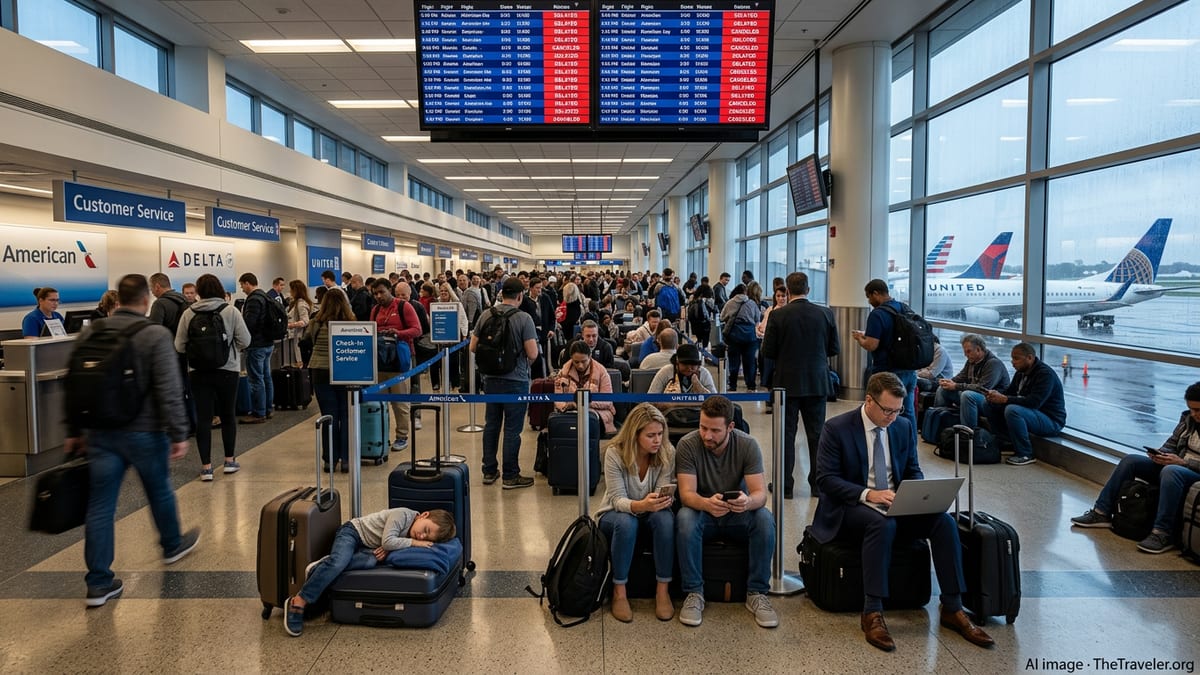
Hundreds of travelers were left stranded at Ronald Reagan Washington National Airport on Tuesday as 294 flights were delayed and 16 canceled, snarling operations for American Airlines, Delta Air Lines, United Airlines and other carriers on some of the busiest domestic routes to New York, Chicago, Miami and Dallas.
Get the latest news straight to your inbox!
Operational Meltdown at One of Washington’s Busiest Gateways
The wave of disruption began early in the day, as departure boards across Reagan National filled with delay notices and cancelations on short-haul routes that typically move thousands of passengers through the capital each weekday. By midafternoon, nearly 300 flights had been pushed back from their scheduled departure times, with some delayed for several hours, as ground operations and air traffic control programs struggled to keep up with the volume.
American Airlines, the largest carrier at Reagan National, was among the hardest hit, along with Delta, United and several regional affiliates that feed their national networks. Travelers heading to New York’s LaGuardia and John F. Kennedy airports, Chicago O’Hare, Miami International and Dallas Fort Worth reported multiple rolling delays and last minute gate changes as aircraft and crews fell out of position.
The knock-on effects rippled quickly beyond Washington. Passengers connecting through Reagan National to onward flights across the country found themselves stuck in terminals as their itineraries unraveled, with some facing overnight stays after their final legs were canceled or rescheduled for the following day.
For many, the disruption at Reagan National compounded an already strained national air travel system that has seen elevated delay rates during peak periods in recent months, according to federal transportation and industry data.
Passengers Face Long Lines, Sparse Information and Missed Connections
Inside the terminal, the scene was familiar to travelers who have been caught in large scale disruptions before: crowded concourses, lines snaking from customer service desks, and passengers camped out on the floor near power outlets while they refreshed airline apps for updates that often failed to keep pace with reality at the gates.
Many travelers described long waits to speak with airline representatives about rebooking and hotel vouchers. With only 16 flights officially canceled, airlines focused on squeezing passengers onto later departures. That strategy, while limiting outright cancelations, left many customers facing multi hour delays and missed connections at downline airports like Chicago and Dallas.
Families traveling for spring vacations, business travelers on tight schedules and government workers commuting to and from Washington all felt the impact. Some passengers reported being rebooked onto flights departing from alternate airports in the region, including Washington Dulles International and Baltimore Washington International, only to confront congestion and delays there as well.
Throughout the day, announcements urged passengers to remain near their gates even when delays stretched beyond two hours, as airlines tried to depart as soon as aircraft, crews and takeoff slots became available. That added to crowding in certain concourses and contributed to a tense atmosphere as patience wore thin.
Airlines Scramble to Recover Schedules Across Key Domestic Routes
The disruption at Reagan National had an outsized impact because of the airport’s role as a tightly scheduled hub for short haul flights along the East Coast and into the Midwest and Southeast. Frequent shuttle style services to New York and Boston, as well as heavy business traffic to Chicago, Miami and Dallas, leave little margin when delays begin to stack up.
Operational experts note that once a critical threshold of delayed departures is crossed at a slot restricted airport like Reagan National, it becomes difficult for airlines to recover without pushing significant numbers of flights into later time banks or canceling rotations outright. With 294 flights delayed, carriers were forced to reshuffle aircraft and crews, contributing to further disruptions on routes that had not initially been affected.
American Airlines and its regional partners bore particular pressure on departures to New York and Miami, where aircraft are heavily utilized throughout the day. Delta and United also faced challenges repositioning aircraft for evening departures to their main hubs, which in turn affected travelers bound for secondary markets across the United States.
By early evening, some airlines began trimming late night frequencies to restore schedule stability for the following morning, a move that helped cap the number of cancelations at Reagan National but extended the travel headaches for passengers whose flights were dropped from the schedule entirely.
Systemic Strain Highlights Vulnerability of U.S. Air Travel Network
The situation at Reagan National underscored how quickly local disruptions can radiate through a national network that is already operating near capacity on many days. Industry analysts point to a combination of high travel demand, congested airspace in the Northeast corridor, staffing constraints and weather sensitive operations as key factors that can turn a day of minor delays into a widespread operational challenge.
Recent federal reports have highlighted Reagan National as one of the country’s airports with a high share of delayed departures relative to passenger volume, reflecting both its tight runway capacity and the complexity of the surrounding airspace. Any slowdown in arrivals or departures can cascade, especially during peak morning and late afternoon banks when airlines schedule flights minutes apart.
Passenger advocacy groups say that the latest disruption is another reminder of the need for clearer, more consistent communication from airlines when things go wrong. They argue that timely updates about the cause and expected duration of delays, along with proactive rebooking options, can significantly reduce the stress for stranded travelers even when the underlying operational issues are difficult to resolve quickly.
With the busy spring and summer travel seasons approaching, the scenes at Reagan National serve as a warning that even a single day of heavy delays can strand hundreds of travelers and disrupt itineraries across the country, particularly on heavily traveled corridors linking Washington to financial and leisure hubs like New York, Chicago, Miami and Dallas.
What Stranded Travelers Are Being Advised to Do
Travel experts recommend that passengers affected by major disruptions at airports like Reagan National take several steps to improve their chances of getting moving again. First, they urge travelers to use both airline mobile apps and airport flight information screens, as one source may update more quickly than the other in fast moving situations.
They also advise travelers to contact airlines through all available channels, including phone, app messaging and social media, while staying in line at the airport customer service desk. Securing a confirmed seat on an alternate flight early, even if it departs from a different airport or later in the day, can make a significant difference when demand for limited seats is high.
For those facing overnight delays, passenger rights vary depending on the cause of the disruption and the airline’s policies, but many carriers will provide hotel and meal vouchers when delays are within the airline’s control. Travelers are encouraged to keep receipts and document their communications with airlines in case they need to seek reimbursement or file a complaint later.
As Reagan National worked through the backlog of delayed flights into the night, airport officials and airline managers emphasized that they were focused on safely moving as many passengers as possible while attempting to restore normal operations for the next day’s departures, a balancing act that has become increasingly challenging amid sustained high demand for air travel to and from the nation’s capital.