

More news on this day
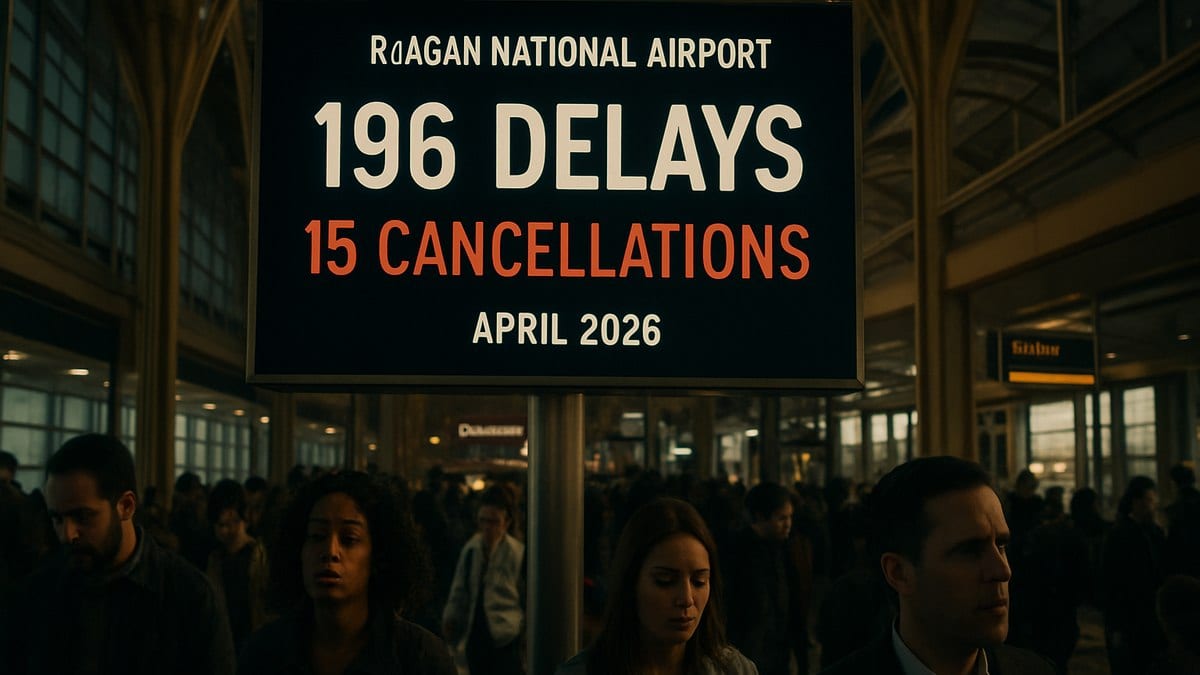
Spring travelers across the U.S. faced another turbulent day on April 5 as weather-related disruptions at Ronald Reagan Washington National Airport led to 96 delayed flights and 5 cancellations, tangling American Airlines, Delta Air Lines and JetBlue schedules on key routes linking Washington, D.C. with New York, Chicago, Boston and Atlanta.
Get the latest news straight to your inbox!
Weather Systems Snarl Traffic in the Capital Region
Publicly available flight-tracking data for Saturday, April 5 indicates that operations at Ronald Reagan Washington National Airport were significantly constrained by adverse weather moving through the Mid-Atlantic and Northeast. Low clouds, periods of rain and shifting winds contributed to a series of air traffic management initiatives that throttled arrivals and departures during peak travel windows.
The 96 reported delays and 5 cancellations concentrated around heavily used corridor routes, particularly shuttle-style services between Washington, D.C. and New York, as well as connections to major hubs in Chicago, Boston and Atlanta. American Airlines, Delta Air Lines and JetBlue, which collectively operate a dense schedule along the East Coast, were among the most affected carriers as they contended with slower turn times and ground holds.
Published coverage of recent storm systems this season shows that the Mid-Atlantic and Northeast have endured a string of disruptive fronts, from nor’easter-like events to fast-moving squall lines. Even when airport conditions appear marginally flyable, wider constraints in the airspace can trigger cascading delays as aircraft are sequenced more conservatively for safety and spacing.
Travel industry analysts note that Reagan National’s constrained runway layout and tight airspace, closely intertwined with restricted federal zones around central Washington, often magnify the impact of even modest weather disturbances. When arrival or departure rates are cut, delays can quickly build and spread into the broader network.
Ripple Effects for American, Delta and JetBlue Networks
The disruption at Reagan National did not remain local. Schedules for American, Delta and JetBlue show that many of the impacted flights served as feeders to and from major hubs in New York, Chicago, Boston and Atlanta, helping to explain why a relatively small number of cancellations translated into widespread inconvenience for connecting passengers.
American Airlines, which maintains a large presence at Reagan National through a mix of mainline and regional flights, saw delays on shuttle-style services to New York as well as on connections into Chicago. These corridors are key for business travelers and weekend leisure passengers, so even short schedule slips can result in missed connections and longer total journey times.
Delta Air Lines and JetBlue, both of which operate high-frequency services in the Northeast corridor, faced similar knock-on effects. Flights between Washington and New York area airports, as well as links to Boston and Atlanta, experienced rolling delays as aircraft arrived late from weather-affected cities or were held at gates awaiting updated departure slots.
Because airlines typically rely on tight aircraft rotations to keep busy short-haul routes efficient, one weather-disrupted leg can delay the same aircraft through multiple turns. Data from recent travel days across the network indicates that this pattern has been common in late March and early April, particularly on routes threading through storm-prone regions of the East and Midwest.
DC, New York, Chicago, Boston and Atlanta Bear the Brunt
Saturday’s problems at Reagan National added strain to an already busy spring weekend across several of the country’s most important aviation markets. New York, Chicago, Boston and Atlanta each reported weather-impacted operations in recent days, creating a challenging backdrop for carriers attempting to keep tightly timed schedules on track.
In the New York area, a mix of unsettled conditions and high winds periodically slowed arrivals and departures, according to widely available aviation updates. As a result, flights shuttling between Washington and New York frequently encountered revised wheels-up times or airborne holding patterns while congestion was managed along the corridor.
Chicago and Boston, both prone to volatile spring conditions, also contributed to the disruption picture. Rain and low ceilings can force increased spacing between aircraft, reducing the throughput of major hubs. When those hubs are central connection points for passengers traveling onward to or from Washington, relatively small local delays can cascade into longer disruptions several legs away.
Atlanta, which functions as one of the country’s busiest connecting hubs, saw its own share of weather-linked slowdowns in recent weeks based on operational summaries. Given Atlanta’s role in Delta’s network and its extensive ties to East Coast and Midwestern cities, constraints there can quickly reverberate through flights linked to Reagan National, compounding the impact of local delays in the capital region.
Travelers Confront Longer Lines and Tight Connections
The combination of delayed departures and rolling schedule changes translated into longer lines at check-in counters and security checkpoints throughout the day at Reagan National. Public reports from passengers describe crowded gate areas, frequent departure time adjustments and a rush to rebook itineraries when tight connections became untenable.
Travel guidance from airlines and consumer advocates generally recommends that passengers build additional buffer time into itineraries during volatile weather periods, particularly when connecting through busy hubs such as New York, Chicago, Boston and Atlanta. On days when delay counts climb, what appears on paper as a comfortable connection can quickly become unrealistic once ground holds or airborne holding patterns are applied.
Rebooking options can be particularly constrained when disruptions occur at multiple airports simultaneously. When Reagan National, New York area airports and a hub such as Atlanta are all operating at reduced capacities, open seats on later flights or alternative routings may be limited, leaving some travelers with extended waits before they can continue their journeys.
Recent experiences across the system also show that travelers on regional jets are often among the first to feel the effects of traffic management programs, as airlines prioritize long-haul operations when forced to trim schedules. With Reagan National heavily served by smaller regional aircraft, this dynamic can intensify the impact on short-haul passengers during weather events.
Ongoing Concerns Over Reliability at Reagan National
The latest disruption adds to growing scrutiny of reliability at Reagan National, where advocates, lawmakers and passenger groups have been tracking elevated delay levels in recent years. Publicly available federal data and independent analyses have highlighted how congestion, airspace complexity and recurring weather issues combine to make the airport particularly sensitive to operational shocks.
Recent discussions in Washington about adjusting long-standing perimeter rules and adding more flights to Reagan National have brought these reliability concerns into sharper focus. Policy briefs and hearing transcripts indicate that some stakeholders worry additional capacity could exacerbate delay patterns on days like April 5, when weather already forces the system to operate at reduced throughput.
Industry observers point out that solutions are likely to involve a combination of infrastructure, technology and scheduling adjustments across the broader capital-region airport system, including Washington Dulles and Baltimore/Washington. Enhanced coordination among air traffic managers and carriers, along with refined slot management, are frequently cited as strategies to help smooth peaks and improve resilience during adverse conditions.
For now, the experience of travelers moving through Reagan National on April 5 serves as another reminder of the fragility of tight schedules in crowded airspace. As the busy spring and summer travel seasons ramp up, the interplay between weather, demand and capacity at key hubs such as Washington, New York, Chicago, Boston and Atlanta will remain a central concern for airlines and passengers alike.