

More news on this day
Passengers at Ronald Reagan Washington National Airport faced mounting frustration on Friday as publicly available flight tracking data showed 182 delayed departures and arrivals and four cancellations, affecting services on JetBlue, American Airlines, Southwest and other major carriers to New York, Chicago, Los Angeles, Miami and several other US cities.
Get the latest news straight to your inbox!
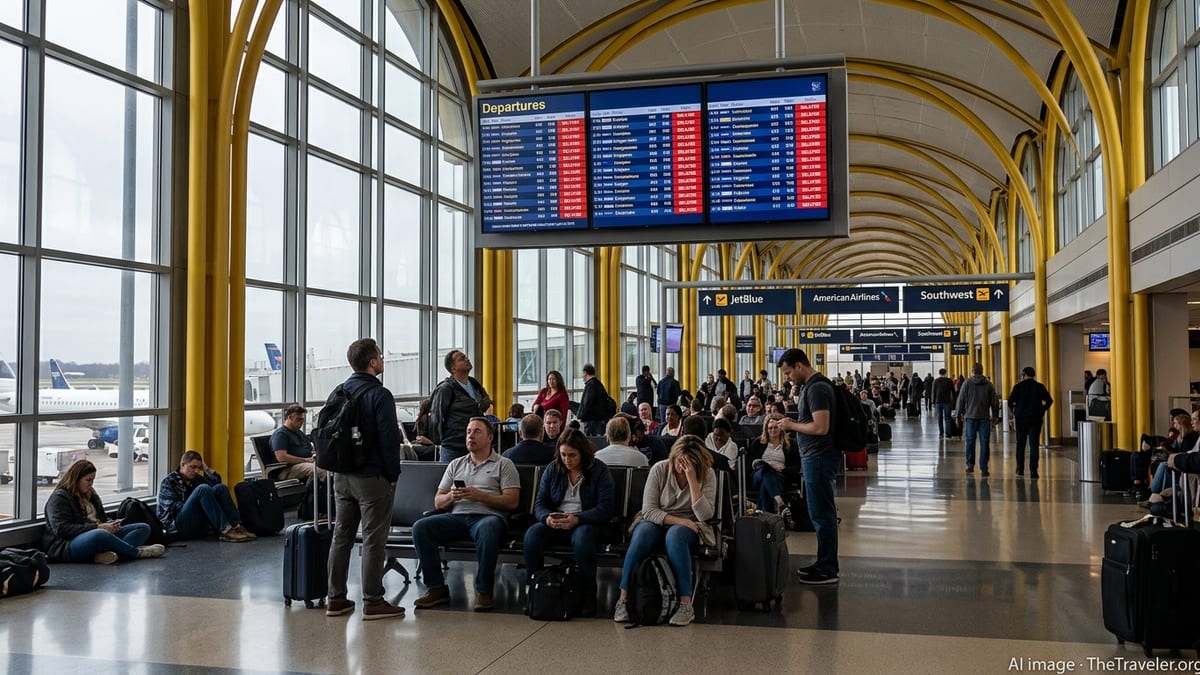
Busy Washington Hub Feels Another Day of Strain
The disruption at Reagan National comes at one of the country’s most capacity-constrained airports, where published federal data and recent congressional testimony have highlighted chronic congestion and some of the highest delay rates in the United States. The latest wave of delays has left travelers clustered around departure boards, watching departure times slip in 15 and 30 minute increments.
Reagan National serves as a key business and political gateway, concentrating frequent shuttles to New York and major connections to Chicago, Los Angeles and Florida. When operations slow, the effects reach far beyond the capital, complicating connections for travelers across the country and tightening aircraft and crew rotations for multiple airlines.
Industry statistics show that delays at busy East Coast airports often cluster in the late afternoon and evening as early schedule disruptions cascade throughout the day. The pattern appeared to be repeating on Friday, with accumulated setbacks pushing some departures deep into the evening and raising the risk of missed connections at onward hubs.
Major Airlines See Schedules Slip to Key US Cities
Publicly available tracking boards at Reagan National showed JetBlue, American Airlines and Southwest among the carriers with multiple delayed flights, including services to New York’s LaGuardia and JFK, Chicago O’Hare, Los Angeles International and Miami International. Other domestic carriers also reported late departures on routes to major business and leisure destinations.
Many of the affected flights were short and medium haul services that typically operate with quick turnarounds. When an inbound aircraft arrives late, the delay typically passes to the next departure, contributing to a rolling backlog that can be difficult to clear without spare aircraft and crews.
According to recent federal air travel consumer data, US airlines continue to grapple with a mix of air traffic constraints, weather and operational challenges that push on time performance below historical peaks. The situation at Reagan National illustrates how even a limited number of schedule pressures can quickly disrupt dozens of departures and arrivals at a tightly scheduled airport.
Weather, Airspace Congestion and Tight Schedules Intersect
While individual causes vary by flight, transportation analysis frequently points to three overlapping factors behind days like this at Reagan National and other East Coast hubs. The first is weather, which can affect not only Washington but the entire route network, from thunderstorms around New York to low clouds in Chicago or coastal systems near Miami.
The second factor is airspace congestion. Washington’s proximity to restricted federal airspace, combined with heavy traffic along the Northeast Corridor, limits routing options when skies are busy or when traffic management initiatives slow arrivals and departures. Reports on the US aviation system have repeatedly cited the capital region as one of the most constrained segments of the national network.
The third element is the tight scheduling common among major carriers. Airlines aim to keep aircraft and crews in near constant motion to maximize utilization. On days when an early mechanical check, crew timing issue or upstream delay pushes a flight behind schedule, those minutes can echo through several subsequent legs, ultimately surfacing as end of day delays for travelers departing Washington.
Travelers Face Missed Connections and Overnight Changes
For passengers, the immediate effects at Reagan National ranged from extended gate holds to missed connections at onward hubs. Travelers bound for West Coast cities such as Los Angeles faced particular challenges, as substantial delays on late afternoon departures risked turning same day arrivals into late night or early morning landings, or forcing rebookings onto the next day’s flights.
Short haul travelers to New York and other East Coast cities also felt the impact. Even modest delays on shuttle-style services can cause passengers to miss evening meetings, performances or family events. Once aircraft reach curfew sensitive airports or face crew duty time limits, airlines sometimes must consolidate or cancel late night departures, amplifying the disruption for those still waiting to leave Washington.
In recent months, consumer advocates have advised travelers using busy hubs like Reagan National to build in longer connection times, monitor their flights through both airline apps and independent trackers, and prepare contingency plans for overnight stays if a significant disruption appears likely late in the day.
What Travelers Can Do on High Disruption Days
On days when the board at Reagan National fills with yellow and red delay notices, travel specialists often recommend a series of practical steps. Checking in online early and clearing security ahead of peak afternoon hours can provide a time buffer if gate or terminal changes occur. Staying near the departure gate, rather than farther away in food courts or lounges, helps ensure passengers do not miss quick boarding calls when an aircraft becomes ready.
Rebooking options may also narrow as the evening progresses, particularly on popular routes to New York, Chicago, Los Angeles and Miami. When significant delays appear likely, some travelers choose to request earlier alternative flights, reroutes through less congested hubs, or even departures from nearby airports such as Baltimore or Washington Dulles, depending on fare rules and seat availability.
Public information from airlines and federal agencies indicates that the broader US system remains vulnerable to days of cascading delays, especially during peak travel periods. For passengers at Reagan National on Friday, the tally of 182 delays and four cancellations was the latest reminder that flexibility, extra time and up to date information remain essential tools when traveling through one of the country’s most tightly constrained airports.