

More news on this day
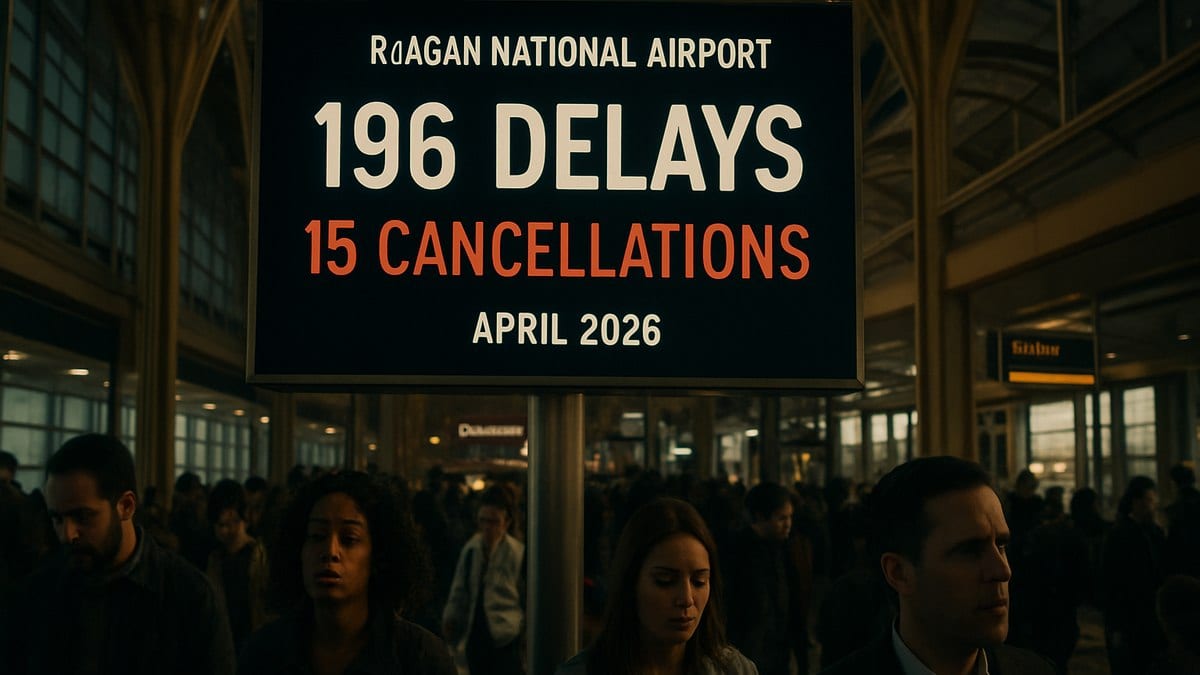
Spring weather turbulence around Washington, D.C. led to 96 delays and five cancellations at Ronald Reagan Washington National Airport on Sunday, disrupting tightly packed schedules for American Airlines, Delta Air Lines and JetBlue and sending knock-on delays through major hubs including New York, Chicago, Boston and Atlanta.
Get the latest news straight to your inbox!
Weather Systems Collide With Peak Spring Travel
Publicly available tracking data and travel industry coverage indicate that a band of unsettled weather over the Mid Atlantic converged with an already busy post‑holiday travel pattern at Reagan National. Low clouds, periods of precipitation and shifting winds reduced the airport’s usable capacity, prompting airlines to trim departure rates and hold arriving traffic as conditions fluctuated.
Reagan National’s location on the Potomac River and its tightly constrained runway approaches leave little margin when visibility or wind patterns deteriorate. Meteorological reports over the Easter period show fast‑moving systems brushing the Washington region while stronger storms and residual winter weather affected the Northeast and Upper Midwest, creating a challenging operating environment across multiple hubs on the same day.
Analysts note that spring is increasingly rivaling summer as one of the most disruption‑prone periods for U.S. air travel. Active storm tracks, lingering cold air masses and strong jet stream dynamics frequently combine to produce the type of widespread, fast‑changing weather that is particularly difficult for airlines to manage at slot‑controlled airports such as Reagan National.
Network Carriers Feel the Strain at Reagan National
Reagan National functions as a key gateway in the networks of several major carriers, with American Airlines maintaining a dominant presence and Delta and JetBlue operating competitive schedules to core business destinations. The latest disruption left American facing the largest share of affected passengers at the airport, as its concentrated bank of departures quickly backed up when weather‑related spacing programs reduced throughput.
Delta and JetBlue also saw multiple departures from Reagan National pushed back or rescheduled as aircraft arrived late from other weather‑hit cities. Limited spare gate capacity and the strict slot regime at the airport meant airlines had few opportunities to shift flights into later time windows without disrupting other services, resulting in rolling delays displayed across departure boards through the afternoon and evening.
Operational data from previous days already showed elevated delay levels nationwide as carriers worked through storm‑related backlogs. Against that backdrop, the additional constraints at Reagan National effectively acted as a pressure point in American, Delta and JetBlue’s East Coast schedules, leaving some passengers facing extended waits and missed connections despite a relatively modest number of outright cancellations.
Ripple Effects From New York, Chicago, Boston and Atlanta
The impact of the 96 delays and five cancellations extended well beyond Washington, according to airline schedule data and flight‑tracking services. Many of the affected Reagan National flights were tied to high‑volume routes linking Washington with New York, Chicago, Boston and Atlanta, meaning a late arrival on one leg could cascade into disruptions at the next destination.
Operations at New York’s LaGuardia and John F. Kennedy airports have been under particular strain through early April as weather fronts and heavy traffic triggered ground delay programs and metered arrivals. When aircraft bound for Reagan National departed New York behind schedule, the knock‑on effect was immediate for downline passengers in Washington and on subsequent rotations to other cities.
Chicago and Boston also featured prominently in the disrupted network, with unsettled conditions over the Great Lakes and New England limiting departure windows and forcing airlines to adjust sequences. In Atlanta, a mix of convective activity and strong winds periodically slowed one of the nation’s busiest hubs, adding further complexity for Delta and its partners as they attempted to reposition aircraft and crews to keep Washington services viable.
Industry observers point out that these interlocking routes mean even localized weather issues rarely remain local for long. Once key spokes such as Reagan National are affected, the reverberations can travel quickly across multiple time zones as aircraft and crew rotations fall out of their intended rhythm.
Structural Constraints Amplify Disruption at DCA
Beyond the day’s weather, structural factors at Reagan National magnified the scale of inconvenience for travelers. The airport operates under federally mandated slot and perimeter rules that strictly limit the number and timing of takeoffs and landings, leaving airlines with far less flexibility to add recovery flights or shift heavily delayed services into off‑peak windows.
Capacity has also been under scrutiny since a fatal mid‑air collision near the airport’s approach corridor in early 2025, which led to a series of new safety measures and tighter traffic management protocols implemented in 2026. Federal aviation updates describe additional restrictions on helicopter operations and more conservative spacing in certain arrival and departure configurations, which can further slow operations when weather is marginal.
Terminal renovation work and constrained ramp space add another layer of complexity, particularly for American’s regional affiliates that rely on quick turns at crowded gates. When multiple inbound flights arrive late in close succession, it can take time for ground crews to reposition aircraft, offload baggage and prepare cabins, extending delays even after weather conditions begin to improve.
Transportation analysts emphasize that these sorts of constraints are not unique to Washington but are especially acute there, given the airport’s river‑hugging footprint, political significance and intense demand for limited slots from both business and leisure travelers.
Travelers Navigate a Season of Volatile Operations
The Reagan National disruption unfolded against a broader backdrop of elevated delays and cancellations across the United States this spring. Data compiled by aviation trackers over recent days shows hundreds of daily cancellations and thousands of delayed flights nationwide, as multiple storm systems affected Texas, the Southeast, the Midwest and the Northeast in rapid succession.
For passengers, the practical effects have been familiar: crowded gate areas, long lines at customer service counters and tight or missed connections at major hubs. Social media posts and traveler accounts from Easter weekend describe departure boards at several airports filled with rolling delay estimates and multiple gate changes, with some passengers resorting to overnight stays or alternative routings to reach their destinations.
Consumer advocates note that while airlines are not required to compensate customers for weather‑related disruptions, carriers have increasingly used fee waivers and flexible rebooking options to manage passenger flows and reduce congestion during major events. Travel publications recommend that passengers monitor forecasts along their entire route, use airline apps and independent trackers for real‑time updates, and favor early‑day departures when possible to reduce exposure to the compounding effects of network‑wide delays.
With the peak summer travel season approaching and airline schedules already near capacity at key hubs, aviation analysts suggest that episodes like the latest turmoil at Reagan National are likely to recur whenever strong weather systems align with busy travel days. For travelers moving through Washington and its connected hubs in New York, Chicago, Boston and Atlanta, building extra time into itineraries may be one of the few practical defenses against the next round of weather‑driven chaos.