

Portugal remains one of Western Europe’s more affordable destinations for internationally mobile professionals, but the real cost of living in 2026 is highly sensitive to city, lifestyle and housing choices. For a single professional considering relocation, understanding current expenditure levels in euros and how they compare with peer locations is critical for realistic salary negotiations and long-term planning.
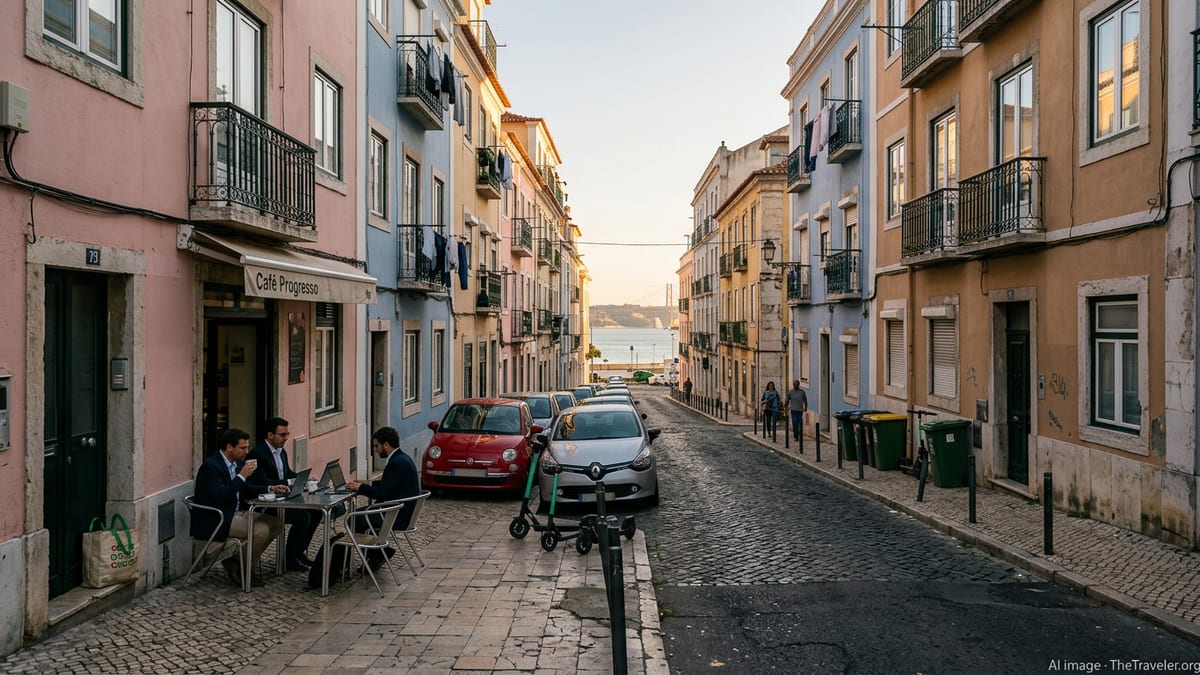
Framework for Assessing Cost of Living in Portugal in 2026
The real cost of living for a single professional in Portugal in 2026 is driven primarily by rent, followed by food, transport and discretionary spending. Portugal is no longer a deep-discount destination compared with its pre-2020 profile. Prime areas of Lisbon, Cascais and Porto have moved closer to mid-tier Western European pricing, while secondary cities such as Braga, Coimbra and Faro generally remain lower cost.
For relocation assessment, it is useful to define three lifestyle bands for a single professional: budget-conscious, mid-range and comfort-focused. In 2026, a typical monthly cost of living excluding income tax can be approximated as follows, assuming private rental of a one-bedroom apartment and a professional lifestyle without dependents:
Budget-conscious: roughly 1,200–1,600 EUR per month outside the very center of major cities, relying more on home cooking, limited eating out and economical leisure choices. Mid-range: typically 1,700–2,300 EUR per month in Lisbon or Porto for a one-bedroom in a reasonable but not prime area, mixed home cooking and dining out, and moderate leisure. Comfort-focused: often 2,400–3,200 EUR or more in Lisbon, Cascais or central Porto, including a higher-spec apartment, regular eating out, and more frequent discretionary spending.
These ranges represent total living costs for an individual, not including income tax, pension or savings. They are indicative rather than prescriptive and will fluctuate with exchange rates, inflation and personal consumption habits.
Housing and Utilities as the Primary Cost Driver
Rent is the single largest component of cost of living for most single professionals in Portugal in 2026. Market reports and listing platforms show that asking rents have elevated significantly since the late 2010s, particularly in central Lisbon, popular coastal municipalities around Lisbon, and central Porto. New supply in some areas has not fully offset demand from both local and international tenants, sustaining relatively high price levels.
As a broad 2026 snapshot, a single professional can expect the following typical monthly rent ranges for a modern one-bedroom apartment with decent condition and internet-ready connections, excluding utilities: Lisbon city center and key business or nightlife districts approximately 1,200–1,800 EUR. Lisbon non-central but well-connected neighborhoods approximately 900–1,300 EUR. Porto central districts approximately 900–1,300 EUR. Porto outer but well-connected neighborhoods approximately 750–1,050 EUR. Secondary cities such as Braga, Coimbra, Aveiro or Faro approximately 600–900 EUR depending on neighborhood and property quality.
Utilities for a single professional in a one-bedroom apartment usually add around 90–160 EUR per month, depending on heating or cooling needs, building insulation, and personal consumption. This bundle typically includes electricity, water, basic heating or air conditioning usage and garbage charges. High-speed fixed internet and mobile service combined are commonly around 35–60 EUR per month for a standard package, with mobile-only plans lower but often combined in bundled offers. These figures mean that housing and essential utilities can account for 45 to 60 percent or more of a realistic monthly budget in Lisbon and Porto, and around 35 to 50 percent in less expensive cities.
Food, Groceries and Eating Out in 2026
Portugal still offers comparatively good value for food relative to many Western European peers, especially when relying on supermarkets and cooking at home. However, the price gap compared with large European capitals has narrowed, particularly in the restaurant segment of major cities popular with international residents.
A single professional who mostly cooks at home can expect monthly grocery spending in the range of 180–280 EUR in 2026 for a balanced diet, including fresh produce, dairy, packaged items and household basics. This assumes use of mainstream supermarket chains and local markets, with limited reliance on premium organic outlets and imported specialty items. A more convenience-oriented pattern using prepared meals, delivery services and higher-end supermarkets can easily push groceries and basic food items closer to 300–400 EUR per month.
Eating out displays stronger price differentiation. In central Lisbon and Porto, a simple lunch menu or prato do dia at a local restaurant typically costs around 8–13 EUR, including a drink. Mid-range dinner for one with a main dish and drink is often in the 18–35 EUR range depending on location, restaurant type and beverage choices. International or upscale venues and rooftop locations can be significantly more expensive. A realistic monthly eating-out budget for a working professional who has two to four restaurant meals per week and occasional café visits generally falls between 150 and 350 EUR, while more frequent dining out or reliance on app-based delivery services can quickly exceed 400 EUR per month in major cities.
Coffee culture is relatively affordable, with an espresso at a counter in a local café typically around 0.80–1.50 EUR in many non-touristic areas, but higher in central or high-footfall locations. For a professional who works in central districts and purchases coffee and snacks daily, a modest but recurring monthly expense of 40–80 EUR should be anticipated.
Transportation and In-Country Mobility Costs
Public transport pricing remains one of the relatively stronger value points in Portugal’s cost-of-living profile for 2026, especially in Lisbon and Porto where integrated passes simplify commuting budgets. Recent years have seen the expansion of metropolitan passes that allow use of metro, suburban trains, trams and buses within defined zones at a capped monthly price.
In Lisbon, a standard monthly public transport pass that covers the metropolitan region commonly sits around 40–50 EUR depending on the exact zones and products available. Porto’s comparable metropolitan pass is usually of similar magnitude. Single tickets or pay-as-you-go journeys typically cost 1.50–2.20 EUR per ride depending on operator and distance, meaning that regular commuters gain clear value from a monthly pass. A single professional living close to work and occasionally using public transport may find that a pay-per-trip strategy is sufficient, but most full-time office-based or hybrid workers will consider a monthly pass cost-effective.
Car ownership materially increases living costs, though some professionals dependent on suburban or intercity travel may consider it necessary. Beyond financing or depreciation, major recurring costs include fuel at broadly comparable prices to other Western European markets, mandatory insurance, periodic vehicle inspections, parking and tolls. A cautious monthly running-cost estimate for an average compact car, excluding financing, sits in the region of 180–300 EUR, heavily influenced by parking arrangements and travel distances. In many central urban locations, high parking pressure and restricted zones make reliance on public transport, ride-hailing services and occasional rentals more financially rational.
Intra-Portugal travel for work or leisure, using intercity trains or long-distance buses, is moderately priced compared with air travel. Professionals who regularly travel between Lisbon and Porto or to regional hubs should budget a variable monthly amount depending on employer reimbursement policies. For most single professionals who travel regionally only a few times per year, this category will usually remain a small share of overall annual cost of living compared with housing and daily commuting.
Everyday Services, Subscriptions and Personal Expenses
Beyond core categories of rent, utilities, food and transport, single professionals in Portugal in 2026 face a broad set of everyday expenses that collectively shape the real cost of living. These include mobile and internet plans, gym memberships, personal care, clothing, domestic services, subscriptions and occasional professional services.
Mobile phone plans with data are generally competitive within the European Union context. Typical monthly expenses for a single professional range from 10–25 EUR for a basic or mid-tier plan, and 25–40 EUR for higher data allowances or premium bundles. Bundled packages that combine fixed home internet, television and mobile can offer aggregate savings but tie the user into contractual commitments. Streaming services, cloud storage, productivity tools and other digital subscriptions can add 15–60 EUR or more per month depending on configuration, and should be explicitly factored into relocation budgeting.
Fitness and wellbeing costs vary considerably between secondary cities and high-demand districts in Lisbon or Porto. A standard gym membership is commonly in the range of 25–60 EUR per month, with low-cost chains at the bottom of that range and full-service clubs with group classes and spa facilities at the top. Specialist studios, yoga or pilates classes, and boutique fitness concepts are often priced per class or via higher-cost memberships, leading some professionals to allocate 70–120 EUR or more per month if these services are a frequent part of their lifestyle.
Personal care services such as haircuts can range from 10–15 EUR in basic barbers or salons to 25–50 EUR in upscale establishments in larger cities. Occasional domestic cleaning support, if used, might add 30–60 EUR per session depending on frequency and duration. Clothing costs roughly align with broader EU mid-market pricing, though imported brands and niche labels will typically carry a premium. Overall, a realistic allowance of 150–300 EUR per month for services, subscriptions and personal care is advisable for a mid-range lifestyle, on top of core living expenses.
Leisure, Social Life and Hidden or Underestimated Expenses
Leisure and social life spending in Portugal in 2026 shows wide variance based on personal preferences, but for a single professional it is often a major factor in perceived affordability. While day-to-day entertainment can be relatively inexpensive compared with some northern European capitals, frequent participation in nightlife, events and weekend getaways can raise monthly outgoings significantly.
A cinema ticket commonly costs in the mid single-digit to low double-digit euro range, so a monthly cinema habit will not drastically alter a budget. However, concerts, festivals and international events can be substantially more expensive. Entry to bars and clubs may be low or free, but drink prices in central nightlife areas of Lisbon, Porto or Algarve resorts can be similar to other Western European urban centers, especially for cocktails and imported beverages. A moderate social calendar, with a few nights out per month, might comfortably sit within 100–250 EUR, while a more active nightlife pattern could double or triple that figure.
Professionals also frequently underestimate irregular but impactful costs such as home setup after arrival, including basic furniture, small appliances, cookware and linens if the apartment is partially or unfurnished. Even when sourcing from budget retailers and second-hand platforms, a practical initial setup can run from several hundred to over one thousand euros. Likewise, occasional medical consultations, dental visits, and out-of-pocket pharmacy purchases can accumulate over time, particularly for those choosing to use private providers without comprehensive insurance coverage.
Other underappreciated categories include gifts, travel to the home country, language courses and professional development. Each of these does not necessarily represent a high monthly recurring cost but can affect overall affordability when aggregated annually. For accurate relocation planning, these intermittent expenses should be spread across the year and factored into an average monthly budget, potentially adding 100–250 EUR to what might otherwise appear as a purely day-to-day cost base.
Indicative Monthly Budget Scenarios for 2026
The following high-level examples summarize how individual cost-of-living components combine into realistic monthly totals for a single professional in 2026. Figures are indicative bands and assume average consumption patterns.
In a budget-conscious Lisbon scenario, a professional rents a small one-bedroom in a non-central but metro-accessible neighborhood for around 950 EUR, with 120 EUR for utilities and internet. Groceries total 220 EUR, eating out and cafés 120 EUR, a public transport pass 45 EUR, and personal services, subscriptions and leisure 200 EUR. This produces a total monthly living cost in the region of 1,650 EUR. Significant savings would require either room-sharing, relocating to a lower-cost city, or materially reducing discretionary spending.
In a mid-range Porto scenario, a one-bedroom in a reasonably central area at 1,000 EUR plus 120 EUR utilities and internet, 230 EUR groceries, 200 EUR eating out, 40 EUR transport, and 250 EUR other expenses leads to a typical monthly spend of roughly 1,840 EUR. A comfort-focused Lisbon or Cascais scenario, with a higher-spec apartment closer to 1,500–1,800 EUR, more frequent dining out at 350–500 EUR, enhanced leisure up to 400 EUR, and vehicle-running costs or ride-hailing usage, can reach 2,700–3,200 EUR per month or more depending on lifestyle intensity.
These scenarios underline that the real cost of living for a single professional in Portugal in 2026 is not inherently low or high but instead highly elastic. Professionals earning local market salaries in lower-wage sectors may experience financial pressure in Lisbon and Porto unless costs are actively managed. Conversely, remote workers or assignees with higher international-level compensation can find that even comfort-oriented living remains competitive compared with other Western European capitals.
The Takeaway
For a single professional evaluating relocation to Portugal in 2026, the real cost of living is shaped by three decisive choices: city selection, housing standard and lifestyle intensity. Lisbon and Porto, while still modestly cheaper than some northern European capitals, have lost much of their former low-cost image, particularly in the rental market. Secondary cities retain a clearer affordability advantage for those whose work or remote arrangements permit location flexibility.
A realistic planning range for total monthly living costs, excluding income tax and long-term savings, is approximately 1,400–1,800 EUR for a frugal but comfortable lifestyle in a non-prime area of a major city, 1,800–2,300 EUR for a mainstream professional lifestyle in Lisbon or Porto, and 2,400–3,200 EUR or more for a comfort-focused profile in prime locations. Structured budgeting that explicitly accounts for setup costs, irregular expenses and discretionary spending is essential to avoid underestimating financial requirements.
Decision-makers and HR teams designing relocation packages or remote work policies should therefore benchmark offered net compensation not against Portugal’s historical reputation as a low-cost market, but against current 2026 expenditure patterns in the relevant city and lifestyle band. When this is done, Portugal can still represent a cost-effective and attractive base for single professionals, but primarily for those with either strong salary alignment or flexibility to optimize their location and housing choices.
FAQ
Q1. What is a realistic minimum monthly budget for a single professional in Portugal in 2026?
A realistic minimum for a single professional renting a modest one-bedroom in a non-central area of a major city is typically around 1,200–1,400 EUR per month, assuming careful spending on food and leisure.
Q2. How much does a one-bedroom apartment cost to rent in Lisbon for a professional?
In 2026, a modern one-bedroom apartment suitable for a professional usually ranges from about 1,200 to 1,800 EUR per month in central Lisbon, with non-central but well-connected neighborhoods around 900–1,300 EUR.
Q3. Is Porto significantly cheaper than Lisbon for overall cost of living?
Porto is generally somewhat cheaper, especially in rent, but the difference is moderate rather than dramatic. Total monthly costs for a similar lifestyle may be lower by roughly 10–20 percent depending on neighborhood and consumption habits.
Q4. How much should I budget for groceries as a single person in Portugal?
A single professional who mainly cooks at home typically spends around 180–280 EUR per month on groceries in 2026, with higher figures if using premium stores or buying more imported products.
Q5. What does public transport cost for a regular commuter in Lisbon or Porto?
A monthly public transport pass that covers metro, buses and suburban trains in Lisbon or Porto usually costs around 40–50 EUR, offering good value for regular commuters.
Q6. How big an impact does eating out have on the cost of living in Portugal?
Eating out is a major swing factor. A moderate pattern of a few restaurant meals per week may cost 150–350 EUR per month, while regular dining out and delivery can add 400 EUR or more to monthly expenses.
Q7. Are utilities expensive for a one-bedroom apartment in Portugal?
Utilities for a one-bedroom apartment, including electricity, water and basic heating or cooling, typically run around 90–160 EUR per month in 2026, depending on usage, season and building efficiency.
Q8. How much should I allocate for leisure and social life as a professional?
A moderate social and leisure budget, including cafés, bars, cinema and occasional events, often falls in the 100–250 EUR per month range, but active nightlife or frequent events can easily double this.
Q9. What hidden or underestimated costs should I plan for when moving to Portugal?
Commonly underestimated costs include initial home setup and furniture, occasional medical or dental visits, travel to the home country, gifts, language courses and professional development expenses.
Q10. Can a remote worker on an international salary live comfortably in Portugal?
Remote workers earning mid to high international salaries can generally live comfortably, even in Lisbon and Porto, with typical monthly costs of 2,000–3,000 EUR allowing for a higher standard of housing and lifestyle.