

More news on this day
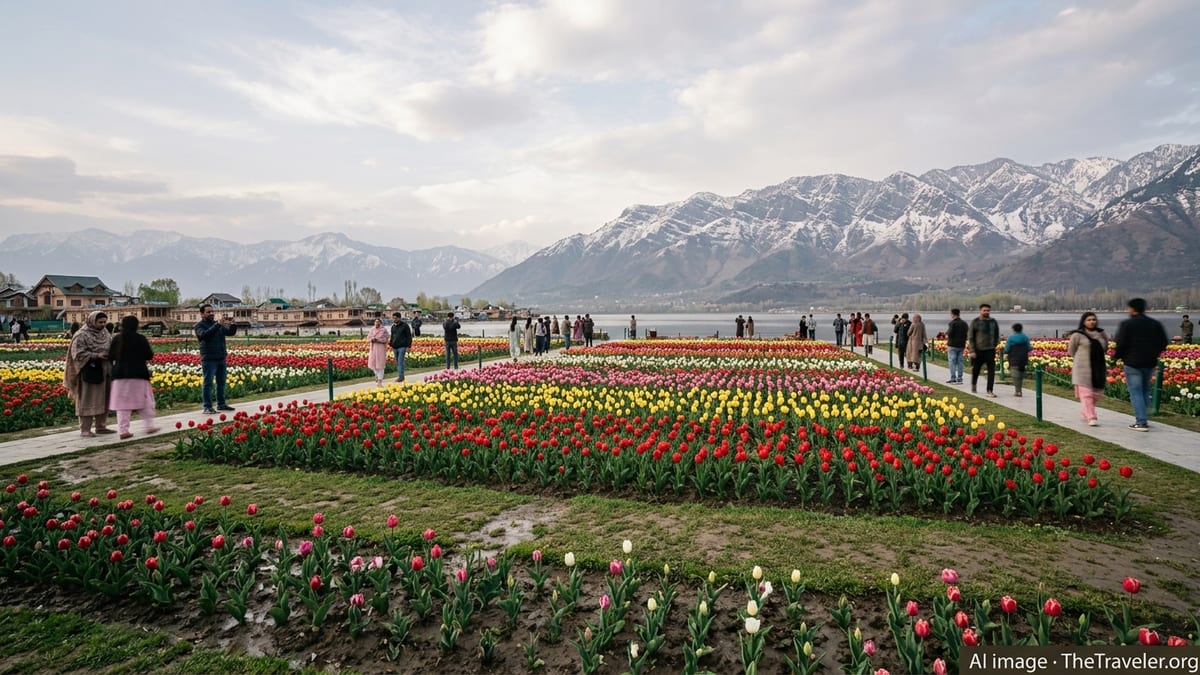
Srinagar’s 2026 Tulip Festival is opening to unprecedented crowds at the Indira Gandhi Memorial Tulip Garden, underscoring a powerful rebound in Kashmir tourism and injecting new energy into the local economy.
Get the latest news straight to your inbox!
Record-Breaking Crowds Expected After Consecutive High-Visitor Seasons
The 2026 edition of the Srinagar Tulip Festival is beginning on the back of consecutive record seasons at the Indira Gandhi Memorial Tulip Garden. Published coverage of the 2025 festival noted visitor traffic of more than 6.7 lakh tourists within the first weeks of opening and over 8.5 lakh by the time the garden closed, setting new benchmarks for the attraction and positioning it among the most visited spring gardens in Asia.
Local newspapers in Srinagar have described a steady escalation in footfall over recent years, from a few lakh visitors earlier in the decade to more than six lakh in 2024 and substantially higher numbers in 2025. The 2026 festival is now expected to surpass even those figures, with reports of strong advance travel bookings and renewed interest from both domestic and international tourists drawn by images of nearly two million tulip blooms framed by Dal Lake and the Zabarwan Range.
Information shared through tourism-focused travel platforms for the 2026 season indicates that up to 1.8 million tulip bulbs across more than 70 varieties are being showcased this year. The combination of expanded plantings, extended opening dates through late March and early April, and the garden’s growing visibility on social media has contributed to expectations of another record-breaking spring for Srinagar.
The festival’s early days in March 2026 have already seen heavy turnout, with anecdotal accounts from visitors and operators describing long but orderly queues at the garden gates and dense streams of tourists along the terraced flower beds. This immediate surge is being interpreted locally as a sign that the tulip festival has firmly established itself as the anchor event of Kashmir’s modern tourism calendar.
Economic Ripple Effects Across Srinagar’s Tourism Ecosystem
The concentration of visitors during the tulip bloom is translating into visible gains for Srinagar’s wider tourism economy. Reports from regional business media during March 2026 point to high occupancy rates at hotels and houseboats around Dal Lake, with many properties near the garden reporting full bookings for peak festival weekends. Guesthouses in popular neighbourhoods such as Boulevard Road and Rajbagh are also experiencing elevated demand compared with the same period last year.
Transport and hospitality operators are among the first to feel the impact. Taxi unions and cab aggregators serving Srinagar International Airport have noted a sharp rise in airport pick-ups tied to tulip season itineraries, even as some coverage highlights concerns over elevated airfares on key routes such as Delhi–Srinagar and Jammu–Srinagar. Despite higher ticket prices, flights into Srinagar in March are reported to be operating close to capacity, a sign that demand is outpacing cost pressures.
Within the city, shikara operators on Dal Lake, pony handlers at nearby hill stations, and guides working day trips to attractions like Shalimar Bagh and Dachigam are benefiting from tourists who combine a tulip garden visit with broader sightseeing. Publicly available information from previous tourism seasons shows that such multi-stop itineraries significantly lengthen average stays and increase per-visitor spending, a pattern local stakeholders hope will be replicated in 2026.
Retailers and small enterprises are equally tied into the tulip season economy. Handicraft shops selling pashmina shawls, carpets, papier-mâché items and wood carvings report higher foot traffic, especially in the old city and along the main tourist corridors. Cafes and restaurants around the garden and on the lakefront are extending hours to accommodate festival crowds, while vendors of tea, kahwa and local snacks are positioning themselves near key entry points to capture impulse purchases from day-trippers.
Tulip Festival as a Flagship for Brand Kashmir
Beyond immediate visitor numbers, the 2026 festival is being framed as a crucial branding exercise for Kashmir as a safe, accessible and attractive year-round destination. Over the last few years, nationally circulated newspapers and travel magazines have increasingly used images of the Srinagar tulip garden as shorthand for Kashmir’s spring season, placing it alongside iconic autumn chinar foliage and winter snow scenes from Gulmarg and Pahalgam.
According to tourism industry analyses published since 2022, the valley has moved from a predominantly summer-focused market to a more evenly distributed calendar, with notable peaks now in spring, autumn and winter. The tulip festival plays a central role in this diversification by opening the main tourism season as early as mid to late March, weeks before traditional hill stations in other parts of the Himalayas fully gear up for visitors.
National-level promotional campaigns for 2026, including features on television travel shows and digital platforms, have prominently highlighted drone and ground-level footage of the tulip terraces, Dal Lake and snow-lined mountain backdrops. These images reinforce a narrative of natural beauty and revitalized infrastructure, with viewers encouraged to pair Srinagar’s floral displays with excursions to newly promoted destinations such as Yousmarg, Doodhpathri and Sonamarg as snow recedes.
The festival’s growing global visibility is also contributing to a modest but important uptick in foreign tourist arrivals. While domestic visitors still make up the overwhelming majority of footfall, publicly available data referenced in tourism policy documents suggests that international arrivals to Jammu and Kashmir have risen steadily since pandemic-era lows, aided by improved connectivity and targeted outreach to overseas tour operators. The tulip garden, often compared in travel coverage to European flower parks, offers a recognizable visual hook for travellers familiar with similar attractions abroad.
Infrastructure, Pricing and Capacity Challenges
The extraordinary popularity of the 2026 tulip season is not without challenges. Recent reporting from local news outlets and industry associations highlights concerns about high airfares to Srinagar during festival weeks, with some stakeholders warning that steep ticket prices could deter budget-conscious travellers or shorten trip durations. There are also references to increased entry fees for the tulip garden in 2026, as indicated by community discussions and visitor advisories shared online.
These cost increases are occurring alongside rising demand for accommodation and transport, prompting calls from tourism businesses for more coordinated pricing strategies to keep Kashmir competitive with other Indian destinations. Analysts quoted in regional business coverage argue that while premium pricing during peak events is common, sustained growth will require balancing revenue goals with affordability and perceived value for money among middle-income travellers.
Capacity constraints inside and around the garden are another recurring theme. Visitor accounts from the 2025 season described long lines at ticket counters, crowded pathways on peak days and pressure on parking and public transport links between the city centre and the garden. In response, local authorities and tourism planners have been reported to be considering measures such as staggered visiting hours, improved traffic management on approach roads and enhanced facilities for waste management and crowd control.
At the same time, efforts are being made to spread visitor flows across a wider network of attractions so that the benefits extend beyond a single site. The recent reopening of multiple tourist spots across Jammu and Kashmir, including additional parks and scenic viewpoints, is viewed as part of a broader strategy to reduce bottlenecks at the most famous locations while creating new income opportunities in less-visited districts.
Outlook for Kashmir’s Tourism Recovery in 2026
The success of the 2026 Srinagar Tulip Festival is being closely watched as a barometer for Kashmir’s wider tourism recovery following the setbacks of recent years. In 2025, the sector was hit by security concerns and a notable downturn in visitor numbers after a high-profile incident in Pahalgam, with trade associations describing a severe collapse in hotel occupancy and tour bookings across the valley. The strong early response to this year’s tulip season is therefore interpreted by many observers as a tentative but hopeful sign of renewed traveller confidence.
Commentary from travel forums and recent travelogues suggests that visitors who do make the trip are generally finding conditions stable and hospitality services eager for business. Many are combining the tulip festival with religious tourism to shrines in Jammu region, adventure trips to Gulmarg and Pahalgam, and cultural experiences in Srinagar’s old quarters, helping to distribute spending across different segments of the tourism ecosystem.
If current trends hold through April and are followed by solid summer and autumn seasons, 2026 could bring the region closer to the multi-million annual tourist arrivals recorded at the start of the decade. Industry observers note, however, that sustaining this trajectory will require continued attention to infrastructure upgrades, transparent communication on safety and access, and support for smaller operators still recovering from several difficult years.
For now, the vivid rows of tulips above Dal Lake have once again become the most visible symbol of spring in Kashmir. As visitors file through the terraced garden and panoramic images circulate across social media feeds in India and abroad, the festival is giving the region not just record footfall but also a renewed sense of economic possibility at the start of the 2026 tourism year.