

More news on this day
New Zealand’s Department of Conservation is reporting one of its busiest summer seasons on record, with new data showing a sharp rise in visitors seeking nature-based, low-impact holidays across the country’s national parks, Great Walks and coastal reserves.
Get the latest news straight to your inbox!
Summer Visitor Numbers Hit New Highs Across Conservation Estate
Recent reporting from the Department of Conservation (DOC) indicates that visitation across public conservation lands over the 2024 to 2025 summer has climbed to, and in some cases surpassed, pre-pandemic peaks. An annual visitor activity snapshot for the year to June 2025 highlights millions of recreation visits to DOC-managed sites, underlining the central role these landscapes now play in both domestic leisure and international tourism.
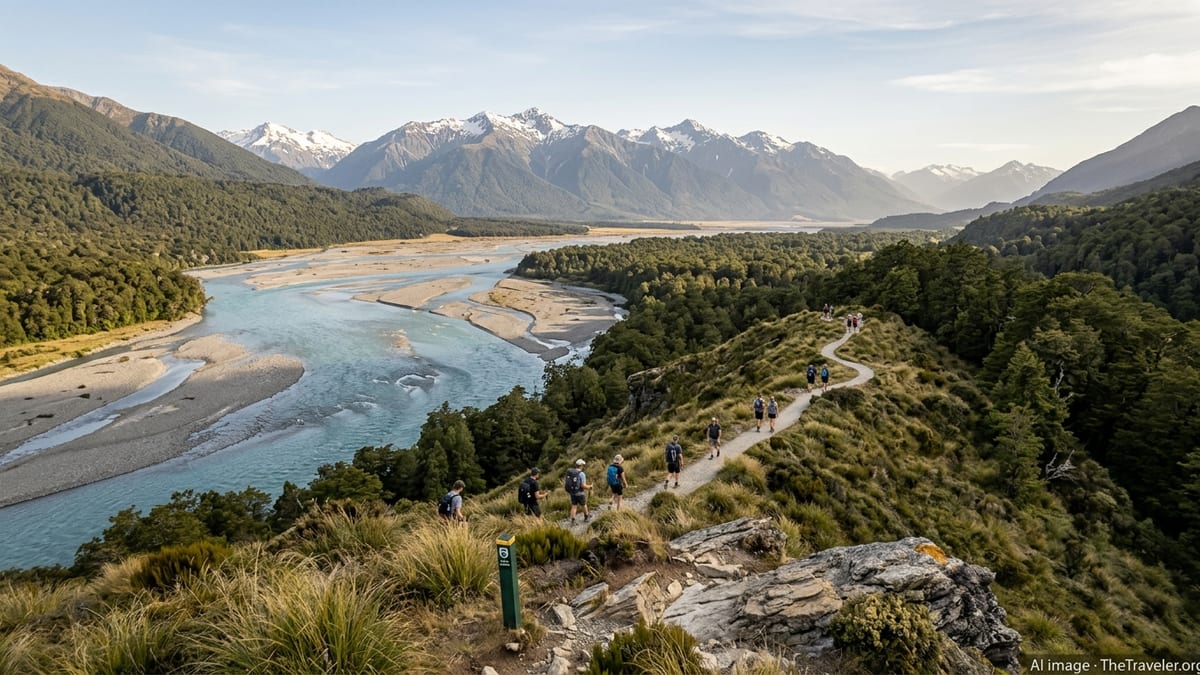
The summer surge has been especially visible on New Zealand’s flagship multi-day Great Walks. DOC figures and associated briefings point to close to 100,000 people booking a Great Walk each year, with around one third of those bookings made by international visitors. Several of the most iconic tracks continue to sell out their peak-season hut and campsite allocations soon after bookings open, signalling robust demand for backcountry experiences that combine scenery, safety and managed environmental impact.
Overnight capacity in huts and campgrounds has remained largely fixed, meaning that heightened interest is translating into fuller calendars rather than uncontrolled crowding. Booking data for the 2024 to 2025 summer shows a concentration of visitors in the traditional December and January holiday window, but also a gradual extension of demand into the shoulder months as travellers look to avoid peak congestion and secure preferred dates.
Domestic Travelers Lead a Shift to “Simple Naturing”
While international arrivals are steadily rebuilding, DOC’s latest “Understanding 2024/25 Visitor Activity” report emphasizes that New Zealand residents continue to drive much of the growth on conservation land. Publicly available information shows that domestic visitors now account for roughly two thirds of Great Walk bednights during the core summer holiday period, a notable increase compared with the years immediately before the pandemic.
DOC’s visitor research describes a trend toward “simple naturing” among New Zealanders, with short walks, day hikes, picnics and easy-access swimming spots ranking as the most common activities. This shift is particularly evident around major urban centers, where regional parks and short walking tracks have recorded steady year-on-year increases in use, reflecting a broader preference for accessible nature experiences rather than long-haul, high-cost travel.
Surveys referenced in the department’s reporting suggest that many residents are using conservation areas as places to de-stress, connect with family and exercise, rather than as traditional sightseeing destinations. This pattern aligns with wider wellbeing narratives in New Zealand, where time in native bush, on beaches and along rivers is increasingly framed as an everyday health and lifestyle choice instead of a special-occasion holiday.
International Tourism Recovery Favors Nature-Based and Eco-Friendly Trips
At the national level, tourism statistics compiled by economic agencies show that international visitor numbers and spending continued to rise through 2024 and into 2025, with total arrivals moving back toward 2019 volumes. Within that recovery, industry analysis points to strong performance in segments built around outdoor adventure, national parks and wildlife, positioning DOC-managed places as core components of the country’s global tourism offer.
Tourism strategies released in the past year highlight an ambition to grow visitor value while maintaining or improving environmental outcomes. Public documents from Tourism New Zealand and central government reference nature-based tourism as a competitive advantage, and call out conservation experiences, Great Walks, marine reserves and cultural landscapes as key drawcards. This framing is encouraging operators to package hiking, cycling, kayaking and stargazing with locally run, lower-emission transport and accommodation options.
Market commentary from sustainability-focused research organisations in New Zealand adds that travellers are increasingly seeking experiences that are not only low-impact but actively regenerative, such as predator-control volunteering days, dune restoration projects and citizen-science activities. While still a niche, these offerings are emerging around existing visitor hubs, indicating that the conservation estate is becoming a platform for more participatory, eco-conscious travel models.
Managing Pressure on Popular Sites While Spreading Demand
The sharp seasonal upswing has renewed attention on crowding, infrastructure strain and ecological pressures at some of the country’s most visited locations. DOC’s own reports note that a small number of “iconic” destinations absorb a disproportionate share of summer visitation, with carparks, toilets and tracks at these sites operating at or near capacity during peak weeks. Extreme weather events in recent years have also damaged tracks and access roads, adding to maintenance backlogs and temporarily pushing visitors into alternative areas.
In response, planning documents and public discussion papers released by government agencies outline a shift from pure visitor growth toward more active management. Proposals under consideration include differential charging for certain high-demand locations, expanded use of booking systems to cap daily numbers, and infrastructure upgrades funded in part by international tourism revenue. These measures are framed as tools to protect fragile ecosystems while preserving visitor safety and experience quality.
At the same time, DOC and regional tourism organisations are using summer campaigns to encourage trip planning that avoids bottlenecks, promoting lesser-known walks, cycle trails and conservation parks. Visitor insights indicate that many travellers are open to exploring alternative sites if they are confident about track quality, safety information and available facilities. This approach is designed to distribute economic benefits more evenly across regions while reducing environmental pressure at marquee attractions.
Climate Resilience, Safety and Low-Carbon Transport Come into Focus
The latest summer has also underscored how climate and extreme weather are reshaping outdoor recreation in New Zealand. Reports on conservation land management describe rising costs from storms, flooding and slips, as well as more frequent temporary track closures. Repair bills for damaged infrastructure have climbed into the millions of dollars annually, diverting funding from other conservation priorities and sharpening debate about how visitor revenue should contribute to resilience spending.
Safety messaging has been elevated in official summer communications, with strong emphasis on checking weather forecasts, understanding track grades and carrying appropriate equipment. Search and rescue statistics, while relatively stable, continue to show incidents linked to underestimating alpine and backcountry conditions. As more first-time hikers and international visitors head into the outdoors, DOC and partner organisations are broadening their use of online trip-planning tools, multilingual signage and pre-departure education.
Alongside safety, transport emissions are becoming a more prominent part of the tourism conversation. Publicly available strategies highlight goals to shift more visitors onto lower-carbon options such as buses, shuttles and shared transport to trailheads, and to integrate charging infrastructure for electric vehicles in key gateways. Industry commentary suggests that travellers, particularly from long-haul markets, are increasingly asking operators about carbon footprints and are willing to adjust itineraries to include fewer flights, longer stays and more time on the ground in natural settings.