

More news on this day
Riga, Tallinn and Vilnius are celebrating a record-breaking January for airBaltic, with fresh passenger highs and expanded networks promising a boost to Baltic tourism and regional air connectivity in 2026.
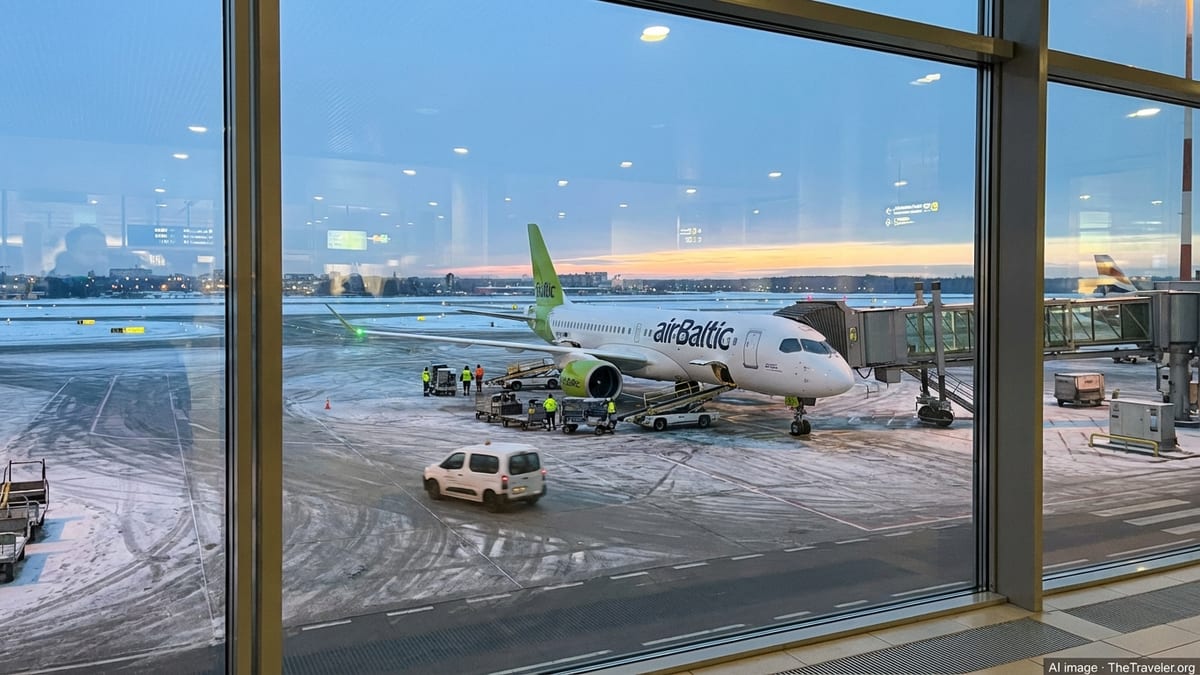
Record January Figures Mark a Milestone for airBaltic
airBaltic has opened 2026 on a high note, reporting its strongest January performance on record and reinforcing its role as the main aviation gateway to the Baltic states. The Latvian carrier transported more than 338,000 passengers across its network during the month, a 3 percent increase compared with January 2025. It also operated just over 3,500 flights, up more than 5 percent year on year, underlining demand for capacity even in one of the slowest months of the travel calendar.
The figures extend a multi‑year growth trend for the airline, which carried around 5.2 million scheduled passengers in 2025, the highest annual total in its history. Including charter and leasing operations, total passenger numbers in 2024 reached 8.3 million, and 2025 data indicate that scheduled services continued to edge higher. For tourism officials in Latvia, Estonia and Lithuania, the record January is being framed as an early indicator that 2026 could deliver another step up in visibility and access for the region.
The growth has come despite a marginal softening in load factor, which slipped by around 2.7 percentage points to roughly 72.7 percent in January. Analysts say that decline reflects deliberate capacity increases and price adjustments during a seasonally weak period rather than a loss of underlying demand. With more seats available and more flights operating, tourism agencies in all three capitals are seizing the chance to push city breaks and winter leisure packages to new markets.
Riga Strengthens Its Role as the Primary Baltic Hub
Riga remains the centerpiece of airBaltic’s network and the primary hub for travelers entering the region. In January 2025, Riga Airport handled about 458,000 passengers, a 9 percent increase on the previous year, with airBaltic carrying just over half of that total. By the end of 2025, the airport had served around 7.1 million passengers, a stable performance that masks shifting traffic patterns in favor of regional connectivity and transfer flows linking Northern Europe with Central and Southern Europe.
For January 2026, early numbers from the airline and the airport suggest that trend is continuing. Around one in five travelers at Riga now use the airport as a transfer point, highlighting its emergence as a compact hub connecting smaller Baltic and Nordic cities with larger European gateways. Popular routes include links from Riga to London, Helsinki, Oslo and Stockholm, while intra‑Baltic services to Vilnius and Tallinn remain key feeders for long‑haul and Western European itineraries.
Riga’s position is being reinforced by airBaltic’s strategy of basing a dense schedule of Airbus A220‑300 aircraft there and layering in seasonal flights to leisure destinations in Southern Europe and the Mediterranean. For city officials and local tourism businesses, the record January traffic is particularly welcome in the shoulder and off‑season, sustaining hotel occupancy and restaurant trade at a time when the city previously relied heavily on business travel.
Tallinn and Vilnius Benefit From Growing Base Operations
While Riga serves as the airline’s largest hub, Tallinn and Vilnius have steadily grown from spoke destinations into important secondary bases. airBaltic now stations aircraft and crews in both cities, allowing early morning departures and late evening returns that are tailored to local demand rather than to schedules built exclusively around Riga. This strategy has materially improved day‑trip and weekend options for Estonian and Lithuanian travelers and has opened new opportunities for inbound tourism.
In Tallinn, the focus has been on reinforcing links to key European business centers and leisure hotspots while maintaining strong connectivity to Riga. Routes to cities such as Amsterdam, Copenhagen, Berlin and Paris have helped attract year‑round visitors, with Estonia’s digital‑nation branding and thriving tech sector drawing a steady stream of business travelers. The January 2026 figures suggest that even during winter, airBaltic’s Tallinn base is benefiting from the wider network expansion, as transfer passengers use the city as a stepping stone to Lapland, the Nordic capitals and the Baltic coast.
Vilnius, meanwhile, has capitalized on its role as a historic capital and cultural destination. Short‑break tourism from Western Europe has grown steadily in recent years, supported by competitive fares and improved schedules. While disruptions at Vilnius Airport in late 2025 temporarily affected traffic and load factors, airBaltic’s capacity for rapid recovery and its ability to reroute passengers via Riga have reassured tour operators planning ahead for 2026. January’s record network performance is being read locally as a sign that confidence has returned and that Vilnius is well placed to capture more city‑break and conference traffic.
New Routes, Partnerships and Long Haul Feeds
airBaltic’s record January performance comes on the back of an expanding route map and a series of strategic partnerships designed to pull more long‑haul traffic into the Baltic region. Over the past year, the airline has announced around a dozen new destinations across Europe and neighboring regions for 2025 and 2026, many of them focused on leisure travelers seeking city breaks and coastal escapes. The additional routes have increased connectivity not only from Riga but also from Tallinn and Vilnius, giving each capital more direct links to Southern Europe and the Mediterranean.
Equally significant is a new codeshare agreement with Air India, signed in late 2025 and due to ramp up during 2026. Building on an earlier interline deal, the partnership allows Indian passengers flying to Europe to connect more seamlessly onward to Baltic destinations via key European hubs. For Riga, Tallinn and Vilnius, the agreement raises the prospect of more visitors from one of the world’s fastest‑growing outbound markets, particularly among business travelers and diaspora communities exploring new routes to Northern Europe.
These partnerships complement existing arrangements with major European carriers and global alliances, which already use airBaltic’s regional network to feed long‑haul services to North America, the Middle East and Asia. Travel agents in the Baltics report growing interest in combined itineraries that pair short stays in Riga, Tallinn or Vilnius with extended trips to destinations as varied as Dubai, New York and Delhi, with airBaltic providing the crucial regional leg.
Tourism Boards Move Quickly to Capitalize on Momentum
Tourism organizations across the three Baltic capitals have been quick to frame airBaltic’s record January as a marketing opportunity. In Latvia, the national tourism board and Riga city officials are promoting winter festivals, contemporary cultural events and culinary experiences to encourage travelers to take advantage of increased seat availability and competitive fares. Campaigns emphasize the ease of reaching Riga from major European hubs thanks to denser scheduling and more frequent departures.
Estonian tourism authorities are highlighting Tallinn’s well‑preserved Old Town, thriving food scene and digital‑nomad‑friendly services. With better flight timings and increased capacity on core routes, they are pushing shoulder‑season city breaks that combine medieval architecture with contemporary design and nature excursions along the Baltic coast. The goal is to smooth out seasonal peaks and build a more stable year‑round tourism economy.
In Lithuania, Vilnius is being positioned as a compact, walkable capital with a growing reputation for design, street art and café culture. Officials there view the stabilization of air services after late‑2025 disruptions and the strong January network numbers as a chance to reengage tour operators who had adopted a wait‑and‑see approach. There is particular interest in attracting more meetings and incentives travel from Western Europe, using improved connectivity and competitive hotel pricing as key selling points.
Balancing Growth With Operational and Financial Pressures
Beneath the headline passenger gains, airBaltic continues to navigate financial and operational pressures familiar across the airline industry. In the first quarter of 2025, the carrier posted a loss of around 29 million euros, an improvement on the previous year but still a reminder that volume growth does not automatically translate into profitability. Rising operating costs, higher carbon emissions charges and the lingering impact of engine maintenance issues on its Airbus A220‑300 fleet have all weighed on the bottom line.
Network optimization, including targeted reductions in frequencies on some routes and the cancellation of underperforming services for the 2025 summer season, has aimed to align capacity more closely with demand. The slight decline in load factor recorded in December 2025 and again in January 2026 is largely attributed to these adjustments and to a conscious decision to add seats in anticipation of longer‑term growth. For travelers, this has translated into attractive fares on many routes, while for airports and tourism sectors it has meant more potential visitors to court.
From a tourism perspective, the key question is whether airBaltic can sustain its growth trajectory without compromising reliability. The airline’s performance in late 2025, when it successfully managed record annual passenger numbers despite engine maintenance constraints and short‑term schedule cuts, has largely reassured partners. Baltic tourism stakeholders, however, remain attentive to how the carrier balances expansion with operational resilience in the year ahead.
What Travelers Need to Know About Baltic Connectivity Now
For travelers planning trips to the Baltics in 2026, the record January traffic and recent network developments translate into more options and greater flexibility. Frequent services from hubs such as London, Frankfurt, Amsterdam and Istanbul into Riga, Tallinn and Vilnius make it easier to incorporate the region into multi‑stop European itineraries. With airBaltic’s bases spread across all three capitals, passengers can often fly into one city and out of another on a single ticket, opening up linear routes that take in the full range of Baltic attractions.
Improved schedules and growing cooperation with long‑haul carriers mean connection times are generally shorter and more predictable than they were a decade ago. Travelers from Asia, the Middle East and North America are increasingly able to reach the Baltics in one connection via major European gateways. The emerging partnership with Air India adds another layer of access for visitors from the Indian subcontinent looking for new destinations in Northern Europe.
At the same time, the slight dip in load factors suggests that, at least for now, travelers may find greater availability of seats during off‑peak periods, particularly in late winter and early spring. Industry observers note that this could be an ideal moment for value‑seeking visitors to book Baltic city breaks or regional tours, benefiting from both expanded capacity and tourism campaigns aimed at filling it.
Airports and Cities Look Ahead to a Busier 2026
Riga, Tallinn and Vilnius are entering 2026 with cautious optimism. Riga Airport plans to keep passenger volumes broadly stable but expects to increase its role as a transfer hub, leveraging airBaltic’s expanding network and the airline’s market share of more than half of all traffic at the airport. Investments in terminal facilities, digital services and ground handling capacity are focused on smoothing the experience for connecting travelers.
Tallinn and Vilnius airports, though smaller, are also preparing for incremental growth driven by base operations and new routes. Both are working closely with national tourism boards to align marketing campaigns with flight schedules and to encourage airlines to sustain services year round rather than heavily concentrating capacity in the peak summer season. This coordination is seen as critical to attracting higher‑spending visitors and improving the economic impact of tourism.
For the cities themselves, the challenge will be to manage growth while preserving the historic charm and livability that underpin their appeal. With a record January for airBaltic setting the tone, Riga, Tallinn and Vilnius are signaling that they intend to compete more aggressively for international visitors in 2026, using enhanced air connectivity as their primary tool. How successfully they balance that ambition with infrastructure, sustainability and community concerns will help define the next chapter of Baltic tourism.