

More news on this day
Spring Break 2026 is shaping up to be the biggest yet for the combined Alaska and Hawaiian Airlines network, with publicly available schedules and planning data indicating roughly 12 million seats across Hawaiʻi, Las Vegas, Costa Rica and a growing roster of warm-weather destinations.
Get the latest news straight to your inbox!
Combined Network Targets Peak Leisure Demand
The 2026 Spring Break period marks the first full high season since Alaska Air Group began more tightly coordinating the Alaska and Hawaiian Airlines brands, creating a single network that stretches from the Pacific Northwest and West Coast deep into the Pacific and Latin America. Publicly available fleet and capacity figures for 2026 show a combined mainline operation of well over 300 aircraft, enabling a sharp focus on leisure-heavy routes to beach and casino markets.
Network planning materials and schedule data for March and early April 2026 indicate that the two brands are collectively offering an estimated 12 million seats systemwide over the core Spring Break travel window, with a significant concentration on flights into Hawaiʻi, Las Vegas and key Latin American resort gateways. Industry analysis suggests that this level of capacity represents one of the largest seasonal offerings yet for the group, reflecting confidence in strong outbound demand from the West Coast and other mainland hubs.
The strategy aligns with broader trends in U.S. leisure travel, where tourism agencies in Hawaiʻi report rising visitor spending and steady growth in available seats from the continental United States compared with prior years. Capacity from western gateways such as Seattle, Portland, San Diego and Las Vegas has been steadily recalibrated to emphasize high-yield holiday periods, with Spring Break now rivaling year-end holidays as a focal point for airline scheduling.
Hawaiʻi Remains the Star of the Spring Break Map
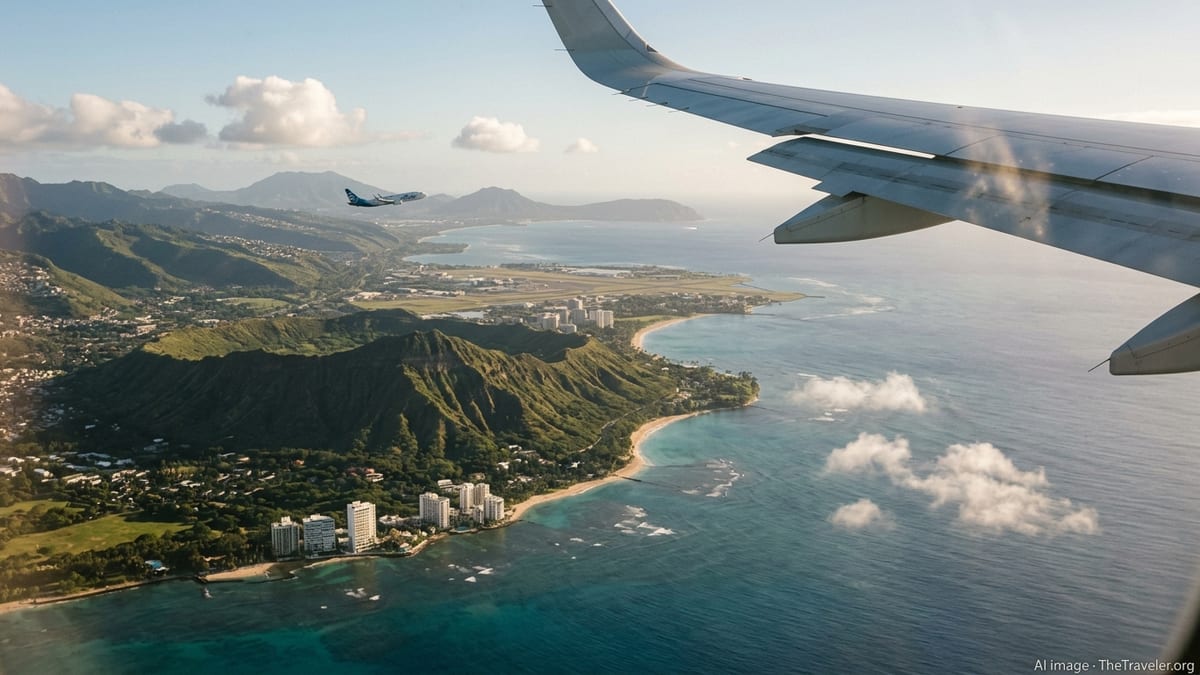
Hawaiʻi continues to anchor the group’s Spring Break 2026 push. State economic data for late 2025 and early 2026 show sustained increases in both visitor counts and total scheduled seats to the islands, underscoring the role of air access as a key driver of tourism. Within that overall flow, Alaska and Hawaiian’s combined network remains one of the dominant providers of lift from the U.S. mainland to Honolulu, Maui, Kauaʻi and Hawaiʻi Island.
Schedules for March 2026 highlight dense patterns of service from Seattle, Portland, Los Angeles, San Diego and other mainland cities into Honolulu and secondary island gateways. Observers note that the consolidation of some routes under a single operating certificate has allowed planners to deploy larger aircraft on select trunk routes, trading frequency for higher total seat counts and smoothing peak-day demand.
For travelers, the result is a broader mix of departure times and connection options, particularly for those using Honolulu as a hub to continue onward into the Neighbor Islands or overseas. Publicly available information from the airlines indicates that stopover options in Hawaiʻi are being promoted as a way to turn a long-haul itinerary into a multi-stop vacation, a message that resonates strongly during the Spring Break period when families and students seek longer, more immersive getaways.
Las Vegas Strengthens Its “Ninth Island” Ties
Las Vegas, often referred to in Hawaiʻi as the “Ninth Island” because of its large Hawaiʻi-born community and steady tourism ties, is another major beneficiary of the Spring Break 2026 build-up. Flight schedules between Honolulu and Las Vegas show frequent nonstop service across multiple airlines, with the Alaska and Hawaiian network positioned as a central player for travelers moving between the islands and the Nevada desert.
Capacity trends published by tourism and airport authorities in late 2025 already pointed to incremental growth in seats from Las Vegas to Hawaiʻi, and the 2026 Spring Break season appears to be continuing that pattern. The corridor now functions as both an origin-and-destination market and a connection point, with Las Vegas serving as a hub for visitors linking to other mainland cities or onward to Latin America on partner carriers.
Travel analysts note that the timing of the Spring Break peak dovetails with major events and conventions in Las Vegas, encouraging airlines to hold or add capacity even when some other domestic routes see seasonal reductions. For the Alaska and Hawaiian brands, the city provides a crucial bridge market that links long-standing Hawaiʻi demand with growing interest from the Pacific Northwest, California and Mountain West.
Costa Rica and Latin America Join the Spring Break Spotlight
While Hawaiʻi and Las Vegas draw much of the attention, Latin America and the Caribbean are playing a growing role in the group’s Spring Break 2026 network. Publicly available booking channels show expanded options from West Coast departure points into sun destinations such as Costa Rica, reflecting a broader industry shift toward Central American and Caribbean beach markets.
Latin American resort routes typically see strong demand from couples, adventure travelers and families seeking eco-tourism, surf breaks and warmer weather after the North American winter. In response, airlines have increasingly scheduled additional frequencies and adjusted aircraft gauge during March and April, when holiday calendars in the United States and Canada support longer trips. Within this context, the Alaska and Hawaiian network’s focus on Costa Rica during Spring Break positions the group to capture travelers who might previously have connected over hubs farther east.
The ability to link these Latin American destinations with West Coast and Hawaiʻi flights under a coordinated network also broadens itinerary choices. Travelers can now piece together combinations such as a Hawaiʻi stopover followed by time in Costa Rica or other regional destinations, using a mix of nonstop and one-stop options marketed under a single umbrella.
What Record Capacity Means for Travelers in 2026
The deployment of roughly 12 million seats across the combined network during Spring Break 2026 carries several implications for travelers. Higher total capacity typically exerts downward pressure on average fares during off-peak days while still allowing airlines to command premiums on the busiest departure dates. Early evidence from publicly visible fare sales in March 2026 suggests that discounted one-way prices are being used strategically to fill shoulder days around the core weekends.
At the same time, fuller aircraft and denser peak schedules can translate into more crowding at key hubs, particularly in airports such as Seattle, Honolulu and Las Vegas where multiple carriers are simultaneously expanding leisure-focused flying. Travel experts often recommend that passengers build in extra connection time and plan for busy security and boarding queues when flying during the height of the Spring Break rush.
For Alaska and Hawaiian, the Spring Break 2026 period serves as a test of how effectively the integrated network can balance high leisure demand with operational resilience. The decision to field record seat counts to Hawaiʻi, Las Vegas, Costa Rica and other warm-weather markets underscores the group’s bet that travelers will continue to prioritize experiences and long-haul vacations, even amid shifting economic signals. How smoothly the season unfolds may shape scheduling and capacity decisions well into the 2026 summer and winter holiday periods.