

More news on this day
Saudi Arabia Railways has capped a record year in 2025, moving more passengers and freight than ever before and underscoring how fast the kingdom’s rail ambitions are reshaping travel, logistics and tourism across the country.
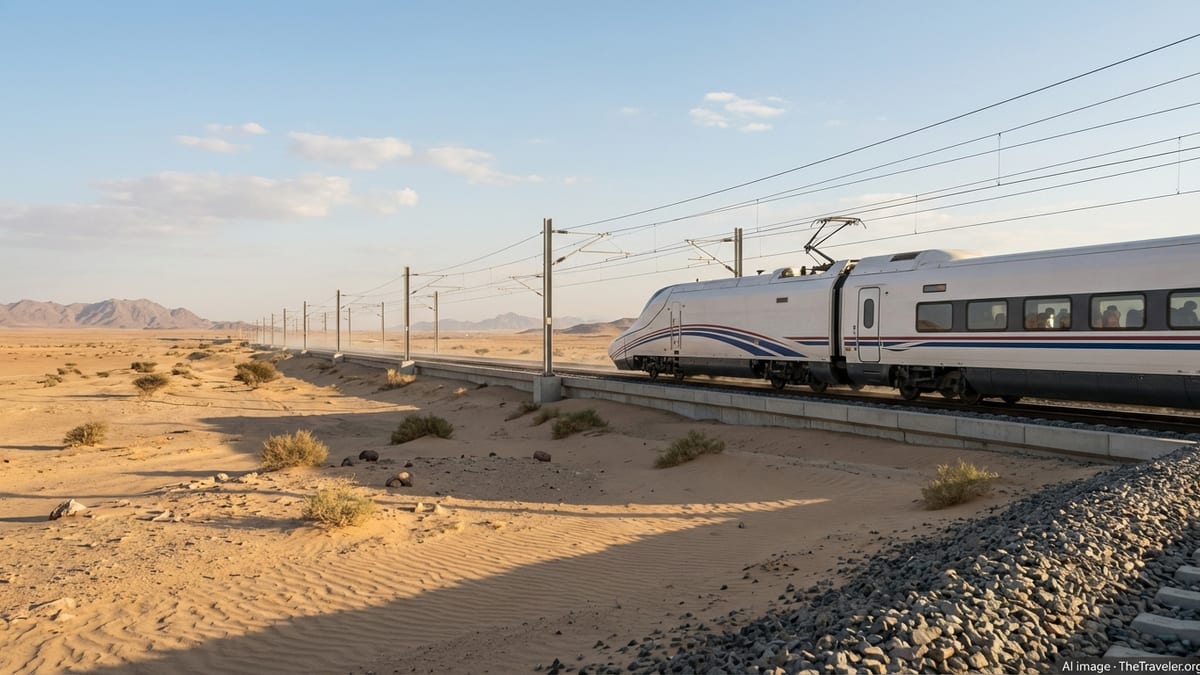
Record Numbers on the Rails
Saudi Arabia Railways reported that its network carried more than 14 million passengers in 2025, the highest annual total in its history and a sharp increase that signals rail is becoming a mainstream choice for domestic travel. The latest figures, released via the Saudi Press Agency and industry outlets in February 2026, also show freight volumes reaching around 30 million tonnes, confirming the operator’s position as a central pillar of the kingdom’s National Transport and Logistics Strategy and Saudi Vision 2030.
The growth in ridership comes on top of already strong momentum. Official statistics in recent years have documented steady gains in both intercity and high-speed traffic, while wider rail-sector data from the Transport General Authority indicates that total train ridership across the kingdom, including urban networks such as the Riyadh Metro, has surged. The result is a rail system that is not only moving record numbers of people but doing so with high punctuality and safety standards.
This performance has concrete environmental and economic consequences. By surpassing 14 million passengers and expanding its freight portfolio, Saudi Arabia Railways has been able to shift millions of journeys away from the road network. That shift reduces congestion, cuts emissions and lowers the national fuel bill, all while supporting new jobs and industrial activity linked to the rail supply chain.
The operator has framed 2025 as a turning point, arguing that rail is evolving from a specialist mode serving pilgrims, miners and heavy freight into a truly national transport backbone. With more trains, more routes and more integrated services, the network is increasingly designed to serve both the everyday commuter and the international visitor.
Haramain High-Speed Rail Leads a Pilgrimage Surge
At the heart of Saudi Arabia Railways’ passenger boom is the Haramain High-Speed Railway, the 450 kilometre line linking Makkah and Madinah via Jeddah and King Abdullah Economic City. Launched commercially in 2018, the service has rapidly become one of the world’s most significant religious-corridor railways, carrying millions of pilgrims every year between the holy cities in journeys of around two hours.
In the 2024 and 2025 Hajj seasons, Haramain extended its reach once again. The operator’s most recent operational plans provided for nearly two million seats for pilgrims in 2025, a rise of about a quarter compared with the previous year, alongside thousands of scheduled services across the peak period. Earlier seasons had already shown the line’s potential, with passenger numbers exceeding one million during Hajj 2024 and growing strongly from the hundreds of thousands carried in 2023.
The line’s service pattern during Hajj has become a benchmark for high-frequency, high-speed operations under intense pressure. On the busiest days, trains depart Makkah station around every 15 minutes, with punctuality rates consistently near or above the high nineties in percentage terms. Such performance has helped smooth the flow of pilgrims between the holy sites, particularly crucial in years when extreme heat and changing global economic conditions affect overall Hajj attendance.
Beyond the pilgrimage itself, Haramain is maturing into an all-year trunk route. By late 2024 the line had passed the milestone of 20 million cumulative passengers since launch, with record monthly totals and high load factors. Industry figures reported that the Saudi high-speed service carried around nine million passengers in 2024 and nearly ten million in 2025 alone, highlighting how quickly the route has scaled up to rival established European and Asian high-speed corridors.
Fleet Expansion and International Partnerships
To support the ridership surge and prepare for future demand, Saudi Arabia Railways has embarked on a major fleet expansion and modernization program. A headline element is the purchase of 20 new high-speed trainsets from Spanish manufacturer Talgo, intended to bolster the Haramain High-Speed Railway fleet by nearly 60 percent once delivered.
The new train order, part of a broader operating contract extension signed with Spanish partners, is valued in the billions of euros and will see deliveries start in 2028, continuing through to around 2031. Each unit will have a capacity of approximately 417 seats distributed across business and economy class, reflecting the mixed profile of pilgrims, residents and international visitors who now rely on the line. The expansion will raise the total Haramain fleet from 35 to 55 trains, giving the operator far greater flexibility during peak religious seasons and busy holiday periods.
These trains will run at commercial speeds of up to 300 kilometres per hour, built to standards similar to Spain’s own high-speed network. The contract also includes long-term maintenance responsibilities, training and technology transfer, reinforcing Saudi Arabia’s strategy of coupling infrastructure investment with skills development and local employment.
International cooperation extends beyond rolling stock. Renfe and other European rail specialists continue to play a role in operations, training and systems engineering, while Saudi institutions such as Saudi Railway Polytechnic deepen local expertise. Together, these arrangements position the Haramain line as both a showcase of global rail technology and a laboratory for building a domestic knowledge base that can support future network extensions.
Freight Growth and the Logistics Revolution
While headlines often focus on high-speed passenger travel, the latest figures underline how crucial freight is to Saudi Arabia Railways’ success. In 2025 the company moved around 30 million tonnes of cargo, from minerals and containers to industrial products. That performance removed an estimated two million truck journeys from Saudi roads, saving roughly 139 million litres of fuel and preventing hundreds of thousands of tonnes of carbon emissions.
These gains align closely with the kingdom’s National Transport and Logistics Strategy, which aims to transform Saudi Arabia into a global logistics hub bridging Asia, Europe and Africa. Rail freight is central to that vision, providing reliable, lower-emission connections between ports such as Dammam and inland dry ports in Riyadh and beyond. Agreements with leading global shipping firms are helping to integrate rail more deeply into the maritime supply chain, making it easier for containers arriving by sea to move inland by train rather than by road.
The strategy is already reshaping port operations. Facilities connected by rail are processing rising container volumes, with new cranes, electric trucks and expanded yard capacities introduced to handle higher throughput. For shippers, the combination of scheduled rail services and upgraded terminal infrastructure reduces transit times and provides more predictable door-to-door logistics.
Within the kingdom’s mining sector, long-distance heavy-haul trains continue to be vital for moving phosphates, bauxite and other commodities to industrial plants and export terminals. The efficiencies generated by rail transport enable larger-scale projects and support the diversification of the Saudi economy, allowing the country to add value to raw materials domestically before sending them abroad.
Technology, Safety and Smart Operations
Underpinning Saudi Arabia Railways’ record year is an ambitious programme of technological upgrades and digital transformation. Across its passenger and freight lines, the company has invested heavily in advanced signalling, automation and data analytics to enhance safety, reliability and capacity.
High-speed operations on the Haramain route are underpinned by modern signalling standards and continuous monitoring of train performance. Onboard and trackside systems feed real-time data to control centres, enabling operators to adjust schedules, manage headways and respond swiftly to incidents or weather-related challenges. These tools have been instrumental in maintaining punctuality during peak Hajj periods, when even minor disruptions can quickly ripple across the network.
Elsewhere, Saudi Arabia Railways is rolling out condition-based maintenance, predictive analytics and remote inspection technologies to reduce downtime and extend asset life. Sensor-equipped rolling stock and infrastructure allow teams to identify wear patterns, detect faults early and plan targeted interventions. This approach cuts costs and enhances safety by addressing issues before they can escalate into failures.
Alongside operational technology, the customer-facing side of the network has also seen rapid digitalisation. Online booking platforms, mobile applications and e-ticketing have simplified the passenger journey for both residents and international visitors. During Hajj seasons, these tools are integrated with broader crowd-management systems used by government agencies, helping to balance loads across trains and stations and improve the overall pilgrim experience.
Tourism, Luxury Trains and Vision 2030
The record-breaking year for Saudi Arabia Railways is not only about capacity and efficiency. It also reflects a shift in how rail is used as a tool to promote tourism and support the broader goals of Vision 2030, which seeks to diversify the economy, attract international visitors and showcase the kingdom’s heritage and landscapes.
In 2025 the company unveiled the “Dream of the Desert” luxury tourism train, a flagship project aimed at high-end travellers seeking multi-day rail journeys through Saudi Arabia’s deserts and historic regions. Designed with upscale onboard accommodation, dining and curated excursions, the service positions rail as an integral part of the kingdom’s emerging experiential tourism offering.
The launch of such trains complements investments in high-speed and intercity services that connect major cities, airports and tourism clusters. Rail is increasingly marketed as a comfortable, scenic and sustainable way to access new destinations, from the Red Sea coast to the planned giga-projects that will define Saudi Arabia’s tourism map in the coming decade.
For domestic travellers, the expansion of rail options supports a growing culture of weekend and holiday travel by train, mirroring patterns long familiar in Europe and parts of Asia. As services become more frequent and stations are developed as mixed-use hubs with retail and hospitality components, rail journeys are likely to become a standard part of the Saudi travel experience.
Urban Networks and the Wider Rail Ecosystem
The surge in national rail usage is occurring alongside a dramatic expansion of urban and regional systems. Data from the Transport General Authority show that intra-city train traffic, including metros and automated people movers, soared in 2025, pushing total rail ridership across Saudi Arabia above 39 million passengers in the third quarter alone. The Riyadh Metro accounted for the majority of these journeys, underscoring how rapidly city residents are embracing rail-based public transport.
This urban growth is highly relevant to Saudi Arabia Railways, which is increasingly tasked with interfacing its intercity and high-speed services with municipal networks. Stations on the Haramain line already connect with airport and urban transport systems, while future projects aim to create seamless transfers between long-distance trains, metros and bus rapid transit corridors.
Such integration is central to the kingdom’s mobility vision. By linking intercity and urban networks, planners hope to reduce dependence on private cars, improve air quality and cut congestion in major cities. For travellers, integrated ticketing, coordinated timetables and shared information platforms will make it easier to plan journeys that combine multiple modes of transport.
The broader rail ecosystem now spans everything from heavy freight trains carrying minerals across the desert to high-speed services conveying pilgrims between the holy cities and driverless metro lines circulating beneath dense urban districts. Within that ecosystem, Saudi Arabia Railways is emerging as the backbone operator, coordinating investments, standards and long-term planning across a fast-evolving sector.
Environmental Impact and the Road Ahead
As Saudi Arabia intensifies its climate commitments, rail’s environmental advantages are gaining prominence. The company’s 2025 performance metrics, including fuel savings of more than 100 million litres and substantial reductions in carbon emissions, highlight how shifting passengers and freight from road to rail can deliver measurable sustainability gains.
These benefits are especially significant in corridors where heavy trucks and high car ownership have historically dominated. By offering faster, more reliable alternatives, Saudi Arabia Railways is helping to make low-carbon choices more attractive to both individuals and businesses. This reinforces national targets for emissions reduction while extending the lifespan of key highways and reducing road-maintenance costs.
Looking ahead, officials and industry partners expect rail demand to continue rising as new lines come into service, urban populations grow and tourism projects reach maturity. The delivery of new high-speed trains, continued investment in freight corridors and ongoing digital upgrades are all intended to keep capacity ahead of demand and maintain high service standards.
For travellers, the transformation already feels tangible. Journeys that once required long, overnight drives through the desert can now be completed in a matter of hours by train, with reliable timetables and modern onboard amenities. For the kingdom as a whole, a record year for Saudi Arabia Railways is a signal that its long-term bet on rail is paying off, propelling the transport system into a future that is faster, cleaner and more connected.