

More news on this day
Regent Seven Seas Cruises is reshaping expectations for Mediterranean and Caribbean sailings by positioning its newest ultra-luxury ships as floating art museums, pairing multimillion-dollar collections with all-inclusive itineraries across two of the world’s most in-demand cruise regions.
Get the latest news straight to your inbox!
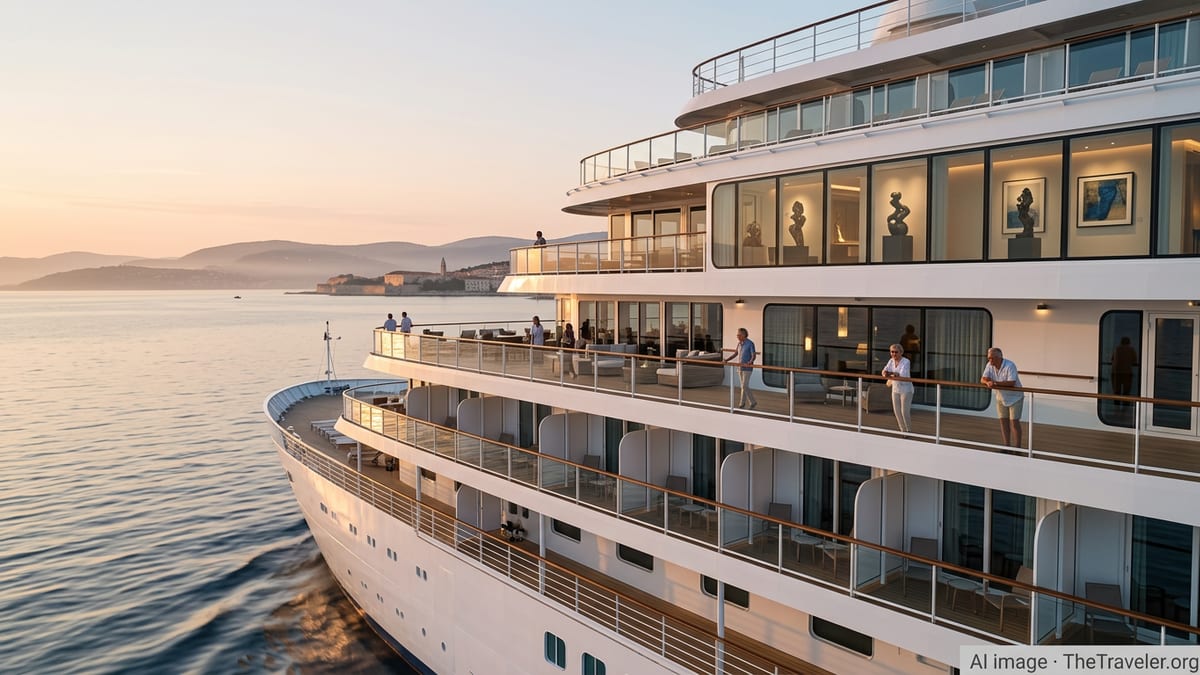
Art Collections Take Center Stage at Sea
Publicly available information shows that Regent Seven Seas has moved decisively to make fine art a defining feature of its fleet, particularly on newer vessels sailing marquee routes in the Mediterranean and Caribbean. The line’s flagship Seven Seas Grandeur, introduced to the fleet in late 2023, is reported to carry a curated collection of around 1,600 works valued in the multimillion-dollar range, from contemporary pieces to blue-chip names.
Coverage in specialist cruise and luxury travel media indicates that Grandeur’s collection includes several original Picasso works displayed in its steakhouse, as well as large-scale commissioned installations that span multiple decks. Reports also highlight a focus on site-specific pieces, with designers and curators working the collection into stairwells, corridors and lounges so that art becomes part of the everyday circulation of the ship rather than confined to a single gallery space.
The artistic ambition is underlined by the presence of Journey in Jewels, a specially designed Fabergé objet d’art that serves as a permanent exhibit at sea. According to company materials and industry coverage, the piece anchors the ship’s overall narrative around heritage and craftsmanship, signaling that art is intended as a core part of the guest experience rather than an incidental amenity.
Alongside Grandeur, other Regent vessels sailing in the Mediterranean and Caribbean have been progressively upgraded with more visible onboard collections and design-forward interiors. Trade publications report that premium suites, including the Regent Suite on Grandeur, feature hand-selected artwork that extends the art-museum concept into private accommodations.
Immersive Art Experiences on Mediterranean Itineraries
Regent’s most recent voyage collections position the Mediterranean as a natural showcase for these floating galleries. Planning documents and promotional materials for the 2025 and 2026 seasons outline a mix of itineraries that link art-focused onboard programming with port calls in cities such as Barcelona, Athens, Istanbul and other centers known for their museums and historic architecture.
Voyage schedules indicate that Seven Seas Grandeur is slated to operate multiple Mediterranean sailings, including longer routes that combine Western and Eastern Mediterranean hubs. These itineraries are often framed around cultural immersion, with overnight stays or extended calls in major cities that allow guests to explore landmarks, galleries and UNESCO-listed sites ashore before returning to an environment where curated art remains a focal point.
Industry analysis suggests that the art collections onboard are increasingly being integrated into enrichment activities. Reports describe digital art tours accessible through Regent’s app, enabling guests to scan works for background details about the artists and commissions. This approach mirrors museum-style labeling and audio guides, but in a format adapted to a moving vessel and a time-flexible cruise schedule.
Mediterranean sailings have long been associated with cultural discovery, and Regent appears to be using art as a way to deepen that positioning. Instead of treating the ship purely as transportation between ports, the company is framing the vessel as an extension of the cultural landscape, effectively connecting classical museums on land with contemporary collections at sea.
Caribbean Voyages Add a Cultural Layer to Sun-Seekers’ Routes
While the Caribbean is better known for beaches and relaxed resort-style cruising, Regent’s recent and upcoming programs in the region show a similar emphasis on art-driven luxury. Schedules for the 2025 and 2026 seasons highlight a series of Caribbean and Panama Canal voyages by ships such as Seven Seas Grandeur and other fleetmates, many of which feature the same high-profile artwork and design concepts introduced in Europe.
According to published voyage collections, winter deployments see these ships reposition from the Mediterranean to Miami and other key embarkation ports for round-trip Caribbean cruises. On board, passengers encounter an environment that resembles a compact museum and design hotel, with curated collections spanning staircases, specialty restaurants and lounges, providing a cultural counterpoint to the more casual atmosphere ashore.
Travel trade reports point to strong demand in the upper end of the Caribbean market for experiences that feel distinctive from mainstream megaship offerings. Regent is positioning its art-forward ships as a response to that demand, targeting guests who might typically gravitate to land-based luxury resorts or European city breaks but are now willing to consider an ultra-luxury cruise if it offers a similarly rich cultural dimension.
Some itineraries in the latest collections combine traditional Caribbean ports with longer repositioning segments across the Atlantic, further reinforcing the narrative of ships as bridges between the art capitals of Europe and the tropical landscapes of the Americas. The presence of a consistent art identity onboard allows Regent to market these sailings as a continuous, gallery-like experience regardless of geography.
Seven Seas Prestige Extends the Floating Museum Concept
The art-led strategy is expected to continue with Seven Seas Prestige, the next newbuild in the Regent fleet. Announcements from Norwegian Cruise Line Holdings, Regent’s parent company, and coverage in European business media indicate that Prestige is scheduled for delivery in late 2026, with an inaugural season featuring Caribbean cruises followed by Mediterranean and Northern European deployments.
Reports on the new ship’s design emphasize a focus on high-end accommodations and public spaces that lend themselves to displaying artwork, including the Skyview Regent Suite, which has been described in Spanish financial press as one of the largest and most lavish suites at sea. While full details of the art program have yet to be disclosed, industry observers widely expect Regent to replicate or expand on the multimillion-dollar collection model seen on Seven Seas Grandeur.
Travel marketing materials referencing the forthcoming Prestige class suggest that Regent sees art and design as central to differentiating its product in a crowded luxury cruise landscape. With competitors also investing in high-end interiors and boutique-style experiences, a recognizable, museum-like environment could help the brand stand out both in the Mediterranean, where competition is intense, and in the Caribbean, where large resort-style ships dominate the headlines.
As Prestige and its sister ships enter service alongside existing vessels, the number of Regent itineraries that can be marketed as floating art experiences in both regions is set to grow, giving repeat guests new ways to engage with the line’s evolving collections across different routes and seasons.
Luxury Demand Drives Art-Focused Cruise Innovation
Industry data and commentary from cruise analysts indicate that demand for ultra-luxury cruising remains resilient, particularly among travelers who prioritize space, service and differentiated experiences over ship size and onboard attractions. Regent’s decision to foreground fine art on its Mediterranean and Caribbean sailings is widely interpreted as part of a broader shift toward more experiential, story-driven branding in the high-end segment.
Published coverage notes that these art collections complement other hallmarks of the brand, including spacious suites, high crew-to-guest ratios and all-inclusive pricing that bundles excursions, dining and premium beverages. By adding museum-quality works and curated tours, the company is aiming to appeal to guests who might otherwise seek out urban art stays or destination-specific cultural itineraries.
Analysts also point out that the floating museum concept offers practical benefits from a commercial standpoint. Unlike headline attractions such as ice rinks or waterparks, art collections do not significantly increase a ship’s operational complexity, yet they provide a powerful storytelling tool for marketing Mediterranean and Caribbean cruises that might otherwise resemble competing products on paper.
As new ships come online and voyage collections expand through 2026 and beyond, Regent Seven Seas appears poised to deepen its identity as an art-forward line. For travelers considering a luxury cruise in the Mediterranean or Caribbean, publicly available information suggests that an increasing number of Regent voyages will not only promise familiar hallmarks of high-end cruising, but also an experience akin to living inside a contemporary art museum at sea.