

More news on this day
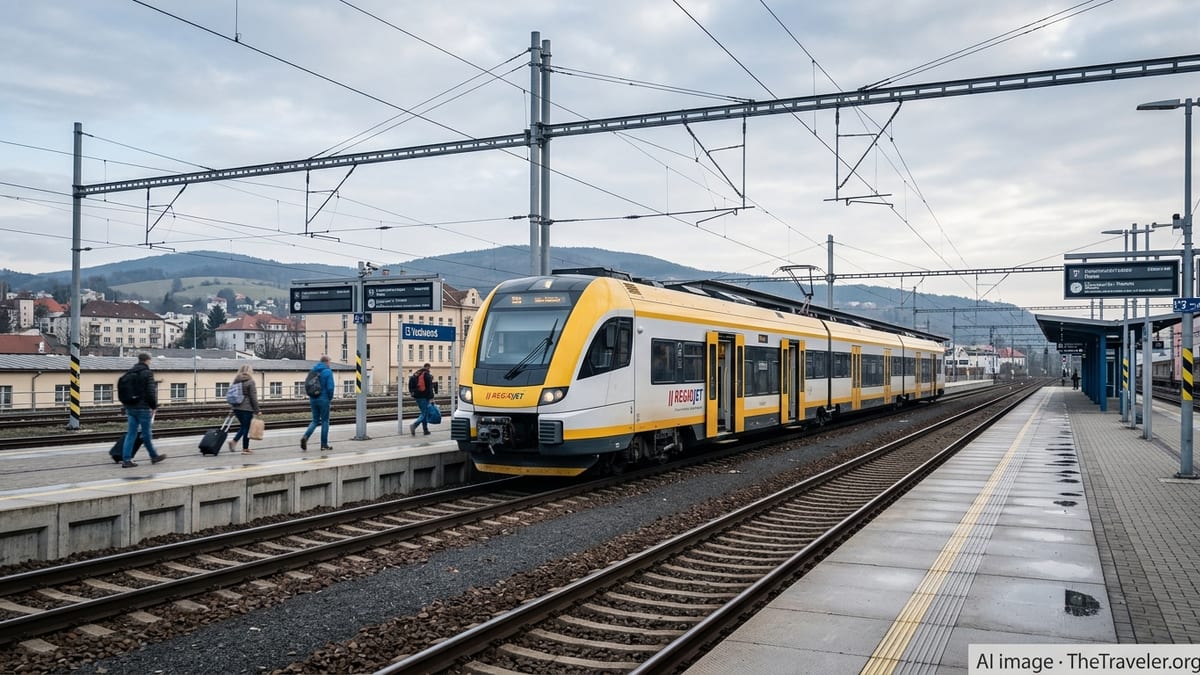
Central European rail operator RegioJet has secured around EUR 84 million in long-term financing for new electric trains over a 15-year period, a move expected to accelerate the modernization of regional passenger services and reshape key cross-border routes in the heart of Europe.
Get the latest news straight to your inbox!
Long-Term Financing Underpins Fleet Renewal
Publicly available information shows that RegioJet, one of Central Europe’s largest private passenger rail operators, has arranged approximately EUR 84 million in financing to support the acquisition and operation of new trains over a 15-year horizon. The structure reflects a broader shift in European rail, where operators increasingly rely on multi-year rolling stock finance to secure predictable costs and stable service levels.
Reports indicate that the package is aligned with the typical lifespan of modern electric multiple units, allowing repayments to be spread across the full period in which the trains will be used intensively on regional and intercity routes. This kind of long-tenor funding is designed to keep annual financial pressures manageable while enabling an upfront leap in quality for passengers.
The financing builds on a growing ecosystem of specialist lenders and supranational institutions that focus on rail, including organizations such as EUROFIMA, which has a mandate to support the renewal and modernization of railway equipment across Europe. Publicly available material on such institutions highlights the importance of long-term, asset-based financing in making new trains affordable for operators in competitive markets.
By locking in capital for 15 years, RegioJet gains a clearer view of its cost base across an entire public service contract cycle, helping it compete effectively in tenders while committing to newer, more comfortable and more energy-efficient rolling stock.
New Electric Units for the Ústí nad Labem Region
A key part of the investment program is linked to RegioJet’s win of a major regional contract in the Ústí nad Labem Region of the Czech Republic. According to published coverage in specialist rail publications, the company has ordered 23 new electric units tailored for these services, with the fleet intended to operate under a long-term agreement running for about 15 years.
Industry reports describe these trains as low-floor electric multiple units designed for intensive regional use, with configurations including both two-car and three-car sets. The units are expected to deliver frequent, high-capacity services on busy suburban and regional corridors, replacing older rolling stock and offering passengers a more reliable experience.
The orders are part of a wider wave of new trains for the Czech and Central European regional networks, as regional authorities embrace competitive tenders to improve service quality and reduce operating costs. Documentation from European rail associations notes that RegioJet’s bids have often combined sharp pricing with commitments to new rolling stock, which require robust financing solutions to implement.
With the new fleet scheduled to enter service in the second half of this decade, the 15-year financing horizon closely matches the regional contract timeframe. This alignment helps ensure that financing costs are directly tied to contracted revenues, a structure that has become increasingly common in European public service rail operations.
Competitive Tenders Transforming Central European Rail
The new financing sits within a broader transformation of Central European rail markets. Over the last decade, countries such as the Czech Republic, Slovakia and neighboring EU member states have turned more frequently to competitive tenders for regional and intercity services, opening the door to private operators alongside traditional state incumbents.
Position papers from European passenger rail associations highlight that RegioJet has been a prominent winner in these procedures, securing multi-year contracts on routes such as the R9 line between Prague and Brno and on several regional lines in northern Bohemia. These contracts typically span around 10 to 15 years, providing the commercial foundation needed to support large-scale rolling stock investment.
In this environment, access to long-term train financing has become a strategic differentiator. Operators that can raise capital on favorable terms are better positioned to propose modern fleets and enhanced timetables in tender competitions. The EUR 84 million facility associated with RegioJet’s latest expansion underlines how finance, rolling stock technology and public policy are increasingly intertwined.
For public transport authorities across Central Europe, the emergence of well-capitalized private operators offers a pathway to rapid fleet renewal without directly bearing the investment burden on public balance sheets. Instead, authorities can tender for defined service levels while operators and their financiers take responsibility for procuring, financing and maintaining the trains.
Modern Trains Aim to Shift Travelers From Road to Rail
The trains financed under the new 15-year package are expected to deliver significant upgrades in passenger comfort and accessibility compared with older regional fleets still common on some Central European routes. Trade publications covering the RegioJet orders describe features such as low-floor access, full air conditioning, on-board information systems and space for bicycles and strollers.
These improvements align with wider European Union transport objectives, which prioritize shifting short and medium-distance trips from private cars and buses to rail. Policy documents at EU level emphasize that modern, frequent and comfortable trains are critical to convincing passengers to change travel habits, particularly in cross-border and regional corridors where service quality has historically lagged behind Western European standards.
By coupling new rolling stock with long-term financing, RegioJet is seeking to position itself as a credible alternative to both cars and legacy train services. The investment also responds to growing public expectations in Central Europe, where economic growth and rising tourism have increased demand for higher standards on regional lines that once catered primarily to local commuters.
For the wider travel and tourism sector, improved regional rail services can unlock lesser-known destinations by making them more accessible from capital cities and international gateways. The financed trains are expected to run on routes connecting industrial centers, spa towns and border regions, potentially supporting more sustainable visitor flows across the region.
Financial Models Point to Future Growth
The EUR 84 million, 15-year financing agreement illustrates a maturing financial toolbox for European rail operators. Public information on the sector shows that long-term, asset-based funding structures are increasingly common, often backed by a mix of commercial banks, export credit agencies and specialized institutions dedicated to transport infrastructure.
Analysts following European transport finance note that such arrangements can spread risk between operators and lenders while anchoring investments in assets that retain value over decades. For operators like RegioJet, this can mean greater flexibility to pursue new contracts and expand into neighboring markets, confident that rolling stock can be financed on terms that reflect its long operational life.
The model also supports technology updates, including more energy-efficient traction systems and digital train control equipment, which can be progressively introduced as part of new-build fleets or mid-life refurbishments. Over a 15-year financing period, cumulative savings in energy and maintenance can be substantial, reinforcing the business case for replacing older trains.
As Central European countries continue to align their transport networks with wider EU climate and connectivity goals, the type of financing secured by RegioJet signals how private capital and public policy can intersect. If replicated across additional routes and markets, similar funding structures could accelerate the renewal of regional rail fleets and contribute to a quieter, cleaner and more reliable travel experience across the region.