

More news on this day
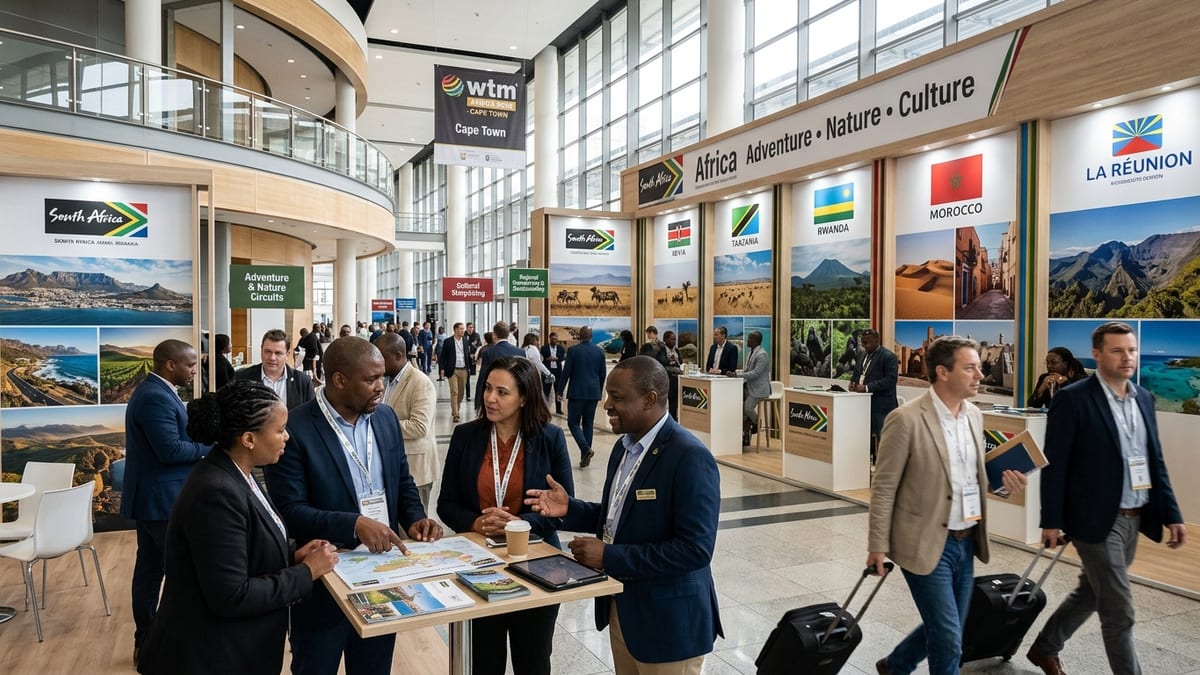
Tanzania, South Africa, Kenya, Rwanda and Morocco are moving to coordinate more closely with La Réunion at WTM Africa 2026 in Cape Town, positioning a powerful regional tourism alliance built around adventure, culture and nature to court international buyers and restart growth across the continent.
Get the latest news straight to your inbox!
WTM Africa 2026 Targets Bigger Regional Footprint
WTM Africa is scheduled to return to the Cape Town International Convention Centre in April 2026 with an expanded programme and a larger contingent of national tourism boards and regional exhibitors. Publicly available information on early exhibitors highlights strong commitments from South African Tourism, the Kenya Tourism Board, the Tanzania Tourist Board, the Rwanda Development Board and the Moroccan National Tourist Office, among others, pointing to a more coordinated African presence than in previous years.
Event coverage indicates that the 2026 edition is being framed as a growth platform for intra African travel as well as long haul arrivals. Reports on the organiser’s hosted buyer programme suggest that more than 450 qualified international buyers are expected, an increase on the 2025 edition, which is viewed by participating destinations as a critical opportunity to secure contracts for the 2026 to 2028 seasons.
Within this context, tourism bodies from Tanzania, South Africa, Kenya, Rwanda and Morocco are aligning their messaging with La Réunion to promote multi country itineraries, cross regional circuits and themed products that combine safari, coastline, culture rich cities and island escapes. The intention is to shift from fragmented national stands to a more visible and collaborative regional platform that can compete more effectively for global attention and investment.
The move comes as African destinations seek to consolidate gains made since the pandemic period and to capture rising demand for experiential travel, nature focused holidays and authentic cultural encounters. Trade observers note that WTM Africa’s focus on sustainability and responsible tourism is resonating with these destinations, many of which are investing in conservation, community tourism and green infrastructure as part of their recovery strategies.
Adventure, Safari and Nature Take Centre Stage
Adventure and nature products are expected to sit at the heart of the joint push by Tanzania, Kenya, Rwanda, South Africa, Morocco and La Réunion. Trade previews point to extensive promotion of safari circuits covering Tanzania’s northern and southern parks, Kenya’s Masai Mara and private conservancies, and Rwanda’s gorilla trekking and volcano landscapes, creating opportunities for cross border itineraries targeted at high yield visitors.
South Africa is expected to use the platform to reinforce its positioning as a diverse adventure hub combining wildlife, coastal drives, winelands and city based experiences. Industry commentary linked to WTM Africa’s programme notes a particular emphasis on outdoor and nature based trips, from hiking and cycling routes to marine experiences, which are seen as key differentiators in a competitive global market.
Further north, Morocco is preparing to highlight its desert expeditions, Atlas Mountain trekking and coastal sports such as surfing and kitesurfing, tying them into broader narratives around cultural heritage and regional diversity. La Réunion, which has built a reputation around volcanic hiking, paragliding and marine reserves, is expected to complement this with a focus on soft adventure and island nature, encouraging buyers to consider add on stays that link mainland Africa with the Indian Ocean.
By presenting these adventure and nature products in a more integrated way, participating destinations aim to increase average length of stay and overall visitor spend. Destination marketers are using the WTM Africa platform to signal that Africa’s wilderness offerings can be combined across borders, supported by improving air connectivity and tour operator partnerships that specialise in multi country journeys.
Cultural Storytelling and Urban Experiences in the Spotlight
Alongside nature and wildlife, culture and urban tourism are set to play a prominent role in the joint presence. Pre event materials and broader Africa Travel Week programming show growing emphasis on storytelling, creative industries and city experiences, aligning with a global trend toward deeper, locally grounded travel.
South Africa and Morocco are expected to highlight established cultural city breaks, from Cape Town and Johannesburg to Marrakech, Casablanca and Fez, focusing on gastronomy, design, festivals and contemporary arts. Kenya and Tanzania are preparing to promote Swahili coast heritage, Indian Ocean trade history and coastal cities that blend beach holidays with living culture.
Rwanda, whose capital Kigali has gained visibility as a meetings and events hub, is anticipated to emphasise museum developments, memorial sites, fashion and coffee culture as part of a broader narrative of transformation and resilience. La Réunion brings an additional dimension with its Creole heritage, mixed cultural influences and music scene, offering a bridge between Africa and the wider Indian Ocean world.
Tourism boards and private operators intend to use WTM Africa’s content stages and networking events to reinforce these narratives, encouraging buyers to package cultural experiences together with nature and adventure. This reflects a wider move toward diversified offerings that can attract repeat visitors and spread tourism benefits beyond traditional hotspots.
Investment, Connectivity and Sustainability Under Review
The Africa Tourism Investment Conference, which runs alongside WTM Africa, is expected to provide a key forum for discussions on financing and infrastructure to support the ambitions of Tanzania, South Africa, Kenya, Rwanda, Morocco and La Réunion. Conference agendas released so far point to sessions on tourism investment trends, blended finance and destination development models tailored to African markets.
These sessions are likely to explore how capital can be directed toward lodge development, transport links, airport upgrades and digital infrastructure that make cross border travel more seamless. In particular, observers are watching for updates on air connectivity that could better link East Africa, Southern Africa, North Africa and the Indian Ocean, which is seen as essential if multi destination trips promoted at the show are to scale up.
Sustainability is also expected to feature strongly, in line with WTM Africa’s ongoing emphasis on responsible tourism awards, climate action and community based models. Many of the participating destinations have been referenced in recent responsible tourism shortlists, reflecting efforts to align conservation, community benefits and visitor experiences in their product design.
Publicly available data from regional and global tourism reports shows that international arrivals to Africa have recovered strongly from pandemic lows, though patterns differ between subregions. The collaborative presence at WTM Africa 2026 is being framed as a way to channel this recovery into more resilient, inclusive and environmentally responsible growth paths for the participating destinations.
What Travelers and the Trade Can Expect Next
For international buyers, tour operators and agents, the coordinated showing by Tanzania, South Africa, Kenya, Rwanda, Morocco and La Réunion at WTM Africa 2026 signals a broader shift toward packaged regional experiences. Trade attendees can expect a more consolidated set of meetings, co hosted events and destination briefings that make it easier to design itineraries spanning multiple countries and ecosystems.
Travelers, in turn, are likely to see a new generation of products and itineraries entering the market for 2026 and 2027. These may include combinations such as East African safaris linked with Moroccan city and desert stays, or South African coastal and winelands routes paired with La Réunion’s hiking and lagoon experiences, marketed under coherent themes such as adventure, culture and nature.
Industry analysis suggests that this kind of regional collaboration can help African destinations capture higher value segments, reduce seasonality and encourage repeat visitation. At the same time, it places additional pressure on governments, private operators and communities to manage growth carefully, protect sensitive environments and ensure that benefits are broadly shared.
As preparations continue in the run up to April 2026, the grouping around Tanzania, South Africa, Kenya, Rwanda, Morocco and La Réunion at WTM Africa will be closely watched by both the trade and prospective visitors. The scale and depth of their joint presence is likely to be viewed as a barometer of how African tourism is evolving in an increasingly competitive and sustainability conscious global market.