

More news on this day
Passengers moving through Birmingham–Shuttlesworth International Airport on March 8 faced an unusually turbulent day as nine regional flights operated by SkyWest Airlines, Mesa Airlines and PSA Airlines were suspended, with further services delayed, disrupting links to major hubs including Dallas, Detroit, Houston, Atlanta and Charlotte.
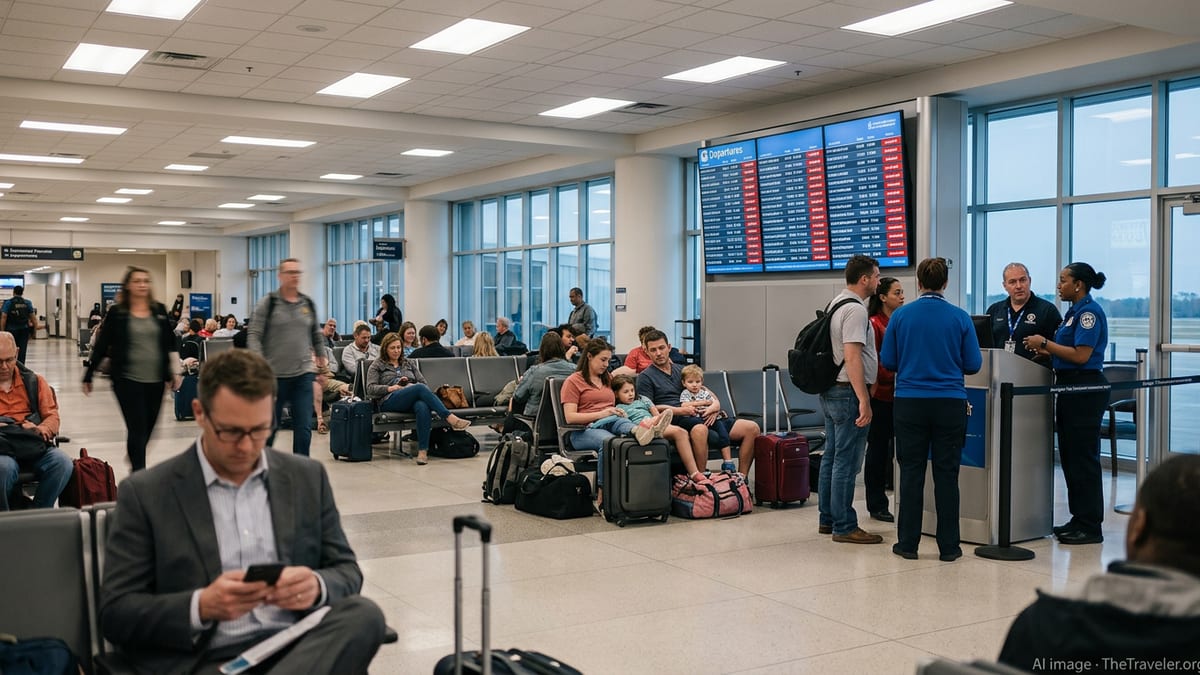
Chain Reaction Hits a Normally Quiet Regional Hub
The wave of disruption at Birmingham–Shuttlesworth began early Sunday as regional carriers feeding the big three U.S. airlines grappled with the knock-on effects of widespread weather and operational issues across the national network. Airport observers described an airport that was “a ghost town” at times on Saturday night, with banks of departures scrubbed or departing hours late as aircraft and crews failed to arrive on schedule from upstream hubs.
Data compiled from airline and airport tracking services indicated that nine departures and arrivals marketed by major carriers but operated by regional partners SkyWest, Mesa and PSA were suspended outright, affecting itineraries built around connections through Dallas–Fort Worth, Detroit Metro, Houston Intercontinental, Atlanta Hartsfield–Jackson and Charlotte Douglas. Several additional flights operated, but only after extended delays as aircraft repositioned into Birmingham from less affected airports.
While Birmingham–Shuttlesworth often benefits from its relatively modest traffic volumes, allowing it to absorb disruptions more quickly than mega-hubs, the airport’s reliance on regional jets linking to a handful of major connection points meant that the loss of even a small cluster of flights had an outsized impact on travelers with downline connections.
Airport officials did not immediately release a full accounting of the affected services, but passengers reported crowds building at gate podiums and ticket counters, with lines stretching through portions of the compact terminal as travelers sought rebookings, meal vouchers and hotel accommodation.
Weather and Crew Constraints Ripple Across the Network
The Birmingham disruptions unfolded against a broader backdrop of severe weather and air traffic control constraints that swept across the United States on March 7 and 8. Thunderstorms in the Southeast, low ceilings and heavy rain around Atlanta, and lingering snow and ice in parts of the central Rockies combined to trigger Federal Aviation Administration ground stops at several major hubs and slow departures across large swaths of the system.
Regional airlines such as SkyWest, Mesa and PSA, which operate under brands like American Eagle, United Express and Delta Connection, are particularly sensitive to this kind of network stress. Their aircraft typically fly multiple short segments per day with tight turn times, and their crews are bound by stringent duty-time regulations. When an early flight in the sequence is delayed or diverted, downline segments can quickly run out of crew duty window, forcing cancellations in order to remain within safety limits.
In the case of Birmingham, several of Sunday’s suspended flights were preceded by aircraft that either diverted to alternate airports, arrived hours behind schedule from congested hubs, or were held at origin while storms moved through busy airspace. By midday, schedules that had appeared routine on paper were fraying, with regional dispatchers forced to prioritize larger hubs and higher-density routes over smaller spokes such as Birmingham.
Industry analysts noted that the same weather pattern that pinched operations at Birmingham also battered Chicago, Denver and multiple East Coast airports this weekend, leaving airlines with limited options for repositioning aircraft and resetting their systems before the busy Monday business rush.
Travelers to Dallas, Detroit, Houston, Atlanta and Charlotte Stranded
The brunt of Sunday’s disruption at Birmingham was felt by passengers bound for or connecting through five key hubs: Dallas, Detroit, Houston, Atlanta and Charlotte. These airports anchor major domestic and international networks for American Airlines, Delta Air Lines and United Airlines, and most of Birmingham’s service to those cities is contracted to regional partners like SkyWest, Mesa and PSA.
With multiple flights canceled or placed into extended delay, travelers watched once-secure connections unravel. Passengers booked from Birmingham to Dallas and onwards to the Mountain West saw same-day options evaporate as remaining departures filled, while those headed to Detroit and onward to the Upper Midwest found themselves rebooked via circuitous routings through Chicago or New York, often arriving a day later than planned.
Flights to Houston and Atlanta, two of the South’s most important connection points, also saw disruptions that cascaded into missed international links and cruise departures. Social media posts from stranded travelers described missed family events, business meetings and spring-break trips, as well as long waits to speak with airline agents handling a crush of rebooking requests on constrained Sunday evening schedules.
Charlotte-bound passengers faced similar headaches. With PSA Airlines shouldering a significant share of American’s regional flying into Charlotte, even a small set of flight suspensions at an outstation like Birmingham can prove difficult to cover, especially when spare aircraft and reserve crews are already engaged in recovery efforts at other affected airports.
Airlines Scramble With Rebooking, Vouchers and Limited Options
By Sunday afternoon, airline teams representing the impacted carriers were working the concourses at Birmingham–Shuttlesworth, arranging overnight accommodations for some passengers and attempting to consolidate others onto remaining departures. Travelers reported a mix of automated text and app notifications alongside in-person announcements, with some praising quick rebookings and others frustrated by conflicting information between gate agents and call centers.
Because the primary drivers of the weekend’s turmoil appeared to be weather and broader airspace constraints rather than a localized mechanical or staffing issue in Birmingham itself, airlines did not universally offer compensation beyond meal vouchers and hotel rooms where required. Travel advisers said many passengers were instead pointed to standard “irregular operations” policies, which generally commit carriers to getting customers to their destination as soon as practical but do not guarantee reimbursement for missed events or ancillary costs.
Rebooking options were further limited by the fact that Birmingham is served by a relatively small set of daily flights compared with nearby Atlanta. Some travelers chose to accept itineraries involving ground transport to alternate airports in exchange for earlier arrival times, while others opted to postpone their trips entirely. Rental car counters at the airport reported a spike in demand on Saturday night and Sunday as fliers chose to drive to regional destinations in neighboring states rather than wait for the schedule to stabilize.
For travelers still hoping to fly, airline staff stressed the importance of monitoring mobile apps and airport display boards closely, as rolling delays and aircraft swaps continued into the evening. Even flights listed as "on time" at midday were occasionally pushed back as the knock-on effects of upstream congestion rolled through the system.
What Sunday’s Turmoil Signals for Spring Travel
The disruptions at Birmingham–Shuttlesworth underscore how vulnerable smaller regional airports can be when national conditions deteriorate. With only a handful of daily departures to each hub and regional partners operating much of the capacity, the suspension of nine flights in a single day can erase a significant portion of available seats and leave travelers with few immediate alternatives.
Aviation experts say the weekend’s events are an early warning for the spring and summer travel seasons, when storm-related ground stops and tight crew availability typically collide with peak passenger demand. They urge travelers who rely on regional spokes like Birmingham to build longer connection windows, travel earlier in the day where possible, and consider backup plans if their itinerary depends on a single hub connection to make an onward international or cruise departure.
Local tourism and business groups will be watching closely to see whether airlines adjust their schedules or add spare capacity into Birmingham and similar markets as they analyze the fallout from the March disruptions. While Sunday’s events may ultimately be remembered as a difficult but isolated episode, they also highlight the increasingly fine margins under which regional carriers operate as they connect smaller cities to the broader U.S. and global air networks.
For now, passengers moving through Birmingham–Shuttlesworth are contending with the immediate effects: full flights, longer lines, and a reminder that even a modest regional airport can suddenly become a flashpoint in a nationwide aviation squeeze.