

More news on this day
Travelers at Ronald Reagan Washington National Airport faced a fresh wave of disruption today as regional carriers PSA Airlines, Republic Airways, Endeavor Air, GoJet and Jazz scrapped around 60 flights and triggered well over 200 delays, crippling busy commuter corridors linking Washington with Providence, Kansas City, Pensacola, Hartford and other cities across the United States.
Get the latest news straight to your inbox!
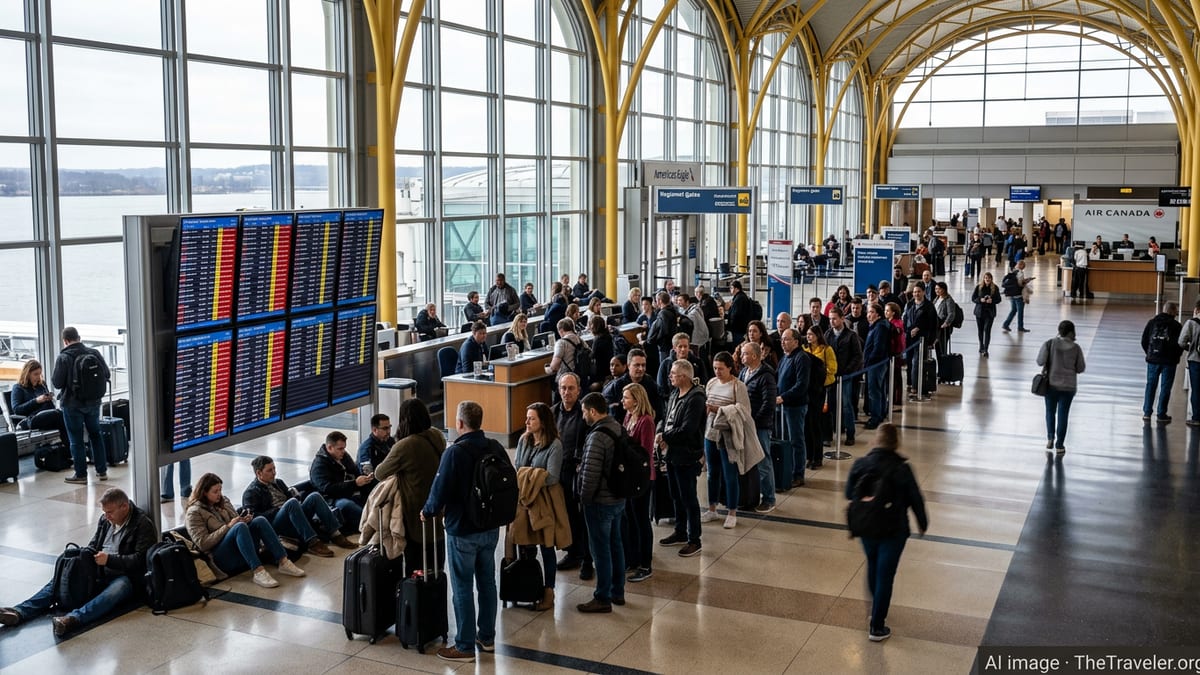
Heavy Disruptions Hit Key East Coast and Midwest Routes
The latest operational crunch at Reagan National unfolded through the early morning and midday banks, when regional jets normally shuttle frequent business travelers and government commuters along the East Coast and into the Midwest. By midafternoon, airport departure boards showed long blocks of red and yellow alerts, with cancellations heavily concentrated among American Eagle, Delta Connection and Air Canada Express services operated by PSA Airlines, Republic, Endeavor Air, GoJet and Jazz.
Routes linking Washington to Providence, Hartford and other New England markets were among the hardest hit, with some city pairs losing multiple frequencies in a single wave as carriers trimmed tightly scheduled rotations. Passengers heading to Kansas City and other mid-continent destinations also saw nonstop options vanish, forcing last minute rebookings over alternate hubs such as Charlotte, Chicago and Atlanta.
Several departures to leisure and military markets in the Southeast, including Pensacola, experienced extended tarmac holds and rolling delays, in some cases pushing flights beyond advertised connection windows. Airline agents at Reagan reported particularly long queues in the regional concourses as travelers scrambled to secure scarce seats later in the day.
While the disruption remained below the levels seen during major winter storms and nationwide IT outages earlier this year, the concentration of problems in short-haul feeder traffic meant a broad swath of itineraries were affected. Many passengers with long-planned international connections found themselves stranded in Washington or diverted to other East Coast gateways.
Operational Strain on Regional Partners
The day’s problems underscored the vulnerability of the regional airline system that underpins much of the United States’ domestic network. PSA Airlines and Republic, which fly under the American Eagle banner, along with Delta’s Endeavor Air, GoJet’s United and Delta operations, and Air Canada’s Jazz subsidiary, collectively handle a large share of Reagan National’s short-haul flying to secondary and midsize cities.
Industry analysts note that these carriers already operate on thin margins with tight crew and aircraft utilization, meaning even minor schedule perturbations can cascade quickly. A cluster of inbound delays into Reagan early in the operating day forced last minute cancellations when aircraft and flight crews could not be repositioned in time to operate subsequent legs.
Pressure on staffing levels among regional operators has persisted since the pandemic, with pilot shortages, training backlogs and competitive hiring from major airlines all contributing to fragile schedules. At the same time, carriers have been reluctant to pare back frequencies from slot-constrained Reagan, where access is capped, to avoid surrendering valuable market share.
Because many of the affected flights were feeding large hub banks in cities such as Charlotte, Chicago, New York and Toronto, cancellations and delays in Washington reverberated outward. Missed connections rippled into later departures, extending the impact well beyond the mid-Atlantic region and into the broader North American network.
Travelers Face Long Lines, Limited Options
Inside Reagan National’s terminals, passengers encountered crowded gate areas and stretched customer service desks as the disruption grew. Airline staff urged travelers to make use of mobile apps and self-service tools to change itineraries, warning that standby lists for later flights to popular destinations were quickly filling.
With many regional flights operating on smaller 50 to 76 seat jets, rebooking options were limited. In several cases, entire planeloads had to be dispersed across just one or two remaining departures later in the day, or shifted to nearby airports such as Dulles International and Baltimore/Washington for alternative routings.
Families returning from school breaks and early spring getaways reported waits of several hours to speak with an agent, while some business travelers opted to abandon same day trips altogether and rebook for later in the week. Others turned to Amtrak’s Northeast Corridor and intercity buses as backup options for short haul journeys between Washington, Providence and Hartford.
Airport officials advised passengers to arrive earlier than usual, build additional buffer time into connections, and monitor flight status frequently, noting that departure times continued to shift through the afternoon. Vendors within the terminals, particularly food and beverage outlets near the regional concourses, saw sustained crowds as passengers waited out rolling delays.
Weather and Air Traffic Constraints Add to Fragile System
While airlines did not immediately detail a single underlying cause for the cluster of cancellations, the day’s disruption coincided with unsettled weather patterns along the Eastern Seaboard and lingering traffic flow restrictions in the busy Washington airspace. Even modest reductions in arrival and departure rates at Reagan can force airlines to trim schedules in real time, particularly when regional fleets are already stretched.
Reagan National’s location along the Potomac River, with tightly constrained approach and departure corridors, makes it especially sensitive to wind shifts, low ceilings and visibility changes. Under such conditions, air traffic controllers often slow the rate at which aircraft can land and take off, compounding delays for carriers operating dense shuttle schedules on smaller jets.
The latest disruption follows a broader pattern of volatility at key East Coast airports over the last year, as carriers juggle chronic air traffic staffing challenges, congested airspace and more frequent severe weather systems. Industry observers say regional subsidiaries frequently bear the brunt of short-notice schedule cuts, because canceling a smaller jet affects fewer passengers than grounding a mainline narrowbody.
For travelers, however, the practical effect is similar: missed meetings, lost vacation time and added travel costs. Some passengers at Reagan reported being offered hotel and meal vouchers or fee waivers for itinerary changes, though policies varied widely by carrier and ticket type.
What Passengers Can Do if Their Flight Is Affected
Airline and airport representatives reiterated that the best defense against rapidly evolving disruption is proactive planning. Passengers booked on regional services into or out of Reagan National, particularly on routes to affected cities such as Providence, Hartford, Kansas City and Pensacola, were urged to check their flight status repeatedly on the day of travel and to enable push notifications within airline apps.
Frequent travelers recommend monitoring both the inbound and outbound legs of a flight, since a late arriving aircraft from another city often signals trouble for the next departure. When significant delays first appear, rebooking early can provide access to the small number of remaining seats before flights sell out, especially on days when multiple carriers are trimming capacity simultaneously.
For those already at the airport, airline counters and customer service phone lines remain primary avenues for assistance, but digital tools are increasingly effective. Same day changes can sometimes be processed more quickly through mobile apps or chat functions than by waiting in physical queues, particularly during peak disruption periods.
Travel experts also suggest having a backup plan in mind, such as alternate airports within driving distance, nearby rail options, or overnight accommodations, in case conditions worsen. With Reagan National continuing to rank among the country’s airports with higher cancellation rates, many seasoned travelers now routinely build extra flexibility into itineraries touching Washington, especially during seasons prone to weather and operational stress.