

More news on this day
Tourism in Bosnia’s Serb Republic registered a modest but symbolically important rise in foreign visits in February, with the latest official data pointing to an increase of just over one percent, largely powered by steady demand from neighbouring Serbia, Croatia and Slovenia.
Get the latest news straight to your inbox!
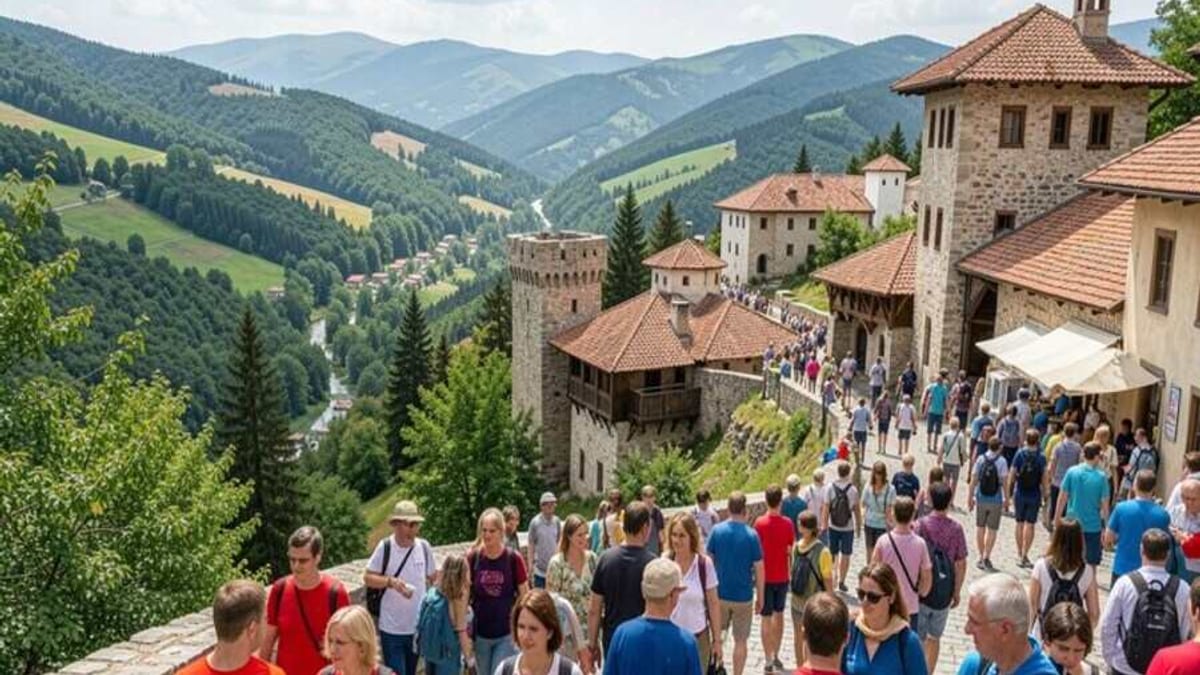
Image by Latest International / Global Travel News, Breaking World Travel News
February Figures Signal Ongoing Foreign Momentum
Recent statistical releases for Bosnia and Herzegovina indicate that foreign tourism in early 2025 continued to climb, even as domestic travel softened. From January to February, foreign tourist arrivals across the country rose by more than six percent compared with the same period a year earlier, with visitors from Croatia, Serbia and Slovenia firmly at the top of the ranking by overnight stays. In February alone, these three markets together accounted for the majority share of foreign nights spent in the country, underlining the growing importance of short-haul regional travel.
Within that wider national picture, Bosnia’s Serb Republic has followed a similar trajectory, recording a rise in foreign visits in February that pushed overall performance just over the one percent growth mark. Publicly available information from the entity and state-level statistics offices shows that the bulk of this foreign demand continues to come from nearby states with strong cultural, linguistic and transport links, making the Serb Republic one of the clearest beneficiaries of a broader regional tourism rebound.
Although the percentage increase may appear modest in isolation, analysts of the Western Balkans tourism market note that such gains are significant in a year when many European destinations are seeing growth flatten after the post-pandemic surge. A low single‑digit rise, driven predominantly by repeat regional visitors, is considered a sign that the Serb Republic is consolidating its tourism base rather than relying on one‑off spikes from long‑haul markets.
Serbia, Croatia and Slovenia Dominate Visitor Mix
According to aggregate tourism statistics for Bosnia and Herzegovina in early 2025, Croatia remains the single largest foreign source of overnight stays, followed by Serbia and then Slovenia further down the ranking. In February, tourists from Croatia generated roughly one third of all foreign nights in the country, while Serbian visitors contributed close to one fifth and Slovenians approached a tenth of the total. This concentration underscores how strongly the tourism fortunes of Bosnia’s Serb Republic are tied to its immediate neighbourhood.
Reports on tourism performance in the Serb Republic through 2024 and 2025 show a similar hierarchy. The entity has repeatedly cited Serbia, Croatia and Slovenia, alongside Montenegro, as the principal foreign markets filling its hotels, guesthouses and spa resorts. In the first ten to eleven months of 2025, the Serb Republic recorded mid‑single‑digit growth in both arrivals and overnight stays, with visitors from these three countries making up the majority of foreign demand and close to two fifths of all nights spent in the entity.
Regional observers note that this pattern reflects both geography and habit. Citizens of Serbia, Croatia and Slovenia can reach many destinations in the Serb Republic by car in a matter of hours, and they are already familiar with the region’s language, currency and customs. As a result, they are more likely to return frequently, book short breaks and explore smaller mountain and rural destinations that have not yet broken into wider European travel circuits.
Record‑Setting Year Provides a Strong Base
The February uptick in foreign visits comes on the back of what local tourism bodies describe as a record or near‑record year for the Serb Republic in 2025. Data released at the end of last year and in early 2026 show that the entity surpassed one million overnight stays within the first ten months alone, recording growth of around four to five percent in tourist arrivals compared with the previous year. Foreign guests accounted for a sizable portion of that increase, with particularly strong results in mountain resorts, spa towns and nature‑focused destinations.
Reports indicate that in the first eleven months of 2025 the Serb Republic counted more than 470,000 tourist arrivals and over 1.1 million overnight stays. This represented continued expansion on the previous year’s totals and confirmed that tourism is becoming a more important pillar of the entity’s economy. The fact that Serbia, Croatia and Slovenia collectively contributed the largest block of foreign nights suggests that regional loyalty and cross‑border mobility are key structural supports for this growth.
Sector analyses published across Bosnia and Herzegovina further show that, at the state level, foreign tourists now account for well over two thirds of all overnight stays, with the contribution of regional neighbours consistently outweighing that of more distant source markets. This baseline helps explain how even a relatively small percentage increase in foreign visits in a single off‑season month can be interpreted as a positive signal for the Serb Republic’s tourism trajectory in 2026.
Regional Connections and Infrastructure Strengthen Appeal
Industry coverage across the Western Balkans links the Serb Republic’s improving tourism numbers to a broader web of regional transport and marketing initiatives. Investments in new and subsidised airline routes to Sarajevo and other Bosnian gateways, many of which connect to hubs in Serbia and Croatia, have made it easier for visitors from the wider region and from the European Union to combine multiple countries in a single itinerary. At the same time, highway upgrades and cross‑border road corridors have shortened travel times for motorists from Belgrade, Zagreb, Ljubljana and coastal areas.
Tourism development strategies in several municipalities inside the Serb Republic emphasise joint promotion with neighbouring states, especially for nature, wellness and cultural tourism. Planning documents highlight the strong growth in visitors from Slovenia and Croatia in recent years and identify Serbia as a stable, high‑volume market. These strategies aim to package the Serb Republic’s mountains, rivers and small historic towns as natural extensions of travel circuits that already include the Adriatic coast or major urban centres elsewhere in the former Yugoslavia.
Analysts point out that this kind of regional integration helps spread visitor flows more evenly across the calendar year. While summer remains dominant in coastal Croatia and many parts of Slovenia, Bosnia’s Serb Republic has capitalised on winter sports, spa tourism and countryside retreats, offering short breaks that appeal to travellers seeking alternatives to crowded seaside resorts. The February rise in foreign visits fits this pattern, indicating that the entity is gradually strengthening its low‑season profile.
Modest Monthly Gain, Outsized Strategic Significance
Viewed strictly in numerical terms, an increase of just over one percent in foreign tourist visits to Bosnia’s Serb Republic in February may seem minor. However, in a regional context marked by volatile consumer prices and shifting travel preferences, it carries larger strategic significance. The gain suggests that core regional markets are not only holding steady but slowly expanding, even during the quieter months of the tourism calendar.
Publicly available tourism data for Bosnia and Herzegovina show that overall growth is now more incremental than in the immediate post‑pandemic years, when double‑digit annual increases were common. Against that backdrop, the Serb Republic’s capacity to continue edging upward, anchored by repeat visitors from Serbia, Croatia and Slovenia, is seen by analysts as an indicator of resilience and sustained appeal.
Looking ahead through 2026, sector observers expect the entity to keep targeting its closest neighbours while cautiously broadening its reach into EU and Middle Eastern markets. If current patterns hold, Serbia, Croatia and Slovenia are likely to remain the backbone of foreign demand, providing a reliable stream of visitors that can support investment in accommodation, infrastructure and destination branding. The February figures, while modest in absolute terms, therefore point to a deeper story of regional interdependence shaping the tourism landscape in Bosnia’s Serb Republic.