

More news on this day
Regional airports across the United States are accelerating route growth in 2026, as carriers such as Southwest Airlines, Allegiant Air and Avelo expand domestic networks and tap into surging demand for leisure and small-city travel.
Get the latest news straight to your inbox!
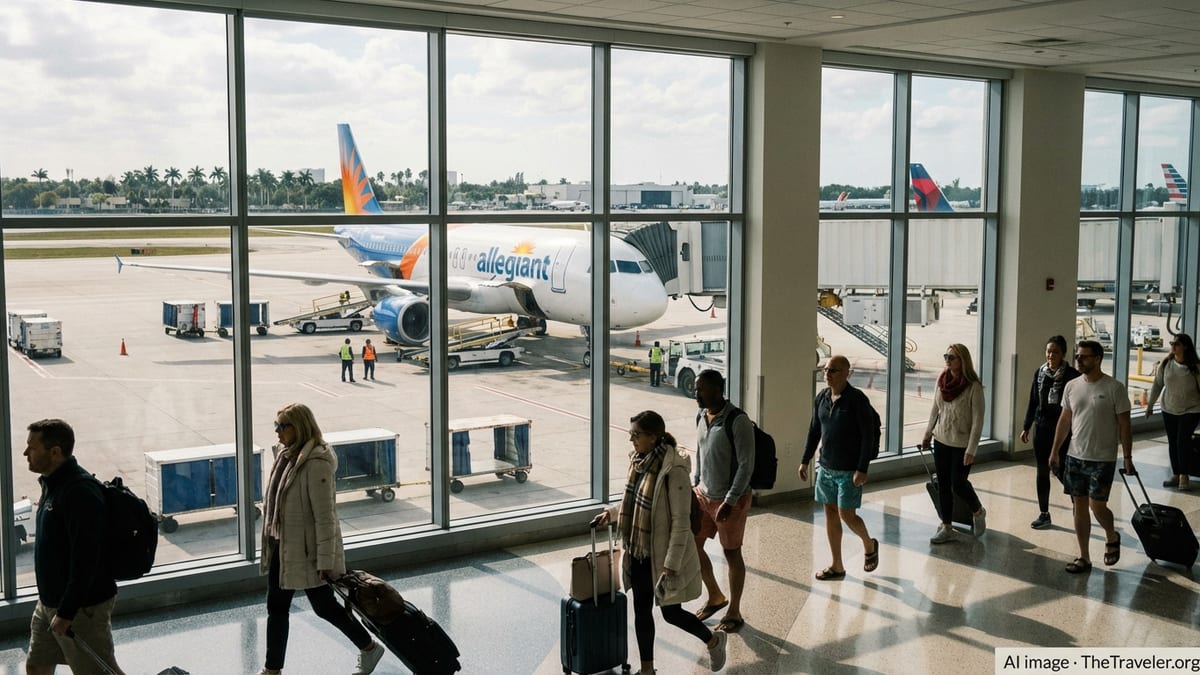
Southwest’s Wine Country Bet at Charles M. Schulz–Sonoma County
Charles M. Schulz–Sonoma County Airport in Santa Rosa, California is emerging as one of the clearest examples of how regional hubs are attracting big-brand carriers. Publicly available information shows that Southwest Airlines began service at the airport on April 7, 2026, adding mainline Boeing 737 flights to San Diego, Las Vegas, Denver and Burbank. The move places the North Bay’s small commercial field firmly onto the national map of one of the country’s largest domestic airlines.
Tourism and airport updates indicate that Southwest’s debut comes on the heels of record passenger volumes in 2025, when the airport handled roughly 780,000 travelers, a marginal increase over the previous year. The new Southwest routes layer on top of an already busy schedule of regional and West Coast flights operated by other carriers, reinforcing the airport’s position as a convenient alternative to San Francisco and Oakland for residents of Sonoma, Napa and Marin counties.
Industry coverage suggests this is part of a broader strategy by Southwest to deepen its California footprint without relying solely on large coastal hubs. By linking Sonoma County directly to key markets such as Denver and San Diego, the airline is capturing both wine tourism and visiting friends and relatives traffic, while giving local residents new one-stop connections across its national network.
Local aviation observers note that the airport has spent the past decade upgrading terminal facilities and parking to accommodate growth. The arrival of a major low-cost carrier is viewed as a pivotal step that could attract further domestic routes in coming schedule updates.
Allegiant’s Aggressive Growth at St. Pete–Clearwater and Beyond
On the opposite side of the country, Allegiant Air is using Florida’s Gulf Coast as a showcase for its latest expansion. Recent regional reporting indicates that St. Pete–Clearwater International Airport entered 2026 with record traffic, serving nearly 2.8 million passengers in 2025. Allegiant, the airport’s dominant carrier, has announced three new nonstop routes from St. Pete–Clearwater to Atlantic City and Trenton in New Jersey, as well as Huntsville, Alabama.
Allegiant’s Huntsville service forms one leg of a wider web of new connections. Coverage of the airline’s network plans shows that Huntsville International Airport is gaining multiple Florida links, including service to St. Pete–Clearwater and other Sunshine State destinations. The routes are closely aligned with Allegiant’s focus on point to point leisure travel, often connecting mid sized cities that lack extensive service from the legacy network airlines.
Industry reports also highlight Allegiant’s corporate ambitions. In early 2026, the carrier announced an agreement to acquire Sun Country Airlines in a multibillion dollar deal, described as a merger of two leisure oriented, low cost operators. While regulators still need to review the transaction, the combined airline would operate hundreds of routes and nearly 200 aircraft, potentially amplifying its presence at regional airports across the country.
For airports such as St. Pete–Clearwater and Huntsville, the strategy translates into a growing list of nonstop options to secondary and tertiary markets. Travel analysts note that these routes often draw price sensitive vacationers and snowbirds, bringing tourism revenue to beach and resort communities while offering smaller inland cities direct access to warm weather getaways.
Greater Rochester and Other Northeastern Gateways Add Low Cost Lift
In the Northeast, Frederick Douglass Greater Rochester International Airport illustrates how regional facilities are using a mix of ultra low cost and hybrid carriers to rebuild and diversify service. Airport announcements in recent seasons have spotlighted Avelo Airlines, which has introduced or expanded nonstop links from Rochester to destinations including Charlotte area Concord and Central Florida’s Lakeland, marketed as an alternative to Orlando and Tampa.
More recent documents from Monroe County’s aviation department point to additional low cost carriers being added or expanded at the airport, continuing a post pandemic trend in which Rochester has sought more point to point service to leisure and sun destinations. The strategy complements legacy carrier hubs by giving residents direct options that bypass congested connecting airports.
Similar patterns are visible at other Northeastern and Midwestern regional airports, where low fare carriers are selectively entering markets that can support a few weekly flights rather than a full schedule. Aviation analysts observe that the economics of modern narrowbody aircraft, along with the operational flexibility of carriers such as Avelo, have made it viable to serve cities that previously struggled to retain nonstop routes.
For communities around Rochester, the growing menu of nonstop destinations has marketing value beyond passenger counts. Local tourism and economic development groups often cite air connectivity as a key factor in attracting both visitors and investment, and incremental additions by low cost carriers are described as important wins.
Eagle County, Mountain Gateways and the Rise of Seasonal Networks
While year round growth is a major storyline, mountain and resort airports such as Eagle County Regional Airport in Colorado highlight the importance of seasonal domestic routes. Public data on Eagle County’s operations show strong winter schedules tied to ski demand, with flights from large hubs like Denver, Dallas and Houston feeding visitors into the Vail Valley.
Carriers including United, American and Delta have historically dominated these seasonal operations, but low cost players are increasingly experimenting with peak season offerings to mountain towns. Industry schedules and airline filings for upcoming seasons reflect continued interest in ski and summer outdoor markets, with some point to point flights directly linking secondary cities to resort areas.
Analysts note that this seasonal layering is part of a broader shift in the domestic network model. Instead of relying solely on large hubs, airlines are stitching together limited window nonstops that appear for a few months each year, often using spare aircraft time during off peak days. For airports like Eagle County, the result is a more complex but also more resilient pattern of service than in previous decades.
Travel planners say that the growing mix of legacy carriers and leisure focused airlines at mountain airports is giving travelers more choice on both price and schedule. At the same time, the reliance on a narrow peak season underscores how sensitive these markets remain to weather, economic conditions and shifts in travel preferences.
Network Strategies Point to a New Phase for U.S. Regional Airports
Taken together, developments at Charles M. Schulz–Sonoma County, St. Pete–Clearwater, Greater Rochester, Eagle County and other similar fields signal a new phase in the role of regional airports in the United States. Instead of acting primarily as feeders to large hubs, many are carving out niche positions as origin and destination gateways for specific types of travel, from wine country weekends to Gulf Coast beach escapes and ski vacations.
Airline route announcements in the past year show that carriers such as Southwest, Allegiant, Avelo, JetBlue and others are willing to commit aircraft to markets that just a few years ago might have been considered too small or too seasonal. Improved fleet efficiency, better data on local demand and the resilience of leisure travel have all been cited in public commentary as reasons behind the shift.
For travelers, the most visible change is on the departures board. New nonstop options from smaller, easier to navigate airports offer shorter drive times and simpler journeys, particularly for residents outside major metropolitan areas. For the airports and their surrounding regions, the stakes are higher, as each additional route can bring measurable tourism spending and business connectivity.
With Southwest’s inaugural flights now operating from Sonoma County and Allegiant broadening its map from hubs like St. Pete–Clearwater and Huntsville, industry observers will be watching closely to see which regional airports secure the next wave of additions. The pattern emerging in 2026 suggests that the competition for new domestic routes is increasingly playing out far from the country’s largest hubs.