

More news on this day
South Wales is preparing for a significant rail transformation as a package of upgrades to the South Wales Main Line relief tracks, coupled with plans for seven new stations, promises quicker journeys and stronger cross-border connections for commuters, businesses and visitors.
Get the latest news straight to your inbox!
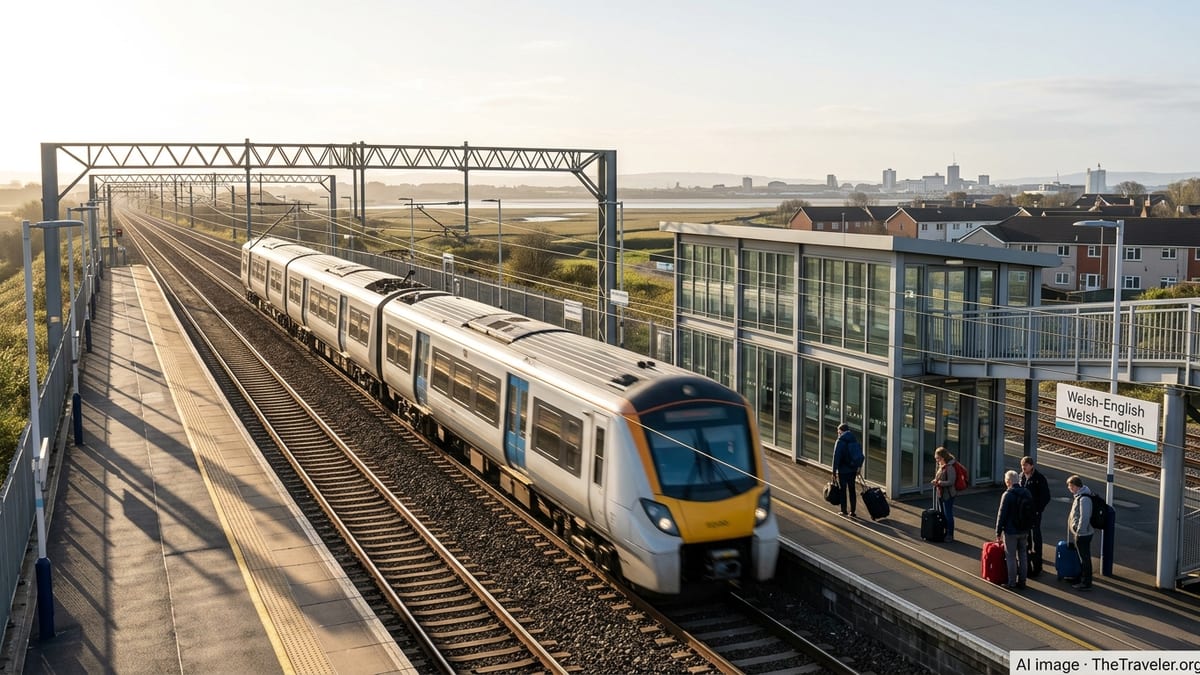
Relief Line Upgrade Unlocks Capacity Between Cardiff and Severn Tunnel Junction
Publicly available information shows that at least £40 million has been ringfenced by the UK government to upgrade the South Wales Main Line relief tracks between Cardiff and Severn Tunnel Junction. Reports indicate that the works will focus on increasing line speeds and unlocking additional capacity on the two-track corridor that runs parallel to the existing high-speed main lines.
The relief line upgrade is intended to allow more stopping services to operate without constraining intercity trains heading towards Bristol, London and southwest England. Policy documents and technical reports linked to the South East Wales Transport Commission and subsequent government announcements describe a vision where the modernised relief lines function as a high-frequency stopping corridor serving local communities.
Transport-focused analyses suggest that increasing speeds and improving signaling on the relief lines will shorten journey times for existing services while creating room for new patterns of local and cross-border trains. This is framed within wider aspirations to cut road congestion on the M4 around Newport by providing a credible “network of alternatives” for both daily commuters and leisure travellers.
The relief line works are also being coordinated with other major investments, including a forthcoming transformation of Cardiff Central station and ongoing South Wales Metro projects. Together, these schemes are expected to create a more resilient and flexible rail backbone for the region.
Seven New and Proposed Stations to Serve Growing Communities
According to recent government announcements and rail industry coverage, funding has been outlined for seven new or planned stations linked to the South Wales Main Line upgrade. The South Wales corridor between Cardiff and the Severn Tunnel is due to see new stations at Magor and Undy, Llanwern, Cardiff East, Newport West, Somerton and Cardiff Parkway, while an additional new station is proposed to serve Deeside Industrial Park in North Wales.
These so-called “Burns stations” on the relief lines are concentrated east of Cardiff, filling gaps in access along a heavily populated commuter belt. Cardiff East is planned to serve the eastern districts of the capital, while Newport West and Somerton will improve access to residential and employment areas around Newport. Llanwern is positioned to support a major regeneration area on former industrial land, and Magor and Undy are intended to give growing communities a direct rail option that reduces car dependency.
Cardiff Parkway, a largely privately led project at St Mellons on the eastern fringe of the city, is framed in published material as a strategic business gateway. The planned four-platform station on the main and relief lines is expected to serve hundreds of thousands of passengers annually and support thousands of jobs in a new business district. Its design aims to accommodate both fast intercity trains and frequent local stopping services, reflecting its role as a multimodal hub.
Taken together, the cluster of new stations along the upgraded relief lines is being promoted as a step-change in local accessibility. By bringing rail services closer to homes, workplaces and development sites, planners anticipate more balanced growth across the Cardiff–Newport corridor and a stronger case for sustainable transport investment.
Boost for Business Connectivity Across the Cardiff–Bristol Economic Arc
Economic and transport prospectuses published in recent months underline how the relief line upgrade and new stations are intended to reinforce the wider Cardiff–Bristol economic region. The corridor is home to financial services, advanced manufacturing, logistics hubs and a growing technology sector, and there is long-standing interest in more reliable rail links to support cross-border commuting and business travel.
Proposals set out by Transport for Wales point to future services that would use the modernised relief lines to offer more frequent trains between Cardiff, Newport, Severn Tunnel Junction and onward to Bristol. Alongside existing Great Western Railway intercity services, additional regional trains could provide regular, clockface stopping patterns that suit commuters with varied working hours and support flexible office locations.
Cardiff Parkway is often highlighted in investment material as a key connector for business travellers, with ambitions for direct services to London, Bristol, Swansea and other major destinations. By situating a high-quality station within a planned business park close to the motorway network, project backers aim to shift a share of car-based journeys onto rail, while making the site more attractive to investors seeking strong national and international connectivity.
Analysts also note that enhanced rail capacity on the relief lines can benefit freight flows between South Wales ports, English markets and European links. While most freight services will continue to use main lines, greater timetable flexibility and resilience in the corridor may help logistics operators manage disruptions and schedule paths more efficiently.
Tourism and Visitor Travel Set to Gain from More Frequent Services
The planned works on the South Wales Relief Line are not only framed as a commuter project. Travel and tourism bodies have pointed out that better local and cross-border rail connections can encourage more visitors to explore South Wales without relying on cars, especially for short breaks and day trips.
With additional stations in place, visitors staying in Cardiff, Newport or Bristol would have more options for accessing coastal villages, historic sites and countryside attractions along the corridor. New stops at communities such as Magor and Undy or Llanwern could support local hospitality businesses by making it easier for tourists to reach walking routes, heritage locations and events without navigating motorway traffic.
Improved frequencies on stopping services between Cardiff, Newport and Bristol are also expected to benefit city-break tourism. More regular trains can make multi-city itineraries simpler, allowing visitors to combine Cardiff’s cultural attractions and sporting venues with Bristol’s harbourside, museums and food scene in a single trip. Rail industry analysis often highlights this type of cross-border leisure travel as an important and growing market.
In parallel, the ongoing South Wales Metro programme is gradually enhancing connections from the main line into the Valleys, creating opportunities for joined-up itineraries that link the relief line corridor with hill walking, industrial heritage sites and smaller towns. As timetables and infrastructure evolve, the combined network is likely to make car-free travel more practical for a broader range of visitors.
Timelines, Phasing and Integration with the South Wales Metro
Published timelines suggest that detailed planning work for the relief line upgrade and associated stations will continue through 2026, with construction of several of the South Wales Main Line stations expected to begin towards the end of the decade. Reports in specialist rail media indicate that delivery of the core group of stations on the relief lines is currently envisaged from around 2029 onwards, although precise dates remain subject to further design, approvals and funding decisions.
Transport for Wales material describes how the programme has been rephased so that key electrification works and junction enhancements can be prioritised, with attention then turning back to new stations and track improvements. This phasing is intended to ensure that the upgraded infrastructure is ready to support higher-frequency stopping services as soon as the new stations open.
Integration with the broader South Wales Metro is a central theme in official prospectuses. The metro project, which combines heavy rail, light rail and bus improvements, is moving towards initial operations from early 2026 on key routes. The relief line upgrade and the “Burns stations” are presented as complementary investments that extend the reach of the metro concept eastwards along the main line, reinforcing Cardiff as a regional hub while providing stronger links to Newport and the English side of the Severn.
As design and consultation work progresses, further detail is expected on service patterns, park-and-ride facilities, active travel links and interchange layouts at each new station. For now, the confirmed funding for the relief line upgrade and the clear political backing for new stations signal that South East Wales is on course for a more connected rail future that serves both daily travellers and the region’s growing tourism economy.