

More news on this day
As post-pandemic travelers trade crowded icons for solitude and star-filled skies, the United States is emerging alongside Canada, Thailand, Australia, Turkey and Japan as a leading gateway to remote, little-known landscapes where nature remains largely untouched.
Get the latest news straight to your inbox!
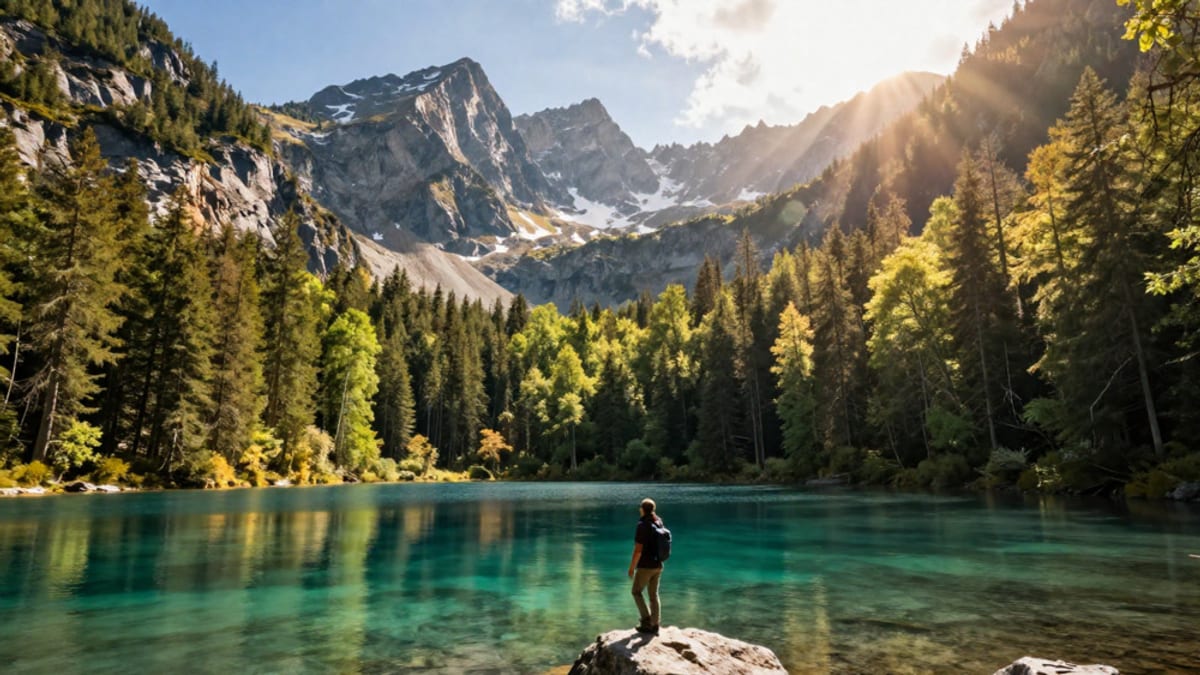
Image by Travel And Tour World
United States Pushes Deeper Into Wild, Quiet Spaces
Across the United States, publicly available tourism plans indicate a strong shift toward experiences in remote parks, reserves and rural communities, aimed at visitors seeking silence, dark skies and low-impact adventure. Western states are leaning into this trend by highlighting lesser-known backcountry sections of long-established national parks and public lands rather than marquee viewpoints crowded in peak season.
Documents from state tourism boards show particular momentum in high-desert and canyon regions, where new or refreshed trail systems, hut-to-hut routes and backcountry camping zones are being promoted as multi-day escapes far from paved roads. These efforts are often paired with messaging around astrotourism, as clear, low-light skies become a major draw for travelers who want to experience the Milky Way without urban glare.
Industry trend reports for 2025 and 2026 also point to the rise of so-called “slomads,” a growing segment of remote workers and long-stay travelers who are extending visits in rural and nature-focused destinations. Research on booking patterns in the United States indicates that longer stays in small towns and remote counties are becoming more common, suggesting that visitors are using these places not just for short breaks but as temporary bases embedded in wild surroundings.
At the same time, national and regional organizations are emphasizing visitor education on topics such as leave-no-trace practices, wildfire awareness and respect for local communities. This reflects a widening recognition that the appeal of these remote areas depends on keeping ecosystems intact, limiting overcrowding and ensuring that tourism revenue supports conservation and resident well-being.
Canada’s Vast Backcountry Lures Solitude Seekers
Canada’s scale and sparse population have long made it a natural fit for remote travel, but recent promotional materials from tourism boards highlight a more deliberate focus on hidden corners of its national and provincial parks. New itineraries spotlight less-trafficked sections of the Rockies, coastal inlets accessible only by floatplane or boat, and northern regions where boreal forest and tundra stretch to the horizon.
Tourism publications for the 2025–2026 seasons describe an uptick in guided and self-guided backcountry routes that combine hut stays, wilderness lodges and Indigenous-owned camps. These products are marketed to experienced hikers, paddlers and wildlife enthusiasts who want multi-day immersion in nature with minimal infrastructure, often limited to a single trail, cabin or dock on an otherwise empty shoreline.
Reports also show that Canadian destinations are capitalizing on demand for aurora viewing and dark-sky tourism, positioning remote communities in the Yukon, Northwest Territories and northern provinces as winter and shoulder-season escapes. Operators are pairing night-sky experiences with daytime activities such as dogsledding, snowshoeing and quiet cultural encounters, framing the trips as antidotes to crowded ski resorts and urban winter getaways.
Parallel to these developments, government and park-agency communications underline strict visitor caps on certain backcountry routes, requirements for permits, and growing investment in search-and-rescue capacity. The messaging reflects a balancing act between opening wild spaces to international travelers and safeguarding fragile ecosystems that can be quickly damaged by unmanaged visitation.
Thailand and Australia Turn to Lesser-Known Wilderness
In Southeast Asia, Thailand is moving beyond its famous beaches to promote remote provinces and islands that remain relatively untouched by mass tourism. Recent coverage in regional and international travel outlets describes new campaigns centered on lesser-known islands, highland towns and forested national parks, with an emphasis on slow travel, local homestays and community-led conservation projects.
Features on destinations such as Nan and Phetchabun in northern Thailand, as well as smaller islands in the Gulf of Thailand and Andaman Sea, highlight early-morning mist over mountain valleys, quiet temples and wildlife-rich reefs that are still accessible but lack the nightlife and congestion of established resort hubs. Travel-writing and destination guides for 2025 and 2026 often frame these areas as “last-chance” escapes for travelers who want to experience rural Thai culture and intact ecosystems before they become more widely known.
Australia is pursuing a similar strategy, particularly in remote coastal and outback regions. Tourism information emphasizes multi-day wilderness tracks in Tasmania and Queensland, extended road trips across sparsely populated interior landscapes, and new or expanded protected areas designed to safeguard wildlife while offering carefully managed visitor access.
National and state-level materials draw attention to long-distance routes that link several national parks and conservation reserves, inviting travelers to spend days or weeks moving through varied ecosystems, from rainforest to alpine plateau and rugged coastline. The approach positions Australia not just as a country of iconic single stops like the Great Barrier Reef, but as a destination where entire journeys can unfold far from towns and highways.
Turkey and Japan Showcase Quiet Coasts and Mountain Sanctuaries
In Turkey, recent destination updates and travel features point to a growing interest in lesser-known stretches of the Aegean and Mediterranean coasts, as well as interior plateaus where traditional village life continues amid sweeping steppe and mountain scenery. Routes that combine sections of long-distance trails with stays in small guesthouses are being singled out as a way to experience the country’s landscapes at walking pace.
Published coverage describes a move away from concentrating visitors in a handful of busy seaside resorts, with new attention given to small bays, forest-fringed peninsulas and archaeological sites that receive only a fraction of the traffic seen at major attractions. These itineraries are often framed around themes such as cultural heritage, coastal ecology and farm-to-table food experiences, allowing visitors to spend slow days following old paths between orchards, olive groves and fishing villages.
Japan is also spotlighting its quieter side, particularly in the form of mountain trails, island archipelagos and rural hot-spring towns that sit well outside the country’s main urban tourism corridors. Recent promotions from regional prefectures feature pilgrimage paths, long-distance forest walks and little-known national parks where strict development controls keep infrastructure minimal.
Reports highlight how local rail lines, community-run inns and small ferries are being positioned as gateways to these secluded areas. Travelers are encouraged to combine day hikes and onsen visits with stays in traditional accommodations, creating trips that focus less on major city sightseeing and more on extended time in calm, natural surroundings.
Remote Travel Aligns With Sustainability and Slower Lifestyles
Across all six countries, current tourism trend analyses describe a convergence between rising demand for remote escapes and growing awareness of sustainability. Industry forecasts for 2025 and 2026 note that many travelers are more willing to accept longer transfer times, basic facilities and limited connectivity if it means access to landscapes that remain largely undisturbed.
Destination strategies increasingly present remoteness as both a privilege and a responsibility. Marketing materials instruct visitors on how to minimize waste, respect wildlife and support local economies, tying the appeal of deserted trails and empty beaches to practical guidelines on how to keep them that way. This reflects a broader shift from simply “discovering” hidden places to participating in their long-term protection.
At the same time, research on remote work and extended-stay travel suggests that slow, nature-focused itineraries are no longer limited to traditional vacation periods. With more workers able to log in from cabins, lodges and small-town rentals, the line between holiday and everyday life is blurring, helping sustain year-round demand for quiet, nature-immersive settings.
Taken together, these trends position the United States alongside Canada, Thailand, Australia, Turkey and Japan in a new global narrative: one where the most coveted journeys are not to the world’s busiest icons, but to the remote ridgelines, forests and shores where the loudest sound is wind, water and wildlife.