

More news on this day
Ambassador Cruise Line’s Renaissance has adjusted its current Atlantic sailing, cancelling a scheduled call in the Azores as a powerful North Atlantic storm system brings increasingly rough seas and high winds to the mid-Atlantic islands.
Get the latest news straight to your inbox!
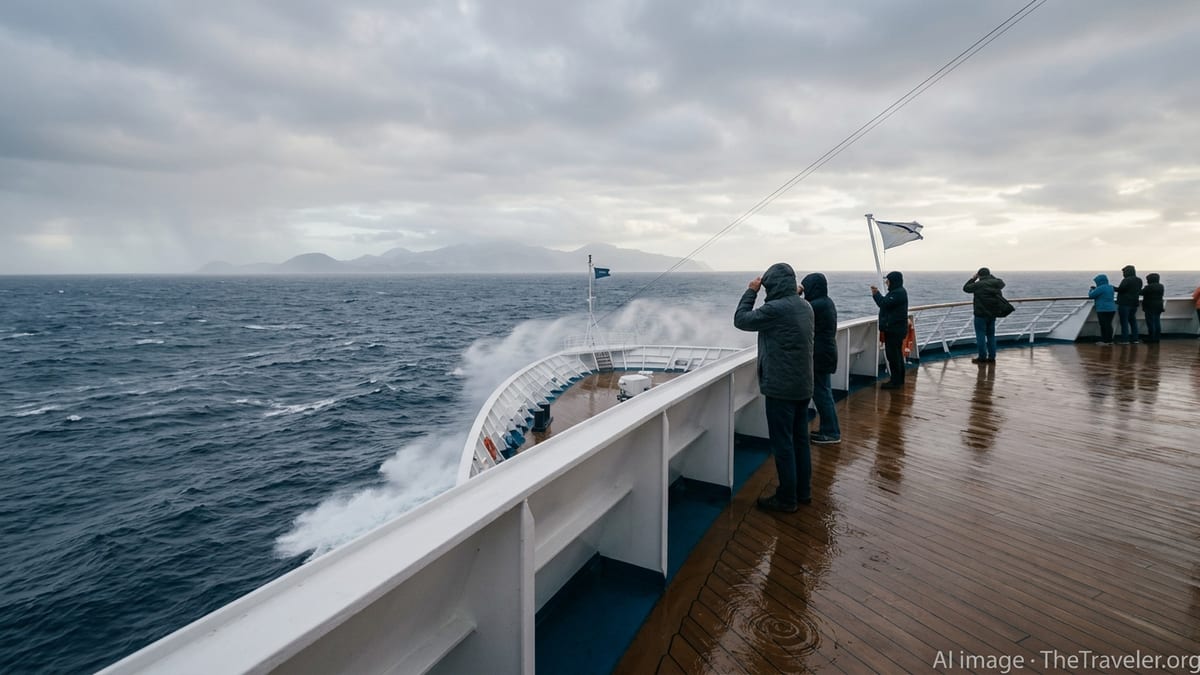
Why the Renaissance Skipped the Azores
According to publicly available marine tracking data and recent cruise industry coverage, the UK-based Ambassador Cruise Line has rerouted its ship Renaissance away from the Azores, where a deep Atlantic low is driving strong winds and heavy swells across the archipelago. The change affects a voyage that was due to call at one of the Azores’ main ports, a popular technical and sightseeing stop on repositioning and Atlantic itineraries.
Weather agencies in Portugal and across Europe have highlighted repeated windstorm events in the eastern and central Atlantic this season, with the Azores frequently sitting near the core of low-pressure systems. Forecast charts for the affected dates show a combination of high waves and gusty winds on the approaches to the islands, conditions that can make approaches, docking and tendering operations challenging for large cruise vessels.
While cruise ships are designed to handle rough seas, port approaches are far more sensitive to sea state, wind direction and harbor limits. Even when skies may appear clearer by the time a ship nears port, residual swell and crosswinds can exceed local safety parameters, prompting last-minute itinerary changes. The Renaissance adjustment reflects this operational reality, prioritizing navigational safety over maintaining the planned schedule.
This is not the first time Atlantic weather has disrupted plans for Ambassador Cruise Line. Recent seasons have seen its vessels, including Ambition and Renaissance, extend port stays or shorten calls in destinations such as Lisbon and Funchal when storms have swept through the region, underlining how quickly conditions can deteriorate in winter and early spring.
What the Itinerary Change Means for Guests
For passengers on board, the removal of the Azores call typically translates into either an additional sea day or a rebalanced timetable that lengthens time in other ports. Publicly available sailing details for the current voyage indicate that Renaissance is using the extra time at sea to steer around the worst of the storm belt, smoothing the ride and preserving arrival windows at subsequent destinations.
In practice, this often means a slightly altered track and changes to onboard programming. Cruise lines generally respond to lost port days by expanding entertainment schedules, adding enrichment talks, or increasing daytime activities around the pool and lounges. Guests may see revised daily programs delivered to cabins or via the cruise app, outlining new showtimes, added trivia sessions, or extended opening hours at certain venues.
For travelers who had planned specific shore excursions in the Azores, the change can be disappointing. However, publicly available information on similar weather-related cancellations across the industry shows that pre-booked excursions for canceled ports are usually automatically refunded to the original form of payment or onboard account. Independent arrangements made off the ship, such as private tours or rental cars, fall outside cruise line control and depend on the policies of local providers.
Renaissance is continuing its broader itinerary in the North Atlantic and surrounding regions, which often includes longer ocean passages between the United Kingdom, Iberia and island destinations. These longer legs provide more flexibility to adjust speed and course when adverse conditions arise, enabling the ship to maintain overall schedule integrity even as individual ports are dropped or swapped.
Safety, Contracts and Why Weather Changes Happen
The decision to cancel a port call for weather is guided by a mix of regulatory requirements, local port rules and company safety protocols. Cruise lines rely on detailed meteorological data, wave and wind models, and pilotage information for each arrival. When any of these elements indicate that docking or tendering could exceed acceptable risk thresholds, the call is removed from the schedule, even if conditions on board still feel manageable for guests.
Industry-standard cruise ticket contracts, which are publicly available, typically state that itineraries are not guaranteed and may be changed for reasons including weather, safety and operational needs. These documents also note that skipping a port does not automatically trigger compensation beyond the refund of specific port taxes and prepaid shore excursions associated with that call. This framework is not unique to Ambassador; it is widely used across the cruise sector.
Recent seasons provide numerous examples of similar decisions. Coverage from multiple cruise news outlets has documented Caribbean and Atlantic sailings that bypassed ports such as Bimini or the Azores when local harbors signaled closure or when high seas made safe approaches uncertain. In many cases, ships substituted alternative ports in more sheltered waters, while in others they simply added an extra day at sea to avoid the worst of the weather systems.
For guests, this can raise questions about what constitutes “bad enough” weather to alter a plan. Publicly shared explanations from lines across the industry emphasize that the critical factor is not comfort alone, but the combination of wind, swell, tidal conditions and port infrastructure limits. A harbor with a narrow entrance or exposed breakwater, such as some found in island chains, is more sensitive to swell direction than a deeply sheltered mainland port, which shapes operational decisions.
What Affected Passengers Should Do Next
Travelers already on board Renaissance have limited recourse in terms of reinstating the original Azores stop, as route decisions are made in real time by the line’s marine operations teams. However, there are practical steps passengers can take to understand their options and potential reimbursements. Guest services desks typically provide written notices summarizing itinerary changes, and onboard announcements often highlight which fees will be automatically refunded.
Passengers who booked through travel agents may wish to keep copies of these notices and their final onboard statements, which can be useful when discussing trip interruptions with insurance providers after the cruise. Many comprehensive travel insurance policies include benefits for trip disruption or missed ports, although eligibility and payout levels vary according to the specific policy wording and the timing of the change.
Those with independent plans in the Azores, such as local tours or overnight stays before or after the scheduled call, may need to contact providers directly to request date changes or partial refunds. Policies among local operators differ widely; some offer flexible rebooking when a cruise ship does not arrive due to weather, while others treat the reservation as a no-show if notice comes too late.
Looking ahead, cruise watchers note that the current North Atlantic and European windstorm season has been more active than usual, increasing the likelihood of late-stage adjustments for ships traversing the region. Guests booked on upcoming Renaissance sailings that include the Azores may wish to monitor pre-departure communications from Ambassador Cruise Line closely, while bearing in mind that final routing decisions are often made only a day or two before a port call, when forecasts become more precise.
Planning Future Cruises Through the Azores
The Azores remain a highlight on many transatlantic and repositioning cruises, offering volcanic landscapes, thermal springs and whale-watching opportunities. However, their mid-ocean location makes them inherently susceptible to shifting weather patterns, particularly during late autumn, winter and early spring, when deep low-pressure systems track across the North Atlantic.
Public itinerary brochures from various cruise brands for 2026 and 2027 still show numerous calls scheduled in ports such as Ponta Delgada and Horta, underscoring that lines continue to see strong demand for these routes. At the same time, these brochures routinely carry small-print reminders that port calls are subject to change based on weather and operational considerations, a recognition of the climatic volatility around the islands.
Travel planners often recommend that guests who consider a specific port, like the Azores, to be the main reason for booking remain aware of this risk. Building flexibility into pre- and post-cruise plans, purchasing travel insurance with trip-interruption coverage, and choosing shoulder-season dates outside the stormiest months can modestly improve the odds of reaching weather-sensitive destinations.
For now, the Renaissance adjustment serves as a timely reminder that even carefully planned itineraries across the Atlantic can be reshaped by the dynamics of wind and sea. As this voyage continues on its modified course, prospective passengers are likely to pay closer attention to seasonal patterns in the North Atlantic when selecting future sailings that cross or call at the Azores.