

More news on this day
A recent weather-related itinerary change by the cruise ship Renaissance has drawn fresh attention to how modern routing technology, stricter safety practices, and resilient passenger demand are reshaping the global cruise industry at a time of rapid growth.
Get the latest news straight to your inbox!
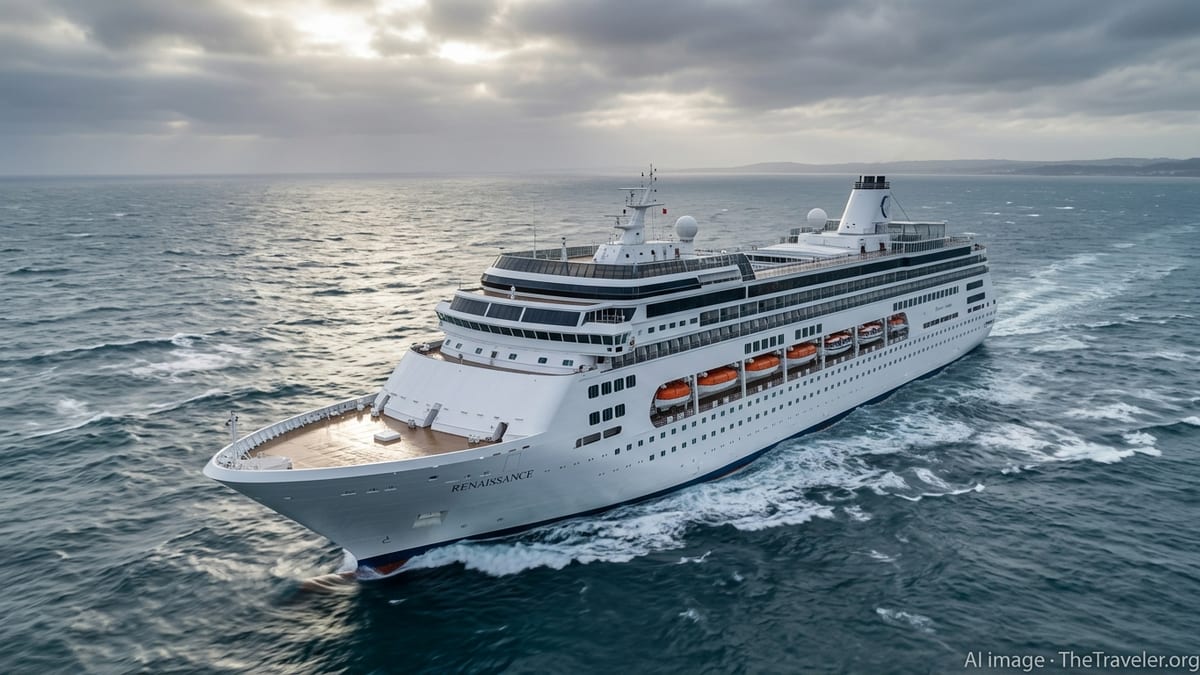
Adverse Weather Forces Change of Course for Renaissance
Marine schedules from Caribbean ports show that the 1,623-passenger cruise ship Renaissance is among the many vessels navigating a winter season marked by unsettled conditions, including strong winds and heavy swells in popular island chains. In this context, a recent decision to reroute the ship away from expected bad weather illustrates how quickly itineraries can shift when sea states deteriorate.
Reports from regional cruise tracking and port calendars indicate that operators in the southern Caribbean have repeatedly adjusted timings, pier assignments, and occasionally ports of call in February and March 2026 as fronts and squalls passed through key sailing corridors. Renaissance’s course change follows this broader pattern, with the ship redirected to calmer waters instead of pushing ahead into higher-risk conditions.
Publicly available information on recent sailings shows that the adjustment resulted in a revised schedule featuring longer sea days and alternative ports where conditions were more manageable. While such changes can disappoint travelers who plan around specific destinations, the decision reflects a strategy that prioritizes navigational safety and operating margins over sticking rigidly to pre-published itineraries.
Cruise operators routinely retain the right to alter routes at short notice, but the Renaissance diversion has resonated with passengers and industry observers because it encapsulates a wider shift in how weather and risk are being managed as global cruise capacity expands.
Safety-First Routing in a More Volatile Climate
Recent analyses of the cruise sector highlight that route optimization has become a core tool for both safety and efficiency, with lines increasingly relying on real-time weather data, ocean current modeling, and in-house meteorology teams. Financial and industry reports note that modern voyage planning software allows cruise operators to simulate multiple options in advance and alter course quickly when adverse systems build along a planned path.
According to published coverage on cruise technology and sustainability, artificial intelligence and predictive analytics are being integrated into routing decisions, helping bridge officers receive constant updates on wind patterns, swell height, and storm evolution. These tools enable vessels like Renaissance to skirt the edges of weather systems, avoiding the worst conditions without necessarily cancelling entire voyages.
Safety regulators and maritime investigators have long pointed to earlier incidents in heavy seas as reminders of what can happen when vessels adhere too rigidly to schedules. In response, many cruise lines have strengthened internal guidelines on when to skip or swap ports when forecast thresholds for wind and wave height are exceeded. The Renaissance alteration aligns with this more conservative operational stance, where avoiding one exposed anchorage can significantly lower risk to passengers, crew, and ship.
The shift also reflects growing recognition that climate variability is adding complexity to route planning. While the North Atlantic and Caribbean have always been subject to seasonal storms, more frequent abrupt changes in local conditions are prompting operators to build additional flexibility into itineraries, marketing, and customer communications.
Resilient Demand as Global Cruise Capacity Climbs
Despite weather disruptions and occasional high-profile incidents, industry data shows that demand for ocean cruising continues to rise. A recent global outlook from a major cruise association projects 37.7 million cruise passengers in 2025, with strong repeat intent among existing cruisers and high interest from travelers considering their first voyage.
Market research published in early 2026 indicates that cruise capacity is expected to grow at an annual rate of more than 6 percent through 2030, supported by dozens of new ships on order and tens of billions of dollars in committed investment. These figures position cruising as one of the fastest-growing segments of leisure travel worldwide, outpacing many land-based tourism markets.
In this context, the Renaissance rerouting underscores a key challenge facing cruise companies: sustaining rapid growth while expanding into more seasonal and weather-sensitive regions. As new ships join fleets and itineraries proliferate in the Mediterranean, northern Europe, and Polar-adjacent waters, the operational risk from sudden weather shifts increases, making resilient planning essential.
Travel advisors and itinerary analysts note that passengers increasingly accept that cruise routes are “managed tourism,” booked and refined far in advance but subject to last-minute change in the name of safety. The Renaissance episode fits within this narrative, where maintaining trust depends less on rigid punctuality and more on transparent, well-executed contingency plans.
Technology, Ports, and Infrastructure Supporting Safer Growth
Beyond shipboard routing tools, ports and destination authorities are investing in infrastructure that can help cruise lines manage weather impacts more effectively. Recent reports from port operators in the Americas and Europe describe expanded pier capacity, upgraded breakwaters, and modernized terminals built to handle larger vessels and provide more sheltered berthing options in marginal conditions.
Shore power installations, while primarily focused on cutting emissions, also intersect with safety and resilience. As more ports add electrical connections and digital monitoring systems, operators gain better real-time insight into port status during storms, including wind limits on berthing and gangway operations. This information, combined with shipboard data, informs decisions like the one taken by the Renaissance to bypass or reschedule particular calls.
Industry conferences focused on cruise technology report that artificial intelligence is being positioned at the center of this interconnected ecosystem, linking weather services, port operations, and onboard navigation. For passengers, the result is less visible than a new waterslide or restaurant, but such systems underpin the ability to replan routes quickly while preserving the overall experience.
As ships become larger and more complex, these behind-the-scenes capabilities become critical. Moving a vessel carrying over a thousand guests away from an exposed anchorage and toward a more protected harbor demands coordination across multiple jurisdictions, especially when dozens of other ships in the region may be making similar calculations in response to the same front or storm band.
Passenger Expectations Evolve Around Flexibility and Safety
The Renaissance rerouting also highlights a gradual shift in passenger expectations. Travel commentary and consumer feedback suggest that many guests now approach cruises with a greater understanding that sea conditions, port congestion, or regulatory changes may alter a trip even shortly before arrival.
Booking trends show that travelers continue to prioritize value, destination mix, and onboard amenities, but are increasingly attentive to how lines communicate about risk and change. Clear explanations of why ports are skipped, why a ship is lingering to let a system pass, or why an alternate island is substituted can help preserve satisfaction, even when the original itinerary cannot be fully delivered.
For the cruise sector, the Renaissance weather diversion becomes one more illustration of how resilience is being tested in real time. As capacity grows and ships sail into ever-busier seas, the ability to adjust routes decisively in response to adverse forecasts may prove as important to the industry’s reputation as new luxury suites or cutting-edge entertainment.
Weather-driven changes of course, once seen mainly as inconvenient exceptions, are increasingly viewed as part of responsible cruise operations. The recent experience of Renaissance shows how safety-driven decisions, supported by technology and infrastructure, can coexist with robust growth in global cruise tourism.