

More news on this day
The landmark former Sheraton Framingham has completed a multi-million-dollar transformation and reopened as the Renaissance Framingham Hotel & Conference Center, emerging as a dramatic new focal point within the Framingham Hotel Collection and a high-profile addition to Greater Boston’s evolving hospitality landscape.
Get the latest news straight to your inbox!
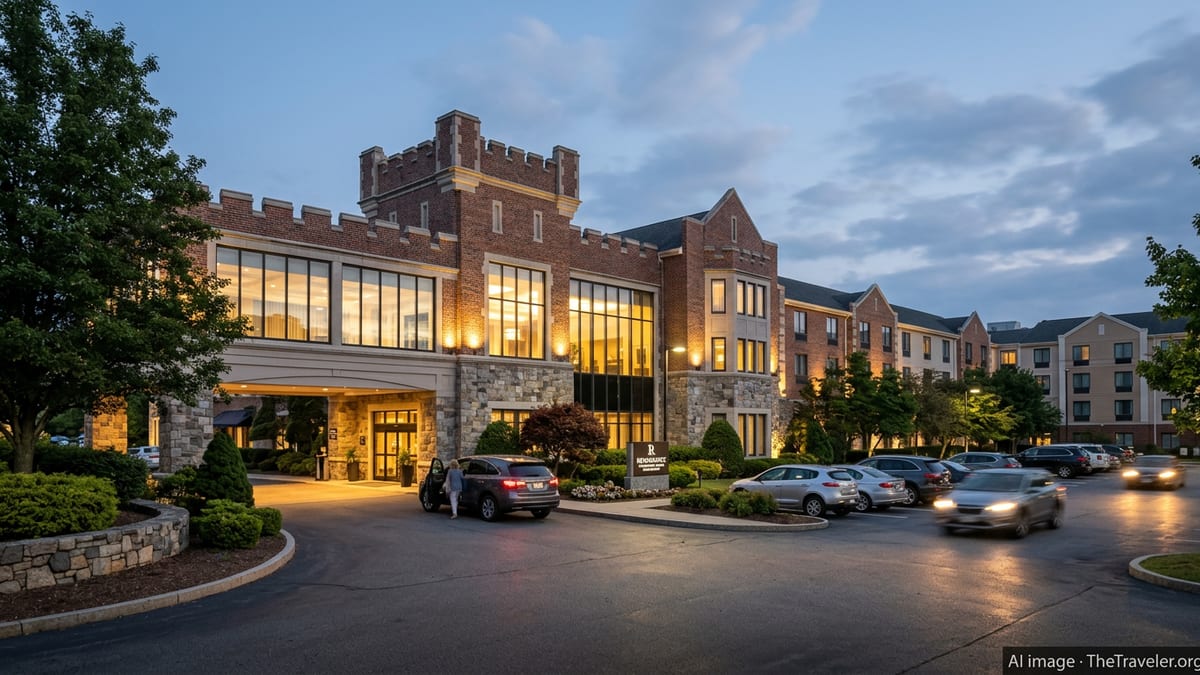
A Castle-Inspired Icon Reimagined for a New Era
Long known to Massachusetts Turnpike travelers for its castle-like silhouette, the Framingham property has undergone a comprehensive redesign that recasts the exterior landmark as a contemporary destination for business and leisure guests. Publicly available information indicates that the conversion to the Renaissance flag was finalized in January 2026, following a phased renovation program focused on both aesthetics and functionality.
The refreshed identity as Renaissance Framingham Hotel & Conference Center is positioned to blend the energetic, discovery-led ethos of the Renaissance brand with the familiar New England character of the original “castle hotel.” Design details, from updated lighting and finishes to modern furnishings, are intended to bring a brighter, more residential feel to formerly traditional spaces, while preserving the building’s distinctive presence along the highway.
Reports on the renovation describe a multi-million-dollar investment that touches nearly every guest-facing area. The goal is to shift the property from a primarily convention-focused Sheraton into a more experience-driven, lifestyle-oriented hub that can compete with newer suburban Boston hotels while leveraging its established recognition.
Fully Renovated Rooms, Suites, and Shared Spaces
Guestrooms and suites have been completely updated, with the renovation documentation describing a full reset of soft goods, casework, and in-room technology. The 188-room inventory now reflects current expectations for upper-upscale accommodations, including enhanced workspace, modern bathrooms, and a lighter, more contemporary design palette aimed at both corporate travelers and wedding parties.
Public spaces have also been extensively reimagined. The lobby has been redesigned as a more social, flexible environment that can accommodate informal meetings, laptop work, and casual gatherings throughout the day. Textures and materials have been selected to reference the building’s heritage while supporting the Renaissance brand’s emphasis on discovery and local character.
Meeting and event areas were a major focus of the transformation. Information shared with the meetings and events sector highlights refreshed function rooms, upgraded audiovisual capabilities, and improved pre-function zones. With approximately 9,300 square feet of meeting space and event capacities reaching several hundred attendees, the property is being promoted as a versatile venue for conferences, corporate retreats, and social celebrations.
Culinary Revival and the Return of a Local Favorite
A headline element of the relaunch is the introduction of three distinct food and beverage concepts, designed to give both overnight guests and local residents more reasons to visit. According to marketing materials circulated to planners and tourism partners, the renovation has brought back a beloved neighborhood institution in updated form: Molly Malone’s, now reborn as Malones Irish Pub & Social.
Malones Irish Pub & Social is positioned as a convivial gathering place that builds on the property’s long-standing connection to the community, while updating the menu and interiors for contemporary tastes. The concept is complemented by Provisions Hearth & Kitchen, which focuses on hearth-driven cooking and relaxed, sit-down dining, and Tara Café, a lobby-adjacent outlet proudly serving Starbucks coffee and grab-and-go options for travelers on tight schedules.
These additions reflect a broader shift in suburban hotel strategy, in which properties seek to become standalone dining and social destinations rather than simply providing in-house options for overnight guests. The culinary lineup at Renaissance Framingham is being used as a key differentiator in the property’s repositioning, with packages and promotions highlighting the new outlets as part of the overall guest experience.
A Tri-Brand Campus Anchoring the Framingham Hotel Collection
The renovation does more than refresh a single building. It completes the emergence of what is being marketed as the Framingham Hotel Collection, a connected tri-brand campus that brings together the Renaissance Framingham Hotel & Conference Center, TownePlace Suites Framingham, and Fairfield Inn & Suites Framingham under one coordinated umbrella.
Event-planning guides and regional tourism materials describe the integrated complex as totaling 371 guest rooms and more than 25,000 square feet of flexible meeting and event space when all three brands are considered. This structure allows organizers to mix extended-stay and select-service accommodations with the full-service offerings of the Renaissance, creating tiered options for conferences, weddings, and multi-day gatherings.
The campus approach also aims to simplify logistics for large groups, with shared parking, coordinated sales teams, and the ability to host everything from intimate board meetings to large-scale galas. In a suburban market where standalone properties have traditionally operated independently, the Framingham Hotel Collection presents a more unified, destination-style model.
New Hub for MetroWest Meetings, Weddings, and Tourism
Regional tourism organizations have quickly begun to spotlight the Renaissance Framingham as a marquee venue for MetroWest events. Information promoting upcoming industry gatherings notes that the rebranded hotel will host travel and tourism summits, legislative breakfasts, and other high-profile meetings, signaling confidence in the property’s upgraded facilities and services.
The timing of the transformation aligns with broader expectations for increased visitor demand across Greater Boston, including from major sporting events and expanded international travel. Observers of the local hotel sector suggest that well-equipped suburban venues like Renaissance Framingham can benefit from this momentum by attracting groups seeking easier highway access and potentially more competitive pricing than central Boston locations.
For Framingham itself, the debut of the Renaissance-branded property is being framed as a milestone in the city’s evolution from a traditional highway stop to a more fully realized regional hub. With its castle-inspired architecture polished for a new era, an expanded culinary and events program, and a tri-brand campus model, the Renaissance Framingham Hotel & Conference Center is positioned as a new crown jewel within the Framingham Hotel Collection and a prominent player in the MetroWest hospitality landscape.