

For professionals and internationally mobile workers assessing a move to Thailand, rent is usually the single largest recurring expense. This briefing compares current rental patterns in Bangkok, Chiang Mai, and Phuket in 2026, focusing on long term leases for standard condominium and apartment units. The objective is to provide decision grade insight into how much housing budget is required in each city, and how far that budget is likely to stretch in practice.
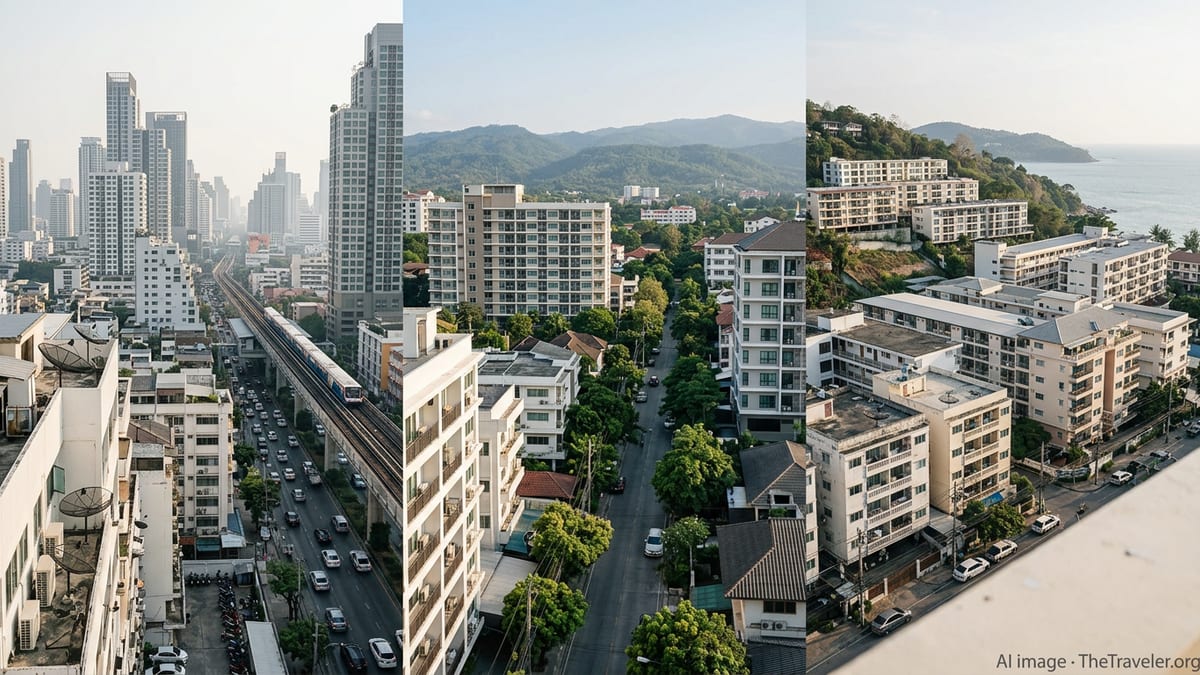
Overall Rent Level Comparison Across the Three Cities
Across Thailand’s main destinations for foreign residents, Bangkok, Chiang Mai, and Phuket display distinct rent profiles. Recent comparative assessments suggest that overall living costs in Phuket are higher than in Bangkok, and rent specifically is estimated at roughly 15 to 20 percent above Bangkok levels on average, with Chiang Mai remaining materially cheaper than both. This relative pattern is more stable than any individual advertised price and should be the starting point for relocation budgeting.
In Bangkok, aggregated data for early 2026 indicates that a one bedroom apartment in the city center averages around 21,800 THB per month, with similar units outside the core averaging approximately 10,700 THB per month on typical one year leases. ([nestopa.com](https://nestopa.com/th-en/articles/monthly-cost-of-living-in-bangkok?utm_source=openai)) Chiang Mai’s modern one bedroom units in central neighborhoods tend to be around 15,000 to 20,000 THB per month, with more basic or non renovated stock and less central locations available from roughly 8,000 to 12,000 THB per month. ([dotproperty.co.th](https://www.dotproperty.co.th/en/apartments-for-rent/chiang-mai?utm_source=openai))
Phuket, driven by tourism demand and constrained land in beach areas, now commands the highest residential rents among the three. Evidence from 2025 to early 2026 suggests that a typical one bedroom condominium on a long term lease averages in the low to mid 20,000 THB range per month, with central or beachside zones often running from about 20,000 up to 35,000 THB depending on specification and micro location. ([bambooroutes.com](https://bambooroutes.com/blogs/news/phuket-rental-yields-apartment?utm_source=openai)) The relative relationship can be summarized as: Phuket at the top, Bangkok in the middle, and Chiang Mai as the lowest cost city for comparable quality.
Typical Monthly Ranges by City and Unit Size
While averages are useful, relocation decisions benefit from viewing rent in realistic ranges. The following approximate long term monthly bands, in Thai baht, synthesize recent published market snapshots with on the ground listing data for early 2026. These figures refer to unfurnished or partially furnished condos and apartments on contracts of six months or longer and assume modern but not luxury specification.
In Bangkok, a studio or compact one bedroom unit outside the city center can often be found in the 8,000 to 15,000 THB per month range, rising to roughly 18,000 to 30,000 THB for a central one bedroom in established expat neighborhoods near mass transit. Two bedroom units in central districts more commonly range from 30,000 to 55,000 THB, depending on building age and facilities, with higher figures for premium developments. ([nestopa.com](https://nestopa.com/th-en/articles/monthly-cost-of-living-in-bangkok?utm_source=openai))
Chiang Mai’s structure is noticeably lower. Studios and basic one bedroom apartments in non premium neighborhoods start from around 6,000 to 10,000 THB per month. Modern one bedroom condos in central areas such as Nimman or within the Old City typically fall between 12,000 and 22,000 THB. Comfortable two bedroom units for long term residents often range from 18,000 to 30,000 THB, with higher asking rents mainly tied to new buildings, large floorplates, or special features. ([eathealthy365.com](https://eathealthy365.com/how-much-does-it-really-cost-to-live-in-chiang-mai/?utm_source=openai))
In Phuket, advertised prices reflect both tourism demand and seasonality, but for year long leases current evidence points to studios and small one bedroom units in inland or non prime zones starting in the 18,000 to 22,000 THB range. In popular coastal districts and expat hubs, a mid range one bedroom commonly costs between 22,000 and 35,000 THB per month, with larger or sea view units climbing beyond that band. Two bedroom apartments and small villas frequently commence around 35,000 THB and can rise quickly depending on proximity to key beaches. ([bambooroutes.com](https://bambooroutes.com/blogs/news/phuket-rental-yields-apartment?utm_source=openai))
City Centre vs Outlying Districts: Location Cost Gradients
Location within each city can change rent by 30 to 50 percent or more for the same unit size, so understanding cost gradients is critical when structuring a housing budget. In Bangkok, the premium is tied closely to access to BTS and MRT rail lines and to key central business districts. The gap between centrally located and peripheral one bedroom units, as reflected in national level datasets, runs at roughly 100 percent on average: about 21,800 THB per month in the center against 10,700 THB in outlying districts. ([nestopa.com](https://nestopa.com/th-en/articles/monthly-cost-of-living-in-bangkok?utm_source=openai))
Chiang Mai’s geography is more compact, but central neighborhoods still attract a premium. Market commentary places one bedroom condos in prime areas such as Nimman at around 20,000 to 25,000 THB per month in late 2023 and 2024, compared with a citywide median close to 15,000 THB and sub 10,000 THB options in older buildings further from the main commercial zones. ([dotproperty.co.th](https://www.dotproperty.co.th/en/apartments-for-rent/chiang-mai?utm_source=openai)) As a result, the central premium in Chiang Mai is material but more modest than in Bangkok when measured in absolute baht terms.
Phuket’s gradient is largely defined by beach proximity and distance from main tourist corridors. Recent guides highlight that a one bedroom apartment or condo in central tourist zones such as Patong or Kata generally ranges from 20,000 to 35,000 THB per month, while similar internal square meterage in inland or non tourist districts may fall several thousand baht below that range. ([ananpropertygroup.com](https://ananpropertygroup.com/living-in-phuket-2026-monthly-budget-and-expenses/?utm_source=openai)) The key implication for mobility planning is that location choices in Phuket, even within the same island, can change housing costs as much as a city move within mainland Thailand.
Lease Length, Seasonality, and Market Volatility
Lease duration and seasonality are particularly important differentiators between these three markets. In Bangkok and Chiang Mai, the standard long term lease runs to 12 months, and many landlords are reluctant to contract for less than six months at local market rates. Shorter stays are often priced at a considerable premium via serviced apartments or platforms designed for transient visitors, and these higher rates can distort impressions of underlying long term rent levels.
Phuket, while it also supports 12 month leases, is structurally more seasonal because of its reliance on tourism. Evidence from early 2026 shows that long term one bedroom leases average around the low to mid 20,000 THB range, whereas short term or flexible arrangements targeting winter visitors and digital nomads average closer to the mid 20,000 THB range or higher for the same unit size. ([bambooroutes.com](https://bambooroutes.com/blogs/news/phuket-rental-yields-apartment?utm_source=openai)) This underlines the importance of distinguishing between short term “high season” pricing and the lower rates typically obtained by residents willing to commit to longer fixed terms.
Market volatility has also diverged. Phuket has recorded rent increases estimated at around the high single digits year on year into 2026, with more pronounced growth of 10 to 15 percent in prime expat and coastal hubs as tourism recovered, against lower single digit increases inland. ([bambooroutes.com](https://bambooroutes.com/blogs/news/phuket-rents?utm_source=openai)) Bangkok and Chiang Mai have seen more moderate upward adjustments from pandemic era lows, but relocation planners should still expect gradual rent inflation over multi year horizons.
Comparative Affordability and Space for Budget
For globally mobile professionals, a useful way to compare the three cities is to ask how much space a fixed rent budget can purchase in each market. Although precise square meter figures vary building by building, current market narratives suggest that a budget of around 25,000 THB per month would typically secure a centrally located, modern one bedroom unit in Bangkok, possibly with limited amenities in a prime neighborhood, while the same budget in Chiang Mai often supports either a high specification one bedroom in the best locations or a comfortable two bedroom in a non luxury building.
In Phuket, that same 25,000 THB budget would usually access a mid range one bedroom in or close to a popular coastal area or a somewhat larger but less central unit further inland. ([bambooroutes.com](https://bambooroutes.com/blogs/news/phuket-rental-yields-apartment?utm_source=openai)) At lower budget levels, such as 15,000 THB per month, Bangkok residents are likely to be looking at smaller units or more peripheral locations, whereas Chiang Mai can still offer modern one bedrooms in decent central or near central areas at that price point. ([eathealthy365.com](https://eathealthy365.com/how-much-does-it-really-cost-to-live-in-chiang-mai/?utm_source=openai))
From a policy perspective, this means corporate housing allowances set at a flat national level will afford very different living standards by city. Without city specific calibration, the same allowance will generally stretch furthest in Chiang Mai, to a moderate extent in Bangkok, and least in Phuket, where coastal proximity commands additional price premia.
Rent Indices and Long Term Trend Signals
Global rent and cost of living indices provide an additional perspective on how these cities compare as rental markets. Thailand wide analyses indicate that Phuket’s overall living costs, including rent, sit above Bangkok’s levels, with rent specifically estimated to be close to one fifth higher on average. ([expatica.com](https://www.expatica.com/th/about/basics/cost-of-living-in-thailand-2172847/?utm_source=openai)) Regional cost of living databases that combine rent and general expenses place Bangkok ahead of Chiang Mai, reflecting higher housing and service costs in the capital, but still well below major global tier one cities.
Within Thailand, recent regional rankings show Bangkok with a higher combined cost plus rent index relative to Chiang Mai, consistent with the empirical rent data already discussed. ([numbeo.com](https://www.numbeo.com/cost-of-living/region_rankings_current.jsp?displayColumn=2®ion=035&utm_source=openai)) These index figures fluctuate as exchange rates and local conditions change, but directionally they support three key long term signals: Bangkok retains a structural premium over Chiang Mai; Phuket now typically exceeds Bangkok in rent and overall living costs; and all three remain materially cheaper than the housing markets of leading financial hubs in Europe, North America, and East Asia.
For organizations designing mobility policies, the implication is that Thailand can often be structured as a single allowance band in global terms, but internal differentiation between Phuket and the other two cities is advisable when employees require beach area housing. Over the medium term, continued tourism development in Phuket and infrastructure investment in Bangkok may sustain gradual upward pressure on rent, while Chiang Mai’s relative affordability is likely to persist barring significant supply bottlenecks.
The Takeaway
For individuals comparing Bangkok, Chiang Mai, and Phuket solely on the basis of rent, the hierarchy is clear. Chiang Mai currently offers the lowest rent levels across most unit types, allowing a given budget to secure more space or higher specification housing than in the other two cities. Bangkok sits in the middle, with a wide spectrum of pricing tied closely to proximity to rail infrastructure and central business districts. Phuket occupies the top end of the Thai rental cost range, particularly in beachside and tourism driven neighborhoods.
At the practical budgeting level, a long term resident targeting a modern one bedroom unit might plan around the low to mid teens in thousands of baht per month in Chiang Mai, the high teens to mid twenties in Bangkok for a central location, and the low to mid twenties in Phuket, with significant upside if coastal proximity or premium facilities are required. Understanding these differentiated bands, along with intra city location gradients and lease length dynamics, is essential for constructing realistic relocation budgets and for calibrating housing allowances that align with employee expectations in each of Thailand’s main destination cities.
FAQ
Q1. Is Bangkok generally more expensive to rent in than Chiang Mai?
Yes. On average, Bangkok’s central rents for comparable one bedroom apartments are materially higher than in Chiang Mai, particularly in areas close to mass transit and major business districts.
Q2. Does Phuket really have higher rents than Bangkok?
In many beachside and prime expat areas, typical long term rents for one bedroom units in Phuket are now somewhat higher than comparable properties in central Bangkok.
Q3. How much should be budgeted for a basic one bedroom in each city?
A cautious planning range is around 12,000 to 18,000 THB per month in Chiang Mai, 18,000 to 25,000 THB in central Bangkok, and 22,000 to 30,000 THB in Phuket’s popular areas.
Q4. Are there significant savings if renting outside the city center?
Yes. In all three locations, moving away from prime districts or beach areas can reduce rent by 30 to 50 percent for the same unit size and building age.
Q5. How do short term and long term rents differ?
Short term or seasonal rentals, especially in Phuket, often cost considerably more per month than standard six to twelve month leases due to higher demand and included services.
Q6. Are rents in these cities rising quickly?
Bangkok and Chiang Mai have seen moderate increases, while Phuket has recently experienced faster rent growth in prime coastal and expat neighborhoods.
Q7. Is it realistic to find quality accommodation under 10,000 THB?
It can be realistic in Chiang Mai and in some peripheral Bangkok or inland Phuket locations, usually in older or more basic buildings and less central areas.
Q8. Do corporate housing allowances need to differ by city?
For consistent living standards, allowances often need to be higher in Phuket than in Bangkok, and higher in Bangkok than in Chiang Mai, especially for centrally located or beachside housing.
Q9. How much does location within each city matter for rent?
Location is a key driver. In Bangkok proximity to rail lines, in Chiang Mai closeness to core districts, and in Phuket nearness to main beaches can significantly influence monthly rent.
Q10. Are serviced apartments priced differently from standard condos?
Serviced apartments typically command a premium over standard condo leases because they include services such as cleaning, reception, and flexible contract terms, particularly for shorter stays.