

Berlin, Munich and Hamburg are among Germany’s most in-demand cities for international assignees and remote workers, but their rental markets differ markedly in both price and structure. Understanding these differences at a quantitative level is critical for realistic relocation budgeting and expectation management. This briefing compares current rent levels and dynamics across the three cities, using recent market indicators and typical asking-price ranges relevant for newcomers signing a new lease in 2024 and early 2025.
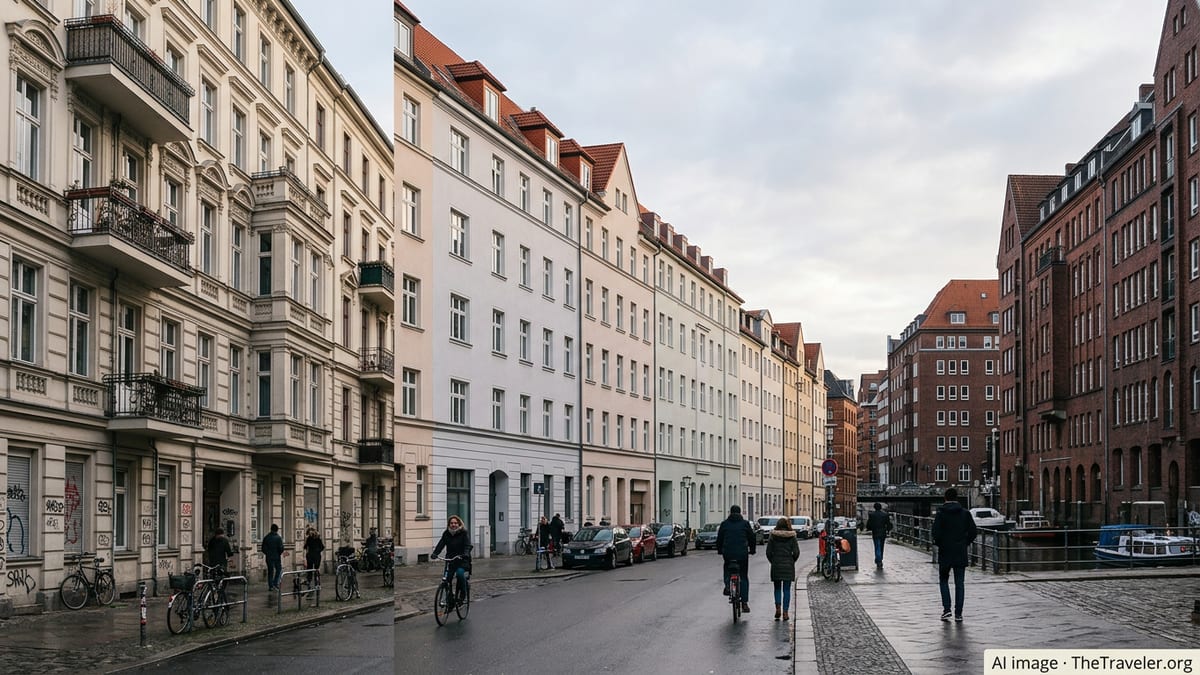
Overview of Rent Levels in Berlin, Munich and Hamburg
Across Germany’s big three cities, Munich remains the most expensive rental market, followed at some distance by Berlin and Hamburg. Recent asking-rent data for larger German cities shows Munich at the top of the national ranking, with average advertised cold rents for standard apartments commonly exceeding 20 euros per square metre, while Berlin and Hamburg cluster in the mid to high teens per square metre for comparable stock. This hierarchy is broadly stable even as all three cities experience continued upward pressure on rents.
For relocation planning, it is important to distinguish between legacy rents paid by long-term tenants and market rents that new arrivals will face. Official rent indices in Germany still contain many older contracts at lower levels, particularly in Berlin, and therefore underestimate the cost of securing a new apartment. New contracts in central and sought-after districts frequently sit significantly above the city-wide averages, especially for smaller units where demand is strongest.
At a high level, international renters should expect Munich to require the highest rental budget for a comparable apartment, Berlin to be materially cheaper but still expensive in absolute terms for new leases, and Hamburg to sit slightly below Berlin on average but with pockets that are close to Munich-level pricing.
Current Market Rent Ranges by City
While precise averages vary by data provider and district, recent market reports and rental analyses for 2024 and early 2025 indicate the following approximate cold-rent ranges for new leases in typical multi-family buildings. These figures refer to broadly standard, non-luxury apartments in relatively central or well-connected districts, rather than subsidised or student housing.
For practical planning purposes, a concise comparison can be expressed as approximate per-square-metre asking-rent bands for new contracts:
| City | Typical new-lease range (cold rent, €/m²) | Comments |
| Berlin | Approximately 15–22 €/m² | Lower legacy contracts exist, but new listings in central areas often sit in high teens or low 20s. |
| Munich | Approximately 20–28 €/m² | Highest national level; centrally located, smaller units can sit comfortably above 25 €/m². |
| Hamburg | Approximately 14–21 €/m² | Average somewhat below Berlin, but prime districts can reach low 20s. |
These bands align with broader national analyses that identify Munich as consistently above 23 euros per square metre on average for advertised apartments, while Berlin has moved into the high teens and select central micro-markets already approach or exceed 20 euros per square metre. Hamburg tends to register slightly below Berlin in most cross-city comparisons, with average offers in the mid-teens but notable premium zones along the Elbe and Alster that match or exceed Berlin’s pricier neighbourhoods.
Because advertised asking rents typically exclude service charges and utilities, total monthly housing costs will be higher once building charges, heating and electricity are added. For international assignees working with corporate housing allowances, it is therefore advisable to build a margin of at least 15 to 25 percent above the cold-rent estimates when setting budgets.
Monthly Budget Scenarios for Typical Apartment Sizes
To translate per-square-metre figures into decision-ready numbers, it is useful to model total cold rent for common apartment sizes: a compact one-bedroom or large studio around 45 to 50 square metres and a standard two-bedroom around 70 square metres. The following approximate bands are derived from the typical new-lease ranges outlined earlier:
| City | Approx. 50 m² apartment (cold) | Approx. 70 m² apartment (cold) |
| Berlin | 750–1,100 € per month | 1,050–1,540 € per month |
| Munich | 1,000–1,400 € per month | 1,400–1,960 € per month |
| Hamburg | 700–1,050 € per month | 980–1,470 € per month |
These ranges reflect the spread between more peripheral but still well-connected neighbourhoods and higher-demand central or waterfront districts. A new arrival insisting on very central locations, recent construction and higher-end fittings should budget toward or beyond the upper end of the indicated bands, especially in Munich and inner Berlin.
Once typical operating charges and heating are added, many households will see warm rents that are roughly 20 percent higher than the cold rents listed in the table. As a simplified rule of thumb, an expatriate household targeting a modern 70 square metre apartment in a good but not ultra-premium location might plan for a total gross monthly rent of around 1,300 to 1,700 euros in Berlin, 1,700 to 2,200 euros in Munich and 1,200 to 1,800 euros in Hamburg, depending on building age and energy efficiency.
For mobility managers, these broad bands provide a starting point for housing allowance design, but relocation budgeting should always account for the upper part of the range if flexibility on district and building standard is limited.
Intra-city Variation and District-level Differences
All three cities display pronounced intra-urban differences in rent levels. In Berlin, recently advertised rents in popular inner districts commonly fall at or above the higher end of the city-wide average range, while outer districts and older stock remain somewhat cheaper. This results in a dual market where long-standing tenants in older buildings may pay relatively modest rents, while newcomers bidding on centrally located flats see advertised prices that are substantially higher than the official rent index suggests.
Munich’s rental market shows less dramatic disparity between inner and outer districts because overall supply is constrained and demand remains strong city-wide. Even peripheral neighbourhoods often attract asking rents in the high teens or low twenties per square metre for standard apartments, and centrally located, high-quality units can be significantly more expensive. The city’s compact geography and strong employment base contribute to persistent pressure across almost all segments.
Hamburg exhibits a clear gradient between premium waterfront and inner-city districts and more peripheral locations. Affluent areas around the Inner and Outer Alster and along prime Elbe stretches frequently command asking rents per square metre at or above Berlin’s prime levels, whereas more distant districts and some eastern or southern quarters offer opportunities closer to the lower end of the city’s overall range. For assignees who prioritise budget over immediate centrality, Hamburg can therefore provide comparatively more options at moderate rent levels than Munich.
Given these patterns, relocation planners should not rely solely on city-wide averages. Specific district targets, commute radius preferences and tolerance for older versus newer building stock will materially influence the achievable rent in each city.
Regulatory Context and Its Impact on Rent Trajectories
Germany applies rent control mechanisms in many tight housing markets, including Berlin, Munich and Hamburg. The key instrument, often translated as a rent brake, limits the rent for new contracts in existing buildings to a certain margin above the local reference index, usually around 10 percent, excluding newly built or comprehensively modernised properties. This framework has been extended in recent years and is currently scheduled to remain in force through the latter part of the decade.
In practice, this regulation moderates but does not eliminate rent increases for new leases in the three cities. Landlords may still set higher asking rents in modern or newly constructed buildings that are exempt, or use improvements and modernisation to justify increases. Market analyses indicate that, despite the regulatory environment, advertised rents in major German cities have risen markedly over the last decade, with cumulative increases around or above 50 percent in some of the larger markets, including Berlin and Munich.
For relocating tenants, the regulatory context mainly affects the ability to challenge excessive rents and the trajectory of rent increases within an existing contract, rather than the headline level of asking rents when searching for a new apartment. Once a contract is signed, subsequent annual increases are usually constrained by legal caps based on the local index, which can provide some predictability in longer-term housing cost planning.
However, rent indices generally lag behind current market offers because they incorporate a large proportion of older, cheaper leases. This gap is particularly visible in Berlin, where official average cold rents remain well below the levels experienced by new arrivals viewing apartments in central neighbourhoods. Munich and Hamburg display smaller, but still noticeable, differences between legacy and current market rents.
Affordability Considerations and Rent Burden
German statistical agencies and economic research institutes often use the rent-to-income ratio as a key measure of affordability, with a threshold around 30 percent of net household income commonly referenced as a critical limit. Analyses of large cities show that many renter households in Berlin, Munich and Hamburg now spend close to or above this threshold on gross rent, with Munich in particular displaying some of the highest rent burdens in the country.
Cross-city comparisons of rent burdens suggest that typical households in Munich may allocate a noticeably higher share of income to rent than comparable households in Berlin or Hamburg, due to Munich’s combination of very high rents and already elevated general living costs. Berlin and Hamburg also show substantial proportions of tenants above the 30 percent threshold, especially among younger and lower-income households, but median rent burdens tend to be slightly lower than in Munich.
For internationally mobile professionals whose remuneration is benchmarked to local salary levels, this implies that living in Munich will usually require a higher housing budget to achieve similar dwelling size and quality compared with Berlin and Hamburg. For assignees whose compensation is set externally, for example through a home-country package, the relative rent differential between cities becomes even more important to overall affordability assessments.
From a risk management perspective, mobility programs may wish to apply more generous or flexible housing allowances in Munich, modestly lower but still robust support in Berlin, and slightly more constrained but careful budgeting in Hamburg, particularly where families require larger units.
The Takeaway
From a rental-cost perspective, the three cities align in a clear hierarchy. Munich stands out as Germany’s most expensive large rental market, with typical new-lease asking rents for standard apartments around or above 20 euros per square metre and monthly cold rents for a 70 square metre flat often well above 1,500 euros. Berlin and Hamburg are more affordable in relative terms but remain high-cost markets by German standards, especially in favoured central districts and for newcomers who cannot benefit from legacy contracts.
Berlin currently offers a wider spread between cheaper outer districts and expensive inner neighbourhoods, which can create opportunities for cost optimisation if assignees are flexible about location and building age. Hamburg generally sits slightly below Berlin in city-wide averages, although its premium districts can approach Munich-level prices. All three markets are structurally tight, and rents have risen substantially over the past decade, despite regulatory measures designed to moderate increases.
For relocation decision-making, these differences are material. Organisations considering Germany as a deployment destination should factor significantly higher housing costs when assigning staff to Munich compared with Berlin or Hamburg, while still budgeting conservatively for all three cities. Individual movers weighing up offers between the cities should view Munich as the high-rent option, Berlin as a mid-to-high scenario with pronounced internal variation and Hamburg as a slightly less costly but still competitive market.
In all cases, early search, realistic expectations about apartment size and location, and a financial buffer above city-wide averages are advisable to navigate these rental markets successfully.
FAQ
Q1. Is Berlin still significantly cheaper to rent than Munich?
In general, yes. Typical new-lease asking rents per square metre in Berlin are materially lower than in Munich, although central Berlin districts can be expensive and the gap has narrowed over time.
Q2. How does Hamburg’s rent level compare to Berlin’s?
Hamburg’s overall averages are usually slightly below Berlin’s, but differences are modest. Premium Hamburg districts can match or exceed prime Berlin rents, while more peripheral areas can be somewhat cheaper.
Q3. For a 70 m² apartment, which city requires the highest budget?
Munich requires the highest budget. New-lease cold rents for a 70 square metre apartment in Munich often exceed 1,400 to 1,500 euros, while comparable units in Berlin and Hamburg generally cost less.
Q4. Are official German rent indices a reliable guide for newcomers?
They provide useful benchmarks but often understate the cost of new leases, especially in Berlin, because they include many older, cheaper contracts that do not reflect current asking prices.
Q5. Do rent-control rules make one of the three cities cheaper?
Rent-control mechanisms apply in all three cities and mainly limit excessive increases within existing contracts. They do not remove the underlying rent gap between Munich and the other two cities.
Q6. Which city offers the best value for larger apartments?
Hamburg often provides more options for mid-sized and larger units at moderate prices compared with Munich, while Berlin offers value primarily in less central districts and older stock.
Q7. How much should be added on top of cold rent for total housing cost?
As a broad estimate, operating charges and heating can add around 15 to 25 percent to cold rent, though the exact amount depends on building efficiency and individual consumption.
Q8. Is it realistic to find low double-digit per m² rents in any of the three cities?
In Munich this is increasingly uncommon for standard apartments. In Berlin and Hamburg, low double-digit per square metre rents are mainly found in peripheral districts, older buildings or smaller local markets.
Q9. Do all three cities show strong rent growth pressure?
Yes. Market analyses indicate significant rent increases over the past decade in Berlin, Munich and Hamburg, driven by population growth, limited new supply and strong demand for urban housing.
Q10. Which city is generally most expensive overall when rent is the main factor?
When focusing strictly on rent, Munich is generally the most expensive of the three, followed by Berlin and then Hamburg, although individual circumstances and district choices can shift the exact ordering for specific cases.