

Rent levels in Mexico City, Guadalajara, and Mérida differ significantly in 2025 and early 2026, both in absolute price and in how quickly they are changing. For professionals, remote workers, and retirees evaluating a relocation within Mexico, understanding these rental market dynamics is critical to assessing affordability and long-term sustainability. This briefing compares current rent ranges, trajectories, and affordability patterns across the three cities, focusing on the types of housing most commonly rented by international relocators: one and two bedroom apartments in central and upper middle income neighborhoods.
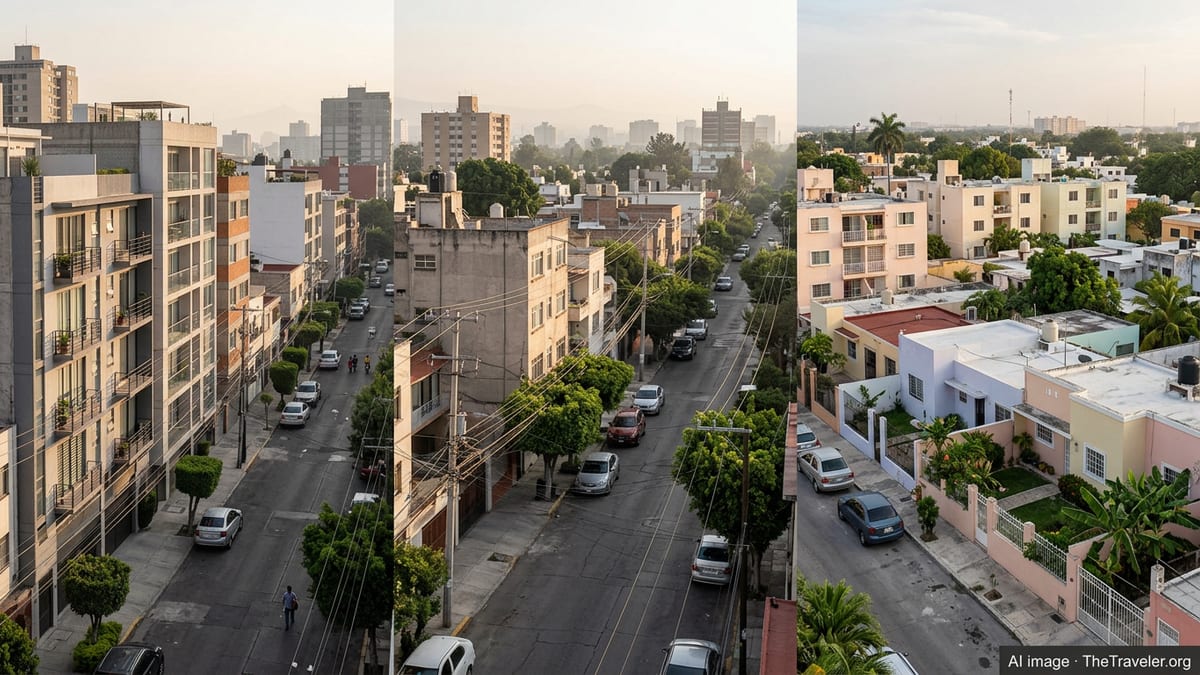
Overview of Relative Rent Levels in the Three Cities
Across the three cities, Mexico City is generally the most expensive rental market, followed by Guadalajara, with Mérida still somewhat cheaper on average but closing the gap. In core central neighborhoods of Mexico City such as Roma, Condesa, and Polanco, typical one bedroom apartments in 2025 and early 2026 often list in the range of roughly 12,000 to 18,000 Mexican pesos per month, with premium units above that band. In contrast, comparable central one bedroom apartments in Guadalajara usually fall in a lower range, while Mérida’s central and desirable northern neighborhoods typically remain below both, although high end developments there can be surprisingly costly.
For relocators benchmarking by international standards, these differences mean that a rent budget which secures a compact but modern one bedroom in Mexico City’s prime districts may be sufficient for a larger or more amenity rich unit in Guadalajara, and potentially an even more spacious or better equipped property in many parts of Mérida. However, rents in all three cities have risen notably over the last several years, and headline averages can conceal sharp variations by neighborhood, property age, and furnishing level.
It is also important to distinguish between historical perceptions of Mexico as uniformly low cost and current realities. Mexico City in particular has seen enough rental inflation in central zones that some international surveys and anecdotal reports now compare its prime urban rents to mid range European capitals. Relocators can still find lower rents in more peripheral areas of all three cities, but this often involves meaningful trade offs in commute time, services, or perceived safety, and may not match the preferences of most new arrivals.
Typical Rent Ranges by City and Apartment Size
While exact figures vary by source and exchange rate, recent 2025 and early 2026 data points and compiled listings suggest the following broad monthly ranges for long term rentals targeting local and expatriate tenants, excluding luxury extremes. These are approximate, not guaranteed, and assume reasonably modern units with independent kitchens and bathrooms, not shared rooms.
For Mexico City, one bedroom apartments in central, highly sought after neighborhoods frequently list between about 12,000 and 18,000 pesos per month, with more basic or peripheral one bedrooms sometimes available under 10,000 pesos. Two bedroom apartments in similar central areas commonly range from about 18,000 to 30,000 pesos, with premium properties exceeding that, especially in top tier districts or new towers. Suburban zones and less fashionable districts can be substantially cheaper, but may not align with the expectations of many professional relocators.
In Guadalajara, recent indicators for 2026 show one bedroom apartments in or near the city center with typical rents in the rough equivalent of the mid hundreds of US dollars per month, which often translates into a band of roughly 9,000 to 14,000 pesos depending on location and finish. Outside the core, average one bedroom rents can fall into a lower range, roughly around the mid four figures to low five figures in pesos, again with wide variation. Three bedroom apartments in central Guadalajara are frequently observed in bands exceeding 20,000 pesos, while similar size units outside the center tend to be notably cheaper.
Mérida currently exhibits a particularly wide spread. One bedroom apartments in central or desirable northern neighborhoods are often reported in a range equivalent to approximately 8,000 to 14,000 pesos per month, with some modern or high amenity units going higher. Some sources cite an average around the low nine thousands of pesos for typical one bedroom apartments citywide, while others highlight higher medians for newer, furnished units or rentals in prestige northern enclaves. Two bedroom furnished properties in favored residential areas often fall in a broader band from the low to mid tens of thousands of pesos, depending on amenities such as pools, multiple air conditioning units, or inclusion in gated communities.
Neighborhood Driven Differentials Within Each City
Within Mexico City, rent levels are heavily segmented by neighborhood, transit access, and building quality. Core areas like Roma Norte, Condesa, Polanco, and parts of Juárez and Cuauhtémoc command a significant premium, especially for renovated or newly built apartments. In these districts, relocators can expect to pay towards the upper end of the one and two bedroom ranges described earlier. By contrast, more peripheral colonias in the same boroughs, or eastern and northern districts farther from the main business and cultural corridors, can offer noticeably lower rents but may involve longer commutes and less consistent building quality.
Guadalajara’s rental market similarly shows strong differentiation between the historic center, university adjacent districts, and outlying municipalities such as Zapopan. While the statistical averages for city center one bedroom apartments indicate moderate rents compared with Mexico City, areas closely associated with higher income residents or major commercial hubs can significantly exceed the median. Conversely, traditional or working class neighborhoods a short bus ride from the center can undercut official averages, though the housing stock there may not meet the expectations of some international professionals.
In Mérida, the sharpest divide is between central and northern neighborhoods. Centro and its surrounding barrios offer a mix of renovated colonial houses, loft style units, and more modest apartments, with rents that can still be moderate for basic properties but climb quickly for restored or architect designed homes. Northern Mérida, particularly prestige micro areas with master planned developments and new high rise condominiums, often commands rents closer to large metropolitan norms, including monthly figures in the mid tens of thousands of pesos for spacious apartments or townhouses. Prospective tenants seeking lower rent levels in Mérida typically look to less central or less fashionable districts with simpler housing stock.
Recent Trends and Trajectory of Rents
All three cities have experienced upward pressure on rents over the past several years, but the drivers and intensity vary. In Mexico City, sustained demand from domestic professionals, internal migrants, and a growing number of international remote workers has contributed to double digit rent increases in some central neighborhoods since the pandemic years. While the rate of increase may fluctuate, local commentary and market analyses frequently reference expectations of continued annual rent growth, especially in central and transit connected zones where new supply is constrained.
Guadalajara has seen more moderate but still notable rental inflation. Its role as a technology and manufacturing hub has attracted inward migration from elsewhere in Mexico, putting steady pressure on desirable urban neighborhoods. Although official cost of living indices still show Guadalajara as cheaper to rent in than Mexico City, the gap has narrowed in specific high demand districts. Evidence from current listing ranges suggests that headline averages may lag behind the actual costs faced by newcomers seeking modern, well located apartments.
Mérida, historically characterized in international commentary as a relatively inexpensive city, has undergone particularly visible rent increases since the late 2010s. Reports for 2025 and early 2026 indicate that average rents for one bedroom apartments have risen faster than national inflation in recent years, especially in renovated Centro properties and northern developments targeting higher income tenants. Despite this, Mérida’s overall rent levels remain generally below those of Mexico City and broadly comparable to, or slightly below, many segments of Guadalajara, though specific prestige areas can be exceptions.
For relocation planning, the main implication of these trends is that projections based on pre 2020 narratives or early post pandemic anecdote risk underestimating current and future rent obligations, particularly in Mexico City and in select submarkets of Mérida. Budgeting exercises should therefore incorporate the possibility of annual rent increases, and candidates for long term stays may wish to factor in both lease length strategies and potential future renegotiations.
Affordability and Rent Burden Considerations
Assessing rent affordability involves more than comparing nominal monthly prices between cities. A realistic view also considers how rent interacts with local income levels, availability of alternatives such as shared accommodation, and expectations for property standards. In Mexico City, analyses of housing and transport affordability have found that non driving households can spend a substantial share of income on rent, often approaching one third or more. For locals, this contributes to high rates of extended family cohabitation and long commutes from peripheral municipalities. International relocators earning foreign denominated salaries or remote income may not face the same constraints, but they participate in the same market dynamics, contributing to price pressure in central areas.
Guadalajara presents a different affordability profile. Local average salaries are generally lower than in Mexico City, but median rents in many neighborhoods are also lower, and the city offers a larger pool of moderately priced housing within bus or light rail distance of major employment centers. For relocators, this can translate into a somewhat lower rent burden for similar living standards, especially if they are willing to live slightly outside the most fashionable districts while maintaining transit access to central areas.
In Mérida, affordability is in transition. Although many residents still access relatively low housing costs in suburban and peripheral zones, rising rents in northern and fully renovated central properties mean that the most sought after areas are no longer low cost in absolute terms. At the same time, local wages in Yucatán state tend to be lower than in the largest Mexican metros, implying a rising rent burden for local tenants in premium areas. International relocators whose income originates outside the local economy may still view Mérida as affordable relative to cities in their home countries, but should not assume that high quality, centrally located housing will be inexpensive by Mexican standards.
Considering rent as a share of total relocation budget, a common planning benchmark is to allocate around one quarter to one third of net monthly income to rent. In Mexico City, this benchmark may be strained in central districts unless income is well above local averages. In Guadalajara and Mérida, achieving or improving on this benchmark is more plausible for many remote workers and pensioners, though this depends heavily on lifestyle choices and neighborhood selection.
Supply, Vacancy, and Negotiation Environment
Supply conditions and vacancy rates influence not only price levels but also the extent to which tenants can negotiate on rent, deposits, or improvements. Mexico City’s central neighborhoods typically exhibit tight rental markets, with limited inventory of well located, mid range apartments. This environment often leaves limited room for negotiation on advertised rents, particularly for high demand units. Prospective tenants may, however, find some flexibility on contract terms such as inclusion of furnishings, minor repairs, or modest discounts in exchange for longer fixed lease periods.
Guadalajara’s rental market appears somewhat more balanced across most segments, with a mix of older housing stock and newer developments in suburban municipalities. While certain prime areas can feel tight, observers generally describe more scope to locate acceptable alternatives if a particular negotiation fails. For relocators, this can translate into better leverage on rent or initial concessions, especially when searching outside peak moving seasons or focusing on neighborhoods with active new construction.
Data from Mérida indicates a moderate vacancy rate consistent with a generally healthy rental market. This suggests that landlords expect some turnover and brief vacancies but are not facing widespread oversupply. In practice, this can mean that well presented properties in central or northern areas still rent quickly at market rates, yet tenants may have room to negotiate in segments with more competition, such as standard two bedroom apartments in less prestige northern districts. Additionally, some landlords may be open to including services such as pool maintenance or minor furnishings as part of the rent to attract long term, reliable tenants.
Across all three cities, relocators should be aware that rental practices, including expected deposit levels, documentation requirements, and co signer norms, can materially affect the upfront cost of securing a property. While these procedural factors are outside the main scope of rent price comparison, they play a role in the total financial outlay associated with entering a lease and should be accounted for separately in relocation planning.
The Takeaway
From a rental cost perspective, Mexico City, Guadalajara, and Mérida form a clear hierarchy with important internal variations. Mexico City stands as the highest cost market, especially in its central, amenity rich neighborhoods, where one and two bedroom apartments command rents that may surprise those expecting uniformly low Mexican housing costs. Guadalajara offers a mid range alternative, with generally lower rents than Mexico City and a broader supply of moderately priced housing that can meet the needs of many professionals and remote workers.
Mérida, while still frequently marketed as a lower cost destination, now exhibits a dual reality. Basic or non renovated housing in less fashionable areas can remain relatively inexpensive, but renovated Centro properties and northern developments often command rents approaching those of mid tier neighborhoods in Guadalajara. Recent years have brought above inflation rent growth, particularly in segments popular with international relocators, narrowing the gap with larger Mexican metros.
For decision makers evaluating relocation options among these three cities, the critical exercise is to align rent expectations with concrete budget parameters and neighborhood preferences. Those prioritizing a central, walkable environment with extensive urban amenities should consider whether their income supports Mexico City’s current rent levels or whether Guadalajara’s slightly lower prices provide a better balance. Individuals placing greater value on climate and residential neighborhood character while maintaining a target rent below Mexico City benchmarks may find Mérida or selected Guadalajara districts more financially sustainable.
Ultimately, rent in all three markets is dynamic rather than static. Effective relocation planning requires regularly updated market checks, realistic assumptions about annual increases, and a willingness to adjust neighborhood choices in line with budget constraints. Approached in this way, the comparative rental advantages of Mexico City, Guadalajara, and Mérida can be assessed with decision grade clarity rather than relying on outdated reputations.
FAQ
Q1. Which city is generally most expensive for rent among Mexico City, Guadalajara, and Mérida?
Mexico City is typically the most expensive, especially in central neighborhoods, followed by Guadalajara, with Mérida usually the least expensive overall, though select Mérida districts can be costly.
Q2. How much should be budgeted for a one bedroom apartment in a central neighborhood in Mexico City?
Relocators should expect a typical range of roughly 12,000 to 18,000 pesos per month for a one bedroom in popular central districts, with premium units above that.
Q3. Are rents in Guadalajara significantly lower than in Mexico City?
Rents in Guadalajara are generally lower, particularly for comparable one bedroom apartments, but the difference narrows in high demand areas, and exact savings depend on neighborhood choice.
Q4. Is Mérida still considered a low cost city for rent?
Mérida can still be low to moderate cost in many neighborhoods, but renovated Centro and northern developments have seen notable rent increases and no longer qualify as very cheap by Mexican standards.
Q5. How do two bedroom rents compare across the three cities?
Two bedroom apartments in prime Mexico City areas often start around the high teens of thousands of pesos and go higher, while Guadalajara and Mérida typically offer similar size units for noticeably less, depending on location and amenities.
Q6. Are there large differences in rent between central and peripheral areas in each city?
Yes. All three cities show substantial rent gaps between central or prestige neighborhoods and more peripheral districts, with trade offs in commute time, services, and building quality.
Q7. Have rents been rising faster in any one of these cities?
Rents have risen in all three, but the acceleration has been especially visible in Mexico City’s central areas and in Mérida’s renovated Centro and northern neighborhoods since the late 2010s.
Q8. Can new arrivals usually negotiate rents down from the listed price?
In very tight segments of Mexico City, negotiation room is limited, while Guadalajara and parts of Mérida often provide more scope for modest reductions or added concessions, depending on vacancy and demand.
Q9. How should rent be planned as a share of income when relocating to these cities?
Many planners use a target of roughly one quarter to one third of net income for rent, recognizing that central Mexico City may push this higher unless income is substantially above local averages.
Q10. Are rental costs stable enough to plan long term stays confidently?
Rents are subject to ongoing upward pressure, so long term planning should include assumptions about annual increases and potential renegotiations, particularly in sought after neighborhoods.