

Housing costs, and in particular rent, are the single largest budget item for most foreign professionals in Italy. For expats comparing Milan, Rome and Florence, understanding current rental levels, how they differ by location and property type, and what is realistically achievable on the ground is critical for relocation planning in 2025–2026.
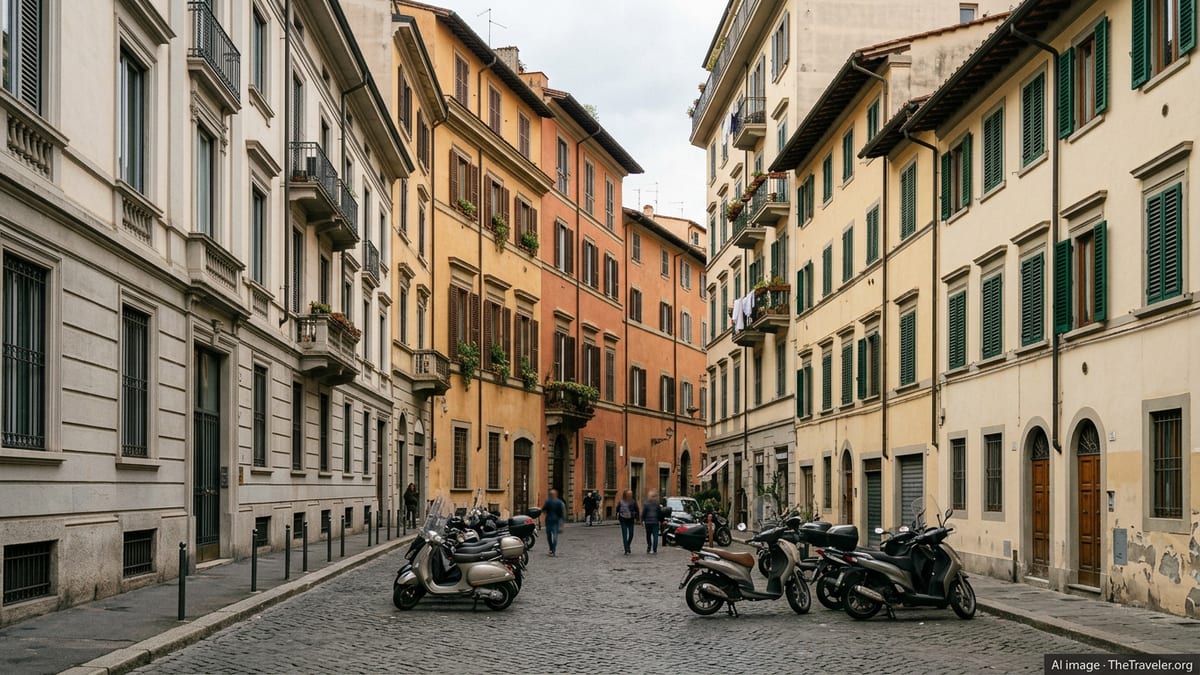
Overview: Relative Rent Levels in Milan, Rome and Florence
Across Italy, Milan, Rome and Florence consistently sit near the top of the national rental price league. Recent data from major listing portals and real estate analyses confirms that Milan is currently the most expensive rental market, followed by Rome, with Florence slightly but not dramatically lower than Rome for comparable central stock.
Nationwide analyses for late 2025 and early 2026 indicate that advertised one bedroom apartments in central areas of these cities typically fall into the following broad ranges for standard long term contracts (excluding short stay tourist lets): around 1,300 to 1,800 euros per month in Milan, 1,200 to 1,700 euros in Rome, and approximately 1,100 to 1,600 euros in Florence, depending on exact micro location, building condition and contract type.
Per square metre figures reported for end 2025 also reflect this hierarchy. Milan shows average asking rents in the low to mid 20s euros per square metre monthly citywide and low 30s in prime central districts, while Rome and Florence generally track several euros per square metre lower. This difference compounds for larger units and explains why family sized housing diverges more strongly in cost than small city centre studios.
For expats comparing the three, the practical implication is that a like for like apartment will typically cost the most in Milan, somewhat less in Rome, and modestly less again in Florence. However, intra city variation is substantial, and contract structure and furnishing level can easily swing effective costs by several hundred euros per month.
Current Benchmarks for Typical Expat Rentals
Published 2025–2026 rental benchmarks provide useful anchors for long term foreign residents. One widely cited analysis of Milan’s rental market for early 2026 indicates an average rent of about 23 euros per square metre per month citywide, with central districts reaching roughly 33 euros per square metre. On this basis, a compact one bedroom of 45 to 55 square metres would commonly list around 1,300 to 1,600 euros in the central area, aligning with observed asking ranges.
For Rome, specialist rental market reviews using late 2025 data report average asking rents around the high teens per square metre citywide, with tenants targeting mid range apartments in well connected neighbourhoods budgeting roughly 1,300 to 2,000 euros per month for a one or two bedroom apartment. This suggests that, for a typical 50 to 60 square metre one bedroom, expats should plan on approximately 1,200 to 1,600 euros in central or semi central zones under standard contracts.
Florence is less extensively covered in international rental reports, but consolidated housing cost guides that compare major Italian cities indicate city centre one bedroom apartments commonly advertised in the approximate range of 900 to 1,600 euros per month, with the lower part of the band found outside the historic core and the upper end in newly refurbished or highly touristic central stock. Recent anecdotal reports from residents highlight strong increases in central studio rents since 2021, with simple units that once rented below 800 euros now closer to 1,200 to 1,400 euros including utilities.
These benchmarks should be treated as orientation figures rather than guaranteed outcomes. High demand, especially in peak academic and corporate relocation seasons, means competitively priced, good quality units often attract multiple applicants and can close above initial asking levels or with less favourable contract terms for the tenant.
City Centre vs Outer Districts: Spatial Price Gradients
The price gap between historic or business cores and outer neighbourhoods is material in all three cities and has important implications for relocation budgeting. Current national housing cost guides suggest spreads of roughly 30 to 40 percent between central and non central districts for long term rentals in Milan, Rome and Florence.
In Milan, published ranges for one bedroom apartments put central rents broadly between 1,000 and 2,000 euros per month, compared with around 700 to 1,200 euros in outlying districts. Given the higher base level in Milan, the absolute saving from moving a few metro stops away from the historic core can easily reach 400 to 600 euros per month on a like sized unit, providing a substantial opportunity for budget optimisation.
Rome displays a similar pattern, though absolute numbers are somewhat lower. Central one bedroom apartments are typically quoted between 900 and 1,800 euros, versus around 600 to 1,200 euros in more peripheral but still residentially attractive neighbourhoods. Since many outer areas are well served by metro or rail connections, expats who can accept longer commutes can access significantly lower rents without leaving the municipality.
Florence, given its smaller geographic size, shows a pronounced difference between the historic centre and its immediate ring of residential districts. Guidance for 2024–2025 points to central one bedroom ranges of about 900 to 1,600 euros, versus roughly 550 to 1,100 euros in peripheral areas. For expats not dependent on being inside the most touristed core, moving even one or two kilometres out can materially reduce rent while still keeping daily life largely walkable.
Property Types, Sizes and Furnishing: Impact on Rent
Beyond location, the main determinants of rent are property size, configuration and furnishing level. Milan’s higher per square metre rents mean that increases in floor area translate quickly into larger monthly payments. For example, using end 2025 data, a 50 square metre one bedroom in a central district at roughly 30 euros per square metre would run around 1,500 euros, while an 80 square metre two bedroom in the same area could approach or exceed 2,400 euros under similar conditions.
In Rome, the typical per square metre rent is lower, but similar proportional differences apply. A mid range 55 square metre one bedroom in a well connected, non prime central neighbourhood at approximately 18 euros per square metre would yield a rent in the vicinity of 990 euros, while a 90 square metre two bedroom at the same rate would be closer to 1,620 euros. Prime central streets, especially those attractive for short term rentals, will sit above these mid range figures.
Florence’s stock is heavily skewed toward older buildings in the core, often with idiosyncratic layouts. Modern units with lifts, air conditioning and energy efficient systems, whether newly built or comprehensively refurbished, command a visible premium over older walk up apartments with basic finishes. Resident reports indicate that small renovated studios and one bedrooms with modern systems that rented in the 700 to 800 euro range a few years ago can now attract around 1,200 to 1,400 euros per month, particularly in historic districts.
Furnished versus unfurnished status also matters. Expats typically gravitate toward furnished or partially furnished apartments, which in these markets tend to cost more per month and may be offered more often on shorter or transitional contract formats. Completely unfurnished long term contracts can be more economical on a per month basis but require up front investment in furniture and may not be practical for short or medium term assignees.
Contract Structures and Additional Rental Costs
Though this briefing focuses on headline rent, expats evaluating Milan, Rome and Florence must consider how contract structures and ancillary costs affect effective monthly outlay. Across Italy, long term contracts commonly require security deposits equal to two or three months’ rent, and agency fees that can approximate one month’s rent or a percentage of the annual contract. These entry costs are higher in more expensive cities simply because they scale with the monthly rent.
Available guidance on Italian rental practices highlights that Milan and Rome, in particular, have competitive private rental markets where landlords can often choose between multiple applicants. In this context, expat tenants seeking central, furnished units should be prepared for little room to negotiate headline rent, especially for well priced apartments. In Florence, selective negotiation may be possible in shoulder seasons or for less obviously marketable units, but the boom in touristic and academic demand has reduced bargaining power for tenants in the historic centre.
Beyond base rent, common ancillary housing costs include building service charges, utilities and occasional local taxes related to waste collection. While these are not the focus of this article, they influence apartment choice. For example, more modern buildings in Milan and Florence may have higher base service charges but lower heating expenses due to better energy performance, while older properties may have limited shared costs but be more expensive to heat or cool.
For comparative purposes between the three cities, it is reasonable for expats to budget that ancillary fixed housing costs will add several hundred euros per month on top of rent, with Milan and Rome slightly higher on average than Florence due to larger average dwellings and more extensive building services in some complexes.
Scenario Comparisons for Common Expat Profiles
To translate market data into practical decision support, it is useful to consider several typical expat housing scenarios and how they might be priced in each city, using conservative late 2025 and early 2026 ranges. These figures are indicative only and assume long term contracts, excluding luxury segments and very short term tourist lets.
For a single professional seeking a one bedroom or large studio in or very close to the central business and historic districts, realistic budget planning would be approximately 1,400 to 1,800 euros per month in Milan, 1,300 to 1,700 euros in Rome, and 1,200 to 1,600 euros in Florence. At the top of each range, tenants can expect renovated stock in good locations; at the lower end, compromises on size, building age or immediate surroundings are likely.
For a couple or small family targeting a two bedroom apartment in well connected but not necessarily prime central neighbourhoods, a working budget of roughly 1,800 to 2,400 euros in Milan, around 1,500 to 2,100 euros in Rome, and about 1,300 to 1,900 euros in Florence is typical. Moving several kilometres from the core in each city could reduce these figures by 15 to 30 percent, depending on public transport access and local demand.
For cost conscious assignees prepared to live in peripheral districts and accept older, less refurbished stock, substantially lower rents are achievable, particularly in Florence and Rome. In such cases, monthly rents for modest one bedrooms can fall into the 700 to 1,000 euro range in Rome and Florence and 800 to 1,100 euros in Milan, but these options often come with trade offs in commuting time, building quality and neighbourhood amenities.
The Takeaway
For international assignees and long term foreign residents, Milan, Rome and Florence all represent relatively high cost rental markets by Italian standards, but they differ in important ways that affect relocation feasibility. Milan currently stands as the clear price leader, with average per square metre rents and headline monthly figures notably higher than in the other two cities, particularly for larger and centrally located units.
Rome occupies a middle position, with rents meaningfully above the Italian national average but usually below Milan’s for comparable housing. Florence, while somewhat less expensive overall, should still be treated as a high demand market in its historic centre, with rents that can approach those in Rome for renovated, well located apartments.
From a planning perspective, expats should model housing budgets at scenario level, taking into account not only published averages but also personal requirements such as district, building type, furnishing and tolerance for commuting. Allowing for a wide band of potential outcomes, especially in peak demand periods, reduces the risk of under budgeting.
Ultimately, the choice between Milan, Rome and Florence from a rental perspective is not simply a question of which city is cheapest, but how each city’s rental structure aligns with employer housing policies, income levels and lifestyle priorities. Decision makers who integrate up to date market data, realistic scenario planning and clear housing requirements will be in a stronger position to determine which city offers a sustainable rent profile for the duration of the assignment.
FAQ
Q1. Is rent always highest in Milan compared with Rome and Florence?
Milan consistently reports the highest average rents among the three, especially in central and business districts, although individual properties in Rome and Florence can match or exceed Milan for highly prime locations.
Q2. How much should a single expat budget for a central one bedroom in each city?
As of 2025–2026, a conservative budget would be about 1,400 to 1,800 euros per month in Milan, 1,300 to 1,700 euros in Rome and 1,200 to 1,600 euros in Florence for central one bedrooms.
Q3. Are rents much cheaper outside the city centre?
Yes. In all three cities, moving from the historic or business core to outer but still urban districts can reduce rent by roughly 15 to 40 percent, depending on local demand and transport connections.
Q4. Is Florence significantly cheaper than Rome for expat rentals?
Florence is typically modestly cheaper than Rome on average, especially outside the historic centre, but the difference is not dramatic for renovated apartments in prime, touristic central areas.
Q5. Do furnished apartments cost more in these cities?
Furnished apartments generally command a higher monthly rent than unfurnished equivalents and are more common in expat oriented and short to medium term rental segments in all three cities.
Q6. How volatile are rents in Milan, Rome and Florence?
Recent years have seen upward pressure on rents, particularly in Milan and central areas of Rome and Florence. While conditions vary by district, expats should plan for limited availability and firm pricing in high demand zones.
Q7. Are there seasonal differences in rent levels?
Advertised monthly rents do not usually change sharply by season, but availability and competition for units increase around academic start dates and at the beginning of major corporate assignment cycles.
Q8. Can expats negotiate rents in these markets?
Some negotiation is possible, particularly for less in demand locations or longer contract commitments, but in central districts of Milan, Rome and Florence landlords often have multiple offers and may resist substantial discounts.
Q9. How do short term lets compare with long term contract rents?
Short term and tourist oriented rentals typically cost much more on an effective monthly basis than standard long term contracts, especially in prime central neighbourhoods, and should not be used as benchmarks for multi year housing budgets.
Q10. What proportion of an expat’s budget is usually taken by rent in these cities?
While individual circumstances differ, it is common for rent in Milan, Rome and Florence to absorb 30 to 40 percent or more of net income for expats renting in central or high demand districts, particularly when living alone.