

More news on this day
Short‑term rental markets in Greece, Turkey and Cyprus are entering an unusually volatile season, as new regulations, fast‑rising costs and fresh geopolitical shocks across the Eastern Mediterranean combine to squeeze supply, trigger a surge in cancellations and deepen uncertainty for both hosts and travelers.
Get the latest news straight to your inbox!
Regulatory Clampdowns Reshape Greece’s Holiday Rental Landscape
Greece’s booming short‑term rental sector, one of Europe’s most dynamic, is now being reshaped by a series of national and EU‑level measures that are beginning to bite just as the 2026 season gets underway. Publicly available information shows that Greek authorities have tightened registration rules, increased inspections and layered on new taxes targeting short‑term stays, part of a wider effort to tackle overtourism, housing pressures and tax leakage in popular destinations such as Athens, Santorini and Mykonos.
Over the past two years, Greece has moved from relatively light oversight to a dense framework of registration requirements, quality criteria and controls. A climate‑related nightly levy on short‑term rentals, higher accommodation taxes, and restrictions or freezes on new listings in saturated central Athens districts are combining to reduce the number of legal properties that can be offered on platforms. Industry data cited in local media shows that thousands of units risk being delisted in coming months as they fail to meet stricter safety, usage and documentation standards.
This tightening is starting to translate into practical disruption for travelers. Hosts in several Greek cities report cancelling or refusing bookings ahead of key deadlines because properties may not be compliant in time or because additional costs make operations unviable at previously advertised rates. Travelers are increasingly being redirected from apartments to hotels or to less central neighborhoods, while some property owners shift back to long‑term leases to secure more predictable income.
Despite strong underlying tourism demand, the Greek short‑term rental market is therefore confronting a paradox: headline visitor numbers remain robust, but the effective supply of legally operable, competitively priced listings in core urban and island hotspots is shrinking, setting the stage for price volatility and last‑minute availability swings through summer 2026.
Turkey’s Rental Hosts Struggle With Inflation, Rules and Risk Perception
In Turkey, the short‑term rental sector faces a different but equally destabilizing mix of pressures. Years of elevated inflation, rapid lira depreciation and repeated tax and fee adjustments have sharply increased operating costs for hosts. At the same time, publicly available information points to tighter rules on private holiday rentals in major cities, with minimum‑stay requirements and licensing obligations reducing the flexibility that once characterized the market.
Travel forums and local coverage describe how some districts of Istanbul and coastal resorts have seen a marked reduction in new short‑term listings after regulations curtailed very short stays and introduced stricter enforcement. For many small landlords, the combination of unpredictable tax liabilities, higher utility and maintenance expenses, and compliance costs has tipped the balance toward exiting the short‑term segment altogether or leaving properties vacant rather than risk penalties.
Security perceptions are adding another layer of fragility. International travel advisories for Turkey continue to urge heightened caution in certain regions, and regional conflict flare‑ups periodically trigger waves of cancellations concentrated among first‑time visitors and long‑haul markets. When geopolitical tensions in the wider Middle East rise or when high‑profile incidents occur, booking platforms frequently register short, sharp dips in reservations for Istanbul and major resort areas, even if on‑the‑ground conditions in tourist districts remain calm.
The result is a stop‑start pattern in demand that complicates planning for hosts and local tourism businesses. Attractive prices and a weaker currency can deliver strong booking surges when sentiment improves, but many owners report that sudden cancellations and last‑minute discounting have become a recurring feature of the business, eroding margins and discouraging investment in property upgrades.
Cyprus Tourism Hit by Cancellations After Military Strikes Nearby
Cyprus, which has long marketed itself as a stable, sun‑drenched gateway between Europe and the Middle East, has been jolted by the latest escalation in regional tensions. In early 2026, widely reported drone strikes on British military facilities at Akrotiri and Dhekelia, on the island’s southern coast, shocked residents and raised traveler concerns about the proximity of the conflict to holiday areas.
According to published coverage, hotels and rental properties in Larnaca and surrounding regions experienced immediate and significant fallout, with estimates indicating cancellations of around 15 to 20 percent and hotel occupancy dropping from typical winter levels of about 60 percent to near 40 percent in the weeks following the strikes. Industry representatives have suggested that cancellation rates may have been even higher in popular leisure hubs such as Paphos and Famagusta, with some reports referencing scrapped bookings in the 25 to 30 percent range.
Short‑term rental hosts, who are often more dependent on individual family and small group bookings than large resort hotels, appear particularly exposed. Many rely on direct reservations or a limited number of platforms, making it difficult to replace lost bookings quickly when travelers pull out due to perceived security risks. Some property owners report empty calendars in months that were previously near fully booked, alongside pressure to slash prices to attract more domestically focused or last‑minute European visitors.
While tourism authorities emphasize that core resort areas remain open and that flights and infrastructure are operating normally, the perception shock has undermined one of Cyprus’s key competitive advantages: its reputation for being insulated from the region’s more acute security risks. Recovery in the short‑term rental segment may depend less on local marketing campaigns and more on whether regional hostilities recede or intensify over the next several months.
Regional Geopolitical Instability Weighs on Traveler Confidence
The challenges playing out in Greece, Turkey and Cyprus cannot be separated from broader geopolitical currents across the Eastern Mediterranean and Middle East. The continuing impact of the Gaza war, maritime tensions in the Red Sea, periodic confrontations involving Iran and its proxies, and disputes in the Aegean and Eastern Mediterranean energy corridors all contribute to a sense of heightened, if uneven, risk across nearby destinations.
International organizations tracking the economic fallout of the Gaza conflict have noted that tourism flows to several neighboring countries declined sharply after October 2023 as travelers postponed or rebooked holidays away from the wider region. While Greece’s main islands and mainland resorts have generally continued to perform well, demand from certain long‑haul markets has become more sensitive to news cycles, with booking spikes when ceasefires or diplomatic breakthroughs are reported and slumps when images of regional escalation dominate headlines.
For Turkey and Cyprus, whose tourism sectors rely heavily on price‑sensitive package holidaymakers and regional visitors, shifts in risk perception can be even more abrupt. Tour operators and online travel agencies report that packages can see sudden surges of cancellations or re‑routing to alternative Mediterranean destinations, including Spain and parts of Italy, when security concerns rise. This volatility filters directly into the short‑term rental channel, leaving hosts exposed to abrupt drops in occupancy that are difficult to hedge against.
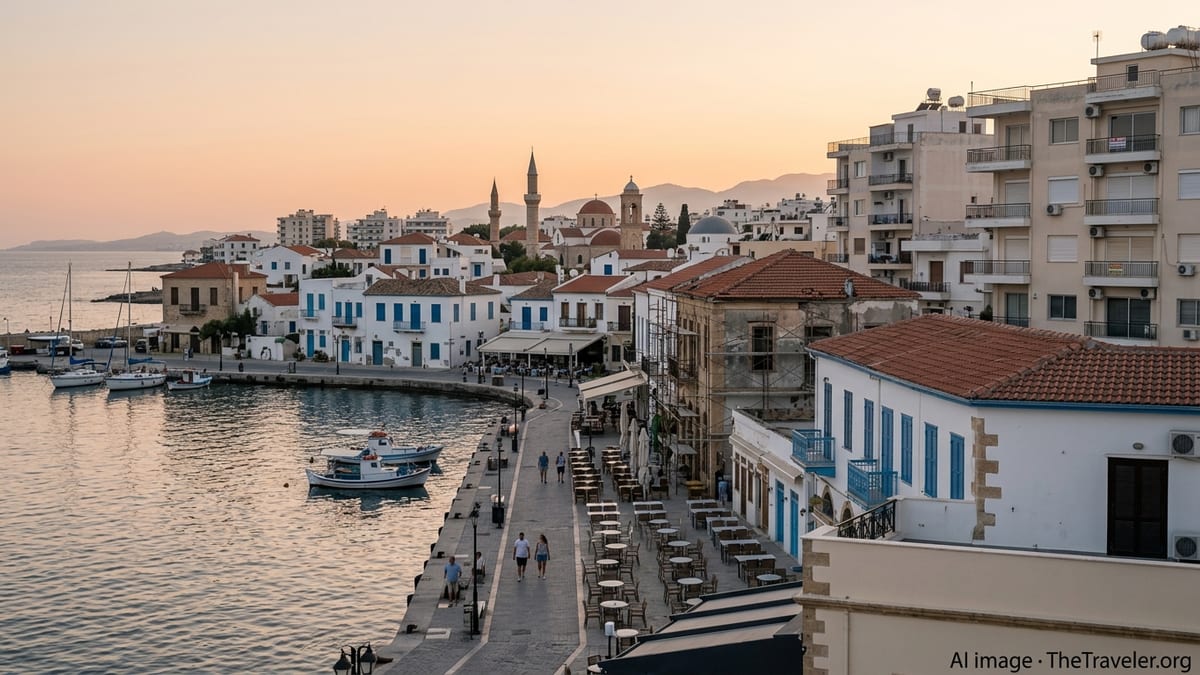
At the same time, the very landscapes that attract travelers to these countries remain largely untouched: Aegean coves, whitewashed hill towns, Ottoman‑era streetscapes and pine‑covered headlands continue to appear in social media feeds and travel features. The tension between the enduring appeal of these settings and the episodic geopolitical shocks surrounding them is at the heart of the current instability facing the region’s rental markets.
Economic Pressures and Policy Responses Add to Market Uncertainty
Overlaying security concerns is a complex economic picture that further unsettles short‑term rental activity. Greece, Turkey and Cyprus have all faced high inflation in recent years, although the trajectory and intensity differ. Rising energy and food prices, higher interest rates and increased borrowing costs are squeezing households and small property investors who rely on rental income to service mortgages or offset living expenses.
Greece’s regulatory push is partly motivated by domestic housing affordability debates, with critics arguing that the proliferation of visitor‑oriented rentals in city centers has constrained long‑term housing supply and driven up rents for residents. New taxes, registration filters and zoning‑style restrictions are designed to channel some properties back into the long‑term market while raising additional public revenue. Similar policy debates exist in Cyprus and, to a degree, in Turkey, where local authorities seek to balance tourism‑driven growth with social and political pressures around housing and neighborhood cohesion.
At the European level, new rules on data sharing and transparency for short‑term rental platforms are being rolled out, obliging intermediaries to pass more detailed information on bookings and hosts to public authorities. While these measures promise a clearer statistical picture and more effective enforcement against illegal listings, they also increase compliance burdens and create new avenues for rapid, large‑scale delistings if properties fail to meet evolving standards.
For travelers and hosts alike, the combined effect of economic strain, regulatory flux and geopolitical uncertainty is a market characterized by frequent rule changes, uneven availability and elevated cancellation risk. Many travelers are responding by favoring flexible booking terms, comprehensive travel insurance and established operators, while smaller independent hosts in Greece, Turkey and Cyprus must navigate an environment where a single new law, advisory or incident can quickly transform a fully booked season into a scramble to fill empty calendars.