

Turkey’s diversity can be hard to grasp until you see how quickly its landscapes change. One hour you are weaving through Istanbul traffic, the next you are gliding past olive groves, white-sand beaches or otherworldly rock pinnacles. For many travelers, renting a car feels like the key to unlocking this variety. Yet in Turkey, where long-distance buses and domestic flights are excellent and city driving can be intense, a rental is not always the obvious win. Knowing when a car is worth it, and when it will only add stress and cost, is essential for planning a smooth trip.
Understanding Turkey’s Roads and Driving Culture
Turkey has an extensive road network that links major cities with coastal resorts, mountain villages and archeological sites. Highways between big hubs like Istanbul, Ankara, Izmir and Antalya are usually modern multi-lane roads with frequent service stations. Regional and coastal roads vary more in quality, but most popular tourist areas are connected by reasonably maintained surfaces that an average driver can handle in dry weather. Road signs are generally clear and use international symbols alongside Turkish. Once you leave the main corridors, expect narrower lanes, more bends and slower local traffic such as tractors and minibuses.
Urban driving, especially in Istanbul, is a different experience from rural routes. Traffic congestion can be heavy, parking is limited, and local drivers are assertive. Lane discipline is looser than in much of Western Europe or North America, and last-minute lane changes or sudden stops are not unusual. Outside the big cities, driving is typically calmer, but you still need to keep a close eye on scooters, pedestrians and livestock that may enter the road unexpectedly. Night driving on unlit rural roads can be challenging due to limited visibility and occasional stray animals.
For visitors who are comfortable with confident but defensive driving, Turkey’s roads can be a pleasure, especially along the Aegean and Mediterranean coasts or around the central Anatolian plains. If you are nervous in heavy traffic, or unused to hairpin bends and overtaking on two-lane highways, you may prefer to use public transport in and out of cities and rent a car only for specific rural stretches. Understanding your own comfort level is often the decisive factor when weighing up whether a rental will enhance or diminish your trip.
When Renting a Car in Turkey Is Truly Worth It
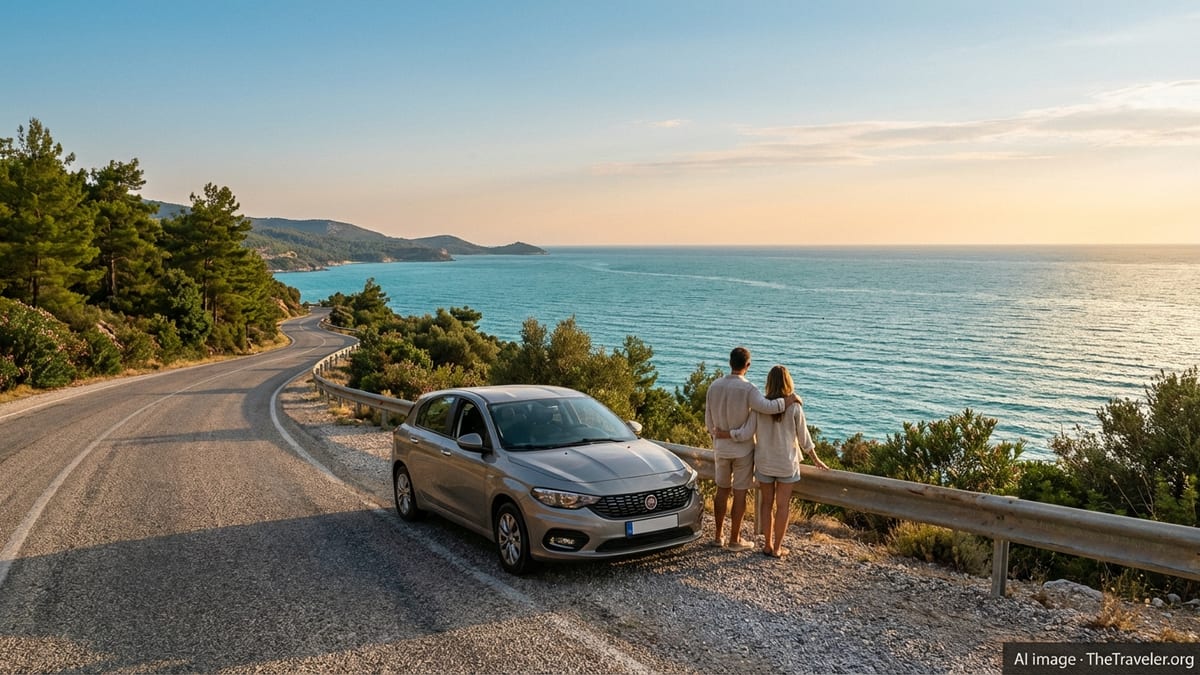
A rental car shines most if your itinerary focuses on smaller towns, rural regions or scattered historical sites. Coastal regions such as the Aegean around Izmir and Bodrum, or the Turquoise Coast between Fethiye and Antalya, are prime examples. Here, buses connect the bigger hubs, but many of the best beaches, coves and hilltop villages are difficult or slow to reach without your own vehicle. With a car, you can swim at a quiet bay before breakfast, visit ruins in the midday lull, then detour to a vineyard or mountain lookout at sunset.
Central Anatolia is another region where a car can transform your experience. In Cappadocia, local tours cover the headline valleys and underground cities, but a rental allows you to explore lesser-known villages, hiking trailheads and viewpoints at your own pace. The same is true for the lake districts and smaller archeological zones scattered across the plateau. If your idea of a perfect trip includes stopping for unplanned photos, pulling into family-run roadside restaurants or following a local tip to an out-of-the-way site, a car provides the spontaneity that buses and set tours rarely match.
Renting can also make sense for family or group travel. When you spread the cost of a mid-size or larger car across three or four people, the per-person expense often compares favorably with multiple long-distance bus tickets or a string of private transfers. Add in the convenience of storing luggage in the trunk between stops and setting your own schedule, and a car quickly becomes appealing. The key question is whether you will actually use the flexibility a car offers. If your plan is mainly to move between a few major cities, public transport is usually cheaper and easier.
Itineraries Where a Car Adds Real Value
Certain classic Turkish routes reward self-drive more than others. Aegean road trips that loop between Izmir, Selcuk, Kuşadası, Ayvalık, Çeşme or the interior around Pamukkale are particularly suited to a car. Distances are moderate, roads are relatively forgiving, and there is an almost endless chain of ruins, villages and farm stands to stop at along the way. You can visit popular sites such as Ephesus or Pergamon early or late in the day to avoid the most crowded bus tours, then explore lesser-known temples, olive mills or fishing harbors in the quieter hours.
The Mediterranean coast from Fethiye to Antalya is another excellent candidate for driving. Public minibuses serve the main towns, but they do not always run to remote beaches, trailheads for the Lycian Way or smaller bays where boutique pensions and family guesthouses cluster. With a car, you can access viewpoints above the coast, inland villages with traditional stone houses, and ancient Lycian tombs tucked into hillsides. The ability to reach these smaller places on your own schedule can turn a straightforward beach holiday into a much richer cultural journey.
Further east, drives through less visited parts of central and eastern Anatolia benefit from a rental if you have the confidence and time. Stretches around Konya, Lake Tuz, the Kaçkar Mountains or the Van region reward inquisitive travelers who want to stop often and linger. However, road conditions, weather and distances can be more demanding, so these routes are best for experienced drivers who are comfortable planning fuel, rest and overnight stops carefully. For first-time visitors sticking to Istanbul plus a couple of coastal or central highlights, focusing a rental on one or two segments is usually sufficient.
When Public Transport or Tours Make More Sense
Despite the appeal of a rental car, there are many situations in Turkey where it is simply not worth the hassle. Istanbul is the most obvious example. Traffic congestion, scarce parking, aggressive local driving and complex one-way systems combine to make the city challenging even for residents. On top of that, Istanbul has extensive public transport including metro lines, trams, buses, ferries and ride-hailing services. For most travelers, renting a car to use inside Istanbul adds cost and stress without providing meaningful benefits.
Intercity travel between major destinations is often faster or more relaxing by plane or bus. Turkey’s domestic airline network is dense, with frequent connections between cities such as Istanbul, Ankara, Izmir, Antalya and Kayseri. Long-distance buses are widely used, relatively affordable and usually comfortable, with assigned seating and regular rest stops. If your trip is primarily about linking these main centers with one or two guided excursions, renting a car can be unnecessary. It may end up parked at your hotel for days while you explore on foot or by tour.
Guided day tours also remain a strong alternative in very popular sightseeing areas. At places like Pamukkale, Ephesus or the key valleys in Cappadocia, organized excursions are easy to book and typically include transport, a guide and entrance coordination. If you only have a short window in a destination, and you want someone else to handle logistics and explanations, a tour can be more efficient than driving yourself. In these contexts, a car is most valuable if you deliberately plan to spend extra days exploring secondary sites that most tours skip.
Costs, Insurance and Hidden Fees
When evaluating whether renting is worth it, look closely at the real cost. Daily base rates advertised online can appear low, especially outside peak summer months, but the final bill often grows once you add mandatory insurance, optional coverage and local charges. Collision damage waivers, third-party liability and theft protection are common components. In Turkey, the included insurance may have a relatively high excess, so many travelers choose extra coverage to reduce their liability. Carefully read what is included, what is optional and which items your credit card might already cover before accepting every add-on at the counter.
Fuel is another substantial expense, and prices can fluctuate. Turkey’s petrol and diesel costs are often higher than in some neighboring countries in real terms, which means long-distance driving may not always be the cheapest option when compared with bus fares. Parking fees in cities, tolls on major highways and bridges, and extra charges for additional drivers or young drivers all add up. Airport pick-up and one-way drop-offs, especially between distant regions, may carry noticeable surcharges. These costs do not necessarily make renting a bad choice, but they should be part of your comparison against train, bus, flight and tour prices.
Hidden or unexpected fees often emerge around existing damage, fuel policies and mileage limits. It is important to document the car’s condition carefully at pick-up with photos or video and to ensure any scratches or dents are recorded in the paperwork. Check if your rental includes unlimited kilometers or if there is a daily cap with excess charges. Review the fuel policy, whether full-to-full or another arrangement, so you are not penalized for returning the tank at a different level. Taking a few minutes to clarify these details reduces surprises and helps you decide realistically whether a rental fits your budget.
Licenses, Rules and Practical Requirements
Most travelers can rent a car in Turkey with a valid driving license from their home country, provided it is written in the Latin alphabet and they meet the minimum age requirement set by the rental company. Many firms require drivers to be at least 21, and some categories of cars may have a higher minimum age or a surcharge for younger drivers. An international driving permit can be useful, particularly if your license is not in Latin script or if you want an extra document to show at police checkpoints, but it is often not strictly required for short-term visitors from many countries.
Basic traffic rules are broadly aligned with European standards. Driving is on the right-hand side of the road, seat belts are mandatory, and using a mobile phone without a hands-free system is prohibited. Speed limits vary by road type and are signposted, but they are often around town speeds on urban streets, higher on rural roads and highest on motorways. Police speed checks and cameras are increasingly common. Blood alcohol limits are relatively strict, and the safest assumption is to avoid drinking entirely if you are driving the same day.
Rental companies usually insist on a major credit card in the main driver’s name, both as a guarantee and for the security deposit held during the rental period. Debit cards may sometimes be accepted for payment but not always for the deposit. You will also need your passport or identity document and, in some cases, proof of entry into the country. If you are planning to cross borders into neighboring countries with your rental, you must verify in advance whether this is permitted, as many standard contracts restrict use to within Turkey’s borders or require additional paperwork and fees.
Safety, Seasonal Considerations and Road Conditions
Road safety in Turkey is a mixed picture. Main highways and busy tourist corridors are generally well maintained, but accident rates can be higher than what some visitors are used to. The main risks usually come from speed, impatient overtaking and occasional lapses in signaling rather than from the road surfaces themselves. Adopting a cautious, unhurried approach, keeping to posted limits and leaving extra space between vehicles helps offset these differences. Defensive driving is particularly important on two-lane routes where some drivers may attempt ambitious overtaking maneuvers.
Season and weather also influence whether a car is a smart choice. Summer along the coasts brings dry roads and long daylight hours, ideal for leisurely drives, but it also means hotter interiors, crowded resort towns and fuller parking lots. Spring and autumn offer cooler temperatures and often clearer views, especially inland, though you can encounter rain and fog in mountainous regions. Winter in central and eastern Turkey can be harsh, with snow and ice on higher passes and reduced visibility. If you plan to drive in colder months or at altitude, ensure your rental is equipped with suitable tires and that you feel confident driving in winter conditions.
In many rural or mountainous areas, lighting is limited and roadside barriers may be minimal. It is usually wiser to avoid driving after dark if you do not know the road. Planning your days to reach your accommodation before nightfall, particularly in remote regions, increases comfort and safety. For coastal and central itineraries in fair weather, these concerns are less pressing, and a car can be one of the most enjoyable ways to experience Turkey’s varied scenery, provided you respect the limits of the conditions and your own experience.
How to Decide: Key Questions to Ask Yourself
Deciding whether a rental car in Turkey is worth it comes down to your route, travel style and comfort behind the wheel. Begin by mapping your main stops and asking how many of them are large cities versus smaller coastal towns, villages or natural sites. If your journey is dominated by Istanbul, Ankara, Izmir and Antalya, with only brief forays outside, public transport and taxis will usually serve you well. If, however, you picture days spent hopping between beaches, vineyard roads, ruins and remote viewpoints, a car becomes more appealing.
Next, consider your tolerance for urban driving and parking. If the thought of navigating Istanbul traffic or hunting for a spot near an old town makes you anxious, structure your rental so that you pick up and drop off the car outside the busiest centers. Many travelers choose to explore a city first without a car, then rent one later from an airport or suburban office to begin the rural section of their trip. This approach often provides the best of both worlds: stress-free city days and flexible countryside time.
Finally, look at the numbers without forgetting the value of freedom. Compare the combined costs of buses, tours and transfers with the full, realistic expense of a rental, including fuel and extras. Weigh this against how much you will actually drive and how important spontaneous detours are to you. If you find yourself repeatedly drawn to images of empty coastal roads and quiet archaeological sites at sunset, chances are that a well-planned rental car segment will be worth it for at least part of your time in Turkey.
The Takeaway
Renting a car in Turkey can be one of the most rewarding choices you make for your trip, but only if it matches your destinations and travel style. On scenic coastal stretches and in regions dotted with small villages and scattered ancient sites, the flexibility and independence of a car can greatly enrich your experience. Being able to pull over at a viewpoint, linger in a roadside café or explore a lesser-known ruin away from the crowds is something that buses and fixed tours rarely allow.
On the other hand, urban exploration and long-distance hops between major cities rarely require a car. Istanbul in particular is better navigated by foot, ferry and public transport, with a rental more likely to add stress than value. Intercity buses and domestic flights typically remain efficient and cost-effective, so there is no obligation to drive simply to get from one big hub to another.
The smartest strategy is often a hybrid approach: rely on public transport and occasional tours for city-based sightseeing, then pick up a car only for selected stages where it clearly improves access and enjoyment. By honestly assessing your confidence on unfamiliar roads, your budget and your priorities, you can decide when a rental car in Turkey is truly worth it and when you are better off leaving the driving to someone else.
FAQ
Q1. Do I need an international driving permit to rent a car in Turkey?
In many cases a valid license in Latin script is accepted, but an international driving permit can be useful and is recommended if your license is not in Latin characters.
Q2. Is it safe to drive in Turkey for foreign visitors?
Many visitors drive safely in Turkey, especially on main highways and coastal routes, but you should practice defensive driving and avoid aggressive speeds or risky overtaking.
Q3. When is renting a car in Turkey not worth it?
It is often not worth renting a car if you are mainly staying in big cities like Istanbul or only traveling between major hubs connected by frequent flights and buses.
Q4. How expensive is fuel in Turkey compared with public transport?
Fuel can be relatively costly in Turkey, so on long routes buses and sometimes flights may be cheaper, especially for solo travelers or couples on a tight budget.
Q5. Can I pick up a rental car in one Turkish city and drop it in another?
One-way rentals are usually possible between many cities, but they often carry extra fees, so you should confirm availability and costs before finalizing your booking.
Q6. Is parking difficult in Turkish cities and tourist towns?
Parking can be challenging and sometimes expensive in busy city centers and popular resorts, while smaller towns and rural areas usually have more straightforward parking options.
Q7. Are automatic cars easy to find in Turkey?
Automatic cars are available, especially in major cities and airports, but they may cost more and sell out faster, so advance booking is strongly advised.
Q8. Can I drive my Turkish rental car into neighboring countries?
Many standard rental contracts restrict driving to within Turkey, or require special permission and extra insurance, so you must check cross-border rules with the company in advance.
Q9. What documents do I need to rent a car in Turkey?
You typically need your passport or ID, a valid driving license, a major credit card in the main driver’s name and, sometimes, proof of your entry into the country.
Q10. Is GPS or offline navigation necessary when driving in Turkey?
GPS or a reliable offline map is very helpful, especially in rural areas and complex city layouts, and it reduces stress by making unfamiliar routes easier to follow.