

More news on this day
Republic Airways is accelerating growth of its Embraer E175 fleet and tightening partnerships with major U.S. airlines, a strategy that is quietly reshaping how tourists reach emerging destinations across North America and beyond.
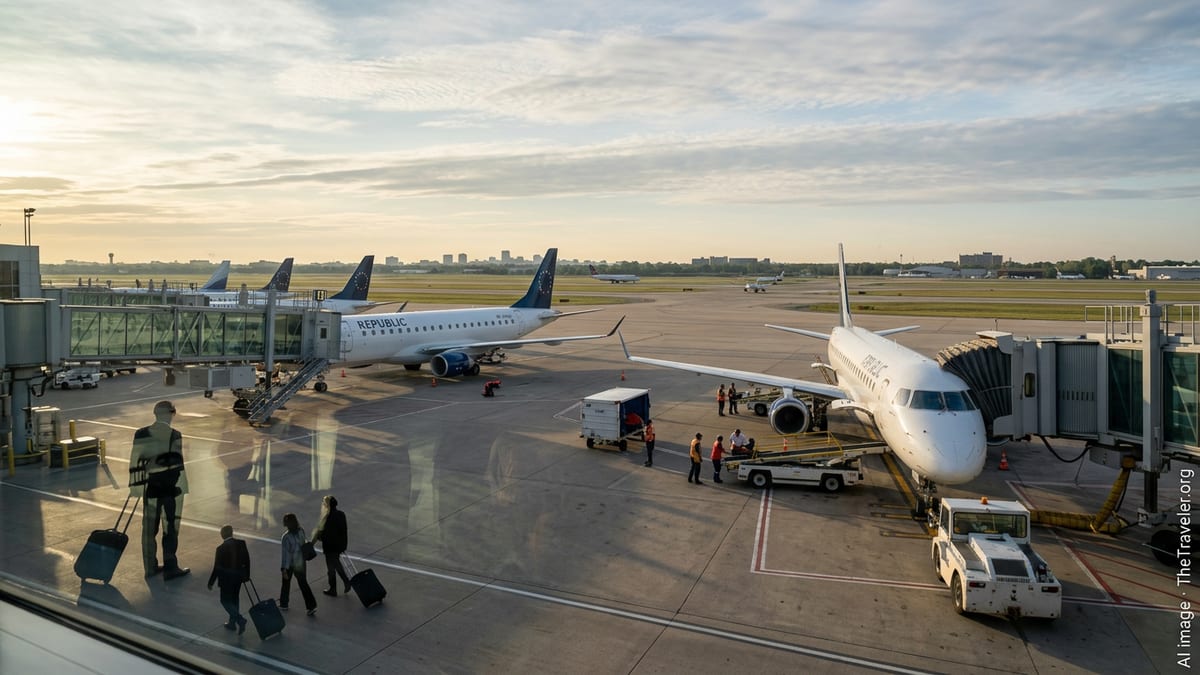
Fleet Expansion Anchored by Embraer E175 Deliveries
Republic Airways closed 2025 with a combined fleet of more than 300 Embraer 170 and 175 regional jets, underscoring its role as one of the largest operators of the Brazilian-built aircraft in the world. The carrier reported that it took delivery of 12 new E175s over the year and has firm orders in place for a further 29 aircraft scheduled to arrive between 2026 and 2029, backed by capital expenditure commitments in the hundreds of millions of dollars.
The E175 has become the backbone of Republic’s growth strategy as U.S. travelers increasingly favor regional jets that offer mainline-style comfort on thinner routes. With dual-class cabins, modern interiors and performance suited to shorter runways, the type allows Republic and its major airline partners to open or sustain routes that would be uneconomical for larger narrowbodies.
Adding more E175s also improves connectivity during peak travel seasons, particularly to secondary cities and resort gateways that rely heavily on inbound visitors. Increased frequencies and better timed departures give both leisure and business travelers more flexibility, supporting weekend getaways, conferences and events that drive local visitor spending.
Industry analysts note that Republic’s focus on a single regional jet family simplifies maintenance and crew training, helping the airline scale up quickly to meet partner demand. That efficiency has become a key selling point as major carriers seek reliable regional capacity to backfill networks rebuilt after the pandemic and recent pilot shortages.
Merger With Mesa Air Group Creates a Regional Powerhouse
The planned all-stock combination of Republic Airways and Mesa Air Group, announced in April 2025, is set to create one of the largest dedicated regional carriers in North America. Under the deal, Mesa’s Embraer 175 fleet and route network will be folded into a combined operation that retains the Republic Airways name and headquarters in the Indianapolis area.
By absorbing Mesa’s flying, Republic gains scale at a time when regional jets are central to the strategies of major U.S. airlines. The enlarged fleet will give the carrier more flexibility to allocate aircraft where demand is strongest, including sunbelt leisure markets, national parks gateways and fast-growing mid-size cities that have seen robust inbound tourism recovery.
For destination marketing organizations and local tourism boards, the merger could translate into more stable air service. Consolidating two operators with overlapping fleets and partners reduces duplication and can make it easier to justify year-round schedules instead of highly seasonal flying, particularly on routes linking smaller communities with big coastal hubs.
While regulators and labor groups will scrutinize the transaction, regional airport leaders are already signaling cautious optimism that a stronger balance sheet and larger fleet will support new service propositions. In markets where Mesa previously flew under capacity purchase agreements, the Republic brand is expected to become more visible to travelers over the next two years.
Deeper Capacity Purchase Agreements With Major U.S. Carriers
Republic’s expansion is being driven in part by strengthened capacity purchase agreements with American Airlines, Delta Air Lines and United Airlines. Recent filings highlight an expanded deal with United to operate 60 E175s, as well as aircraft reallocation between United and American that keeps Republic embedded in key hub systems across the Northeast, Midwest and Sun Belt.
These long-term partnerships effectively make Republic an extension of its mainline clients, operating flights under brands such as American Eagle, Delta Connection and United Express. For travelers, the experience is largely seamless: tickets are sold by the major airline, connections are coordinated across a single reservation, and loyalty benefits apply as if flying on mainline metal.
The practical impact on tourism is significant. As American, Delta and United pursue network strategies that emphasize connectivity over sheer size, they increasingly rely on Republic to feed passengers from smaller markets into long-haul hubs. Added regional frequencies into key gateways enable more same-day international connections, making it easier for inbound tourists to reach smaller American cities, ski resorts and coastal communities without overnight layovers.
Codeshare coordination also improves schedule reliability and risk-sharing. Because capacity purchase agreements insulate Republic from some fuel and revenue volatility, the airline can sustain service to marginal yet strategically important destinations that might otherwise lose nonstop links, preserving vital access for tourism-dependent economies.
Strengthening Tourism Links to Secondary and Emerging Destinations
The combined effect of new aircraft, a larger route portfolio and deeper partnerships is most visible in secondary and emerging destinations that depend on air service for visitor growth. Cities such as Indianapolis, Columbus, Kansas City and smaller regional centers have seen a steady build-up of Republic-operated flights feeding major hubs, enhancing their connectivity to both domestic and international markets.
Leisure corridors are also benefiting. Republic’s E175s play a key role in funneling travelers from interior states to beach destinations in Florida, the Gulf Coast, the Caribbean and Mexico during peak holiday periods. Additional frequencies and upgraded cabins encourage short-break travel and repeat visits, boosting hotel occupancy and local tourism revenues.
In the western United States, regional jets have supported the rebound of travel to national park gateways and outdoor recreation hubs, where demand can spike seasonally but remains too volatile for larger jets. Republic’s ability to right-size capacity with the E175 helps keep fares competitive and schedules frequent enough to attract both organized tour groups and independent travelers.
Local officials and airport managers in several mid-size markets have pointed to regional connectivity as a deciding factor in attracting conferences, sports events and new hotel projects. By offering reliable, frequent service under household brand names, Republic’s expanded operation gives these destinations a stronger case when competing for global tourism dollars.
Workforce and Training Investments Support Sustainable Growth
Behind the fleet and partnership moves, Republic has continued to invest in workforce development through its LIFT Academy training arm and in-house technician pipelines. These programs, established before the latest expansion phase, have taken on added importance as the airline prepares to induct more aircraft and scale post-merger operations.
LIFT Academy has trained hundreds of pilots since opening in 2018, many of whom move directly into cockpits at Republic. The model provides a more predictable flow of crew at a time when regional airlines across the United States are grappling with long-term pilot and mechanic shortages, factors that have constrained capacity and caused schedule disruptions.
For tourism stakeholders, a robust training pipeline translates into more reliable service. Fewer cancellations and better on-time performance are critical for travelers connecting to cruises, tours or package holidays with limited flexibility. Republic’s investment in training and retention is designed to support high-utilization schedules on its E175 fleet, particularly during peak holiday travel windows.
As Republic integrates Mesa’s operations, coordinates new aircraft deliveries and deepens its ties with major airline partners, its strategy centers on being a dependable regional backbone for the broader U.S. air network. That reliability, coupled with targeted growth into high-potential markets, is poised to further strengthen the aviation links that underpin tourism growth across North America.