

More news on this day
Passengers traveling through Indianapolis International Airport in late March are facing mounting disruptions as a series of Republic Airways cancellations trigger missed connections and delays across a network of more than 20 major U.S. cities.
Get the latest news straight to your inbox!
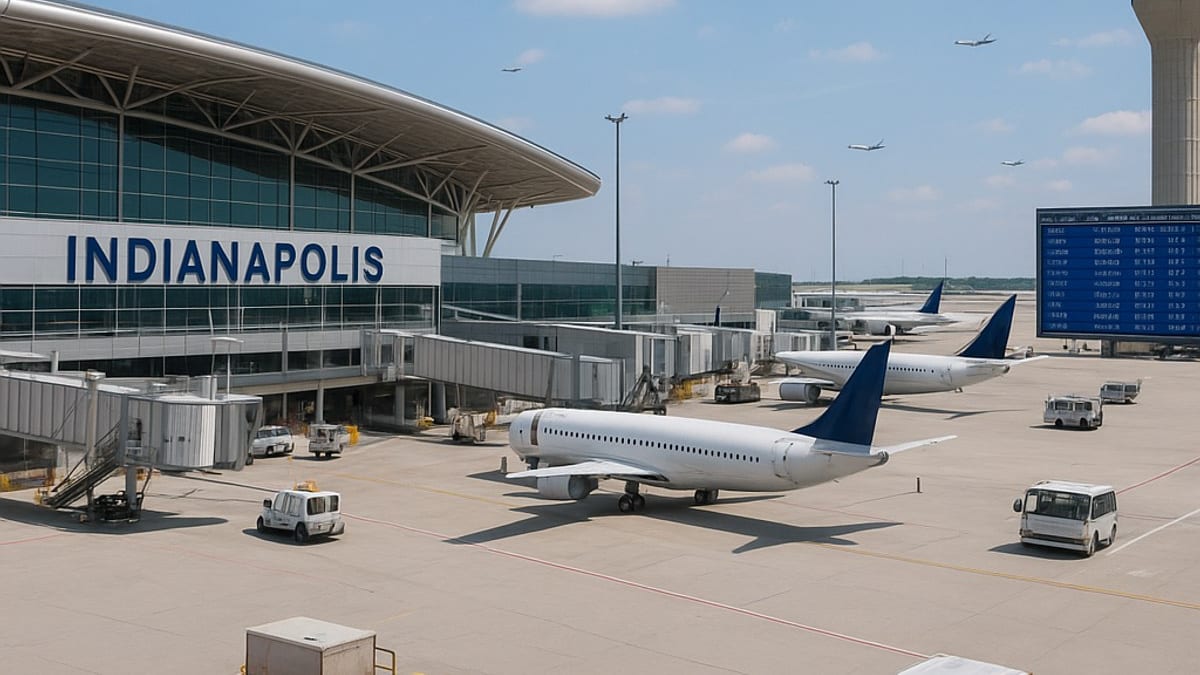
Image by Nomad Lawyer
Indianapolis Becomes Flashpoint in a Wider Disruption
Recent operational data and published coverage indicate that Indianapolis International Airport has been hit by a run of cancellations and delays concentrated among regional carriers, with Republic Airways frequently appearing at the top of disruption tallies. On March 25, 2026, reports highlighted 11 cancelled flights and 22 delays at the airport, with Republic responsible for the majority of cancellations alongside schedule issues at Southwest and Spirit.
Just days earlier, on March 16, 2026, another surge in irregular operations saw 24 cancellations and 65 delays logged at Indianapolis. Publicly available tallies show Republic and SkyWest each recording seven cancellations that day, underscoring the vulnerability of midwestern connector hubs when weather and operational stress converge.
These localized events unfolded against a broader backdrop of severe turbulence in the U.S. airline system in March, with industry trackers counting hundreds of cancellations tied to storms and convective weather. In that context, Indianapolis is functioning as a pressure point in the regional network, where problems at a single airline ripple across multiple partners and destinations.
For travelers booked on Republic-operated flights under major airline brands, the experience on the ground is often indistinguishable from a mainline disruption. Departures vanish from boards, rebooking lines grow, and connections to major cities become uncertain, even when long-haul flights are operating on time.
Republic’s Role as a Regional Connector
Republic Airways operates primarily as a regional contractor, flying Embraer jets on behalf of large U.S. carriers. According to industry overviews, the airline and its merged partner Mesa now collectively run more than 1,200 daily departures across the country, linking mid-sized hubs like Indianapolis with major centers such as Chicago, New York, Atlanta, Dallas and Denver.
Because Republic flights often bear the flight numbers and branding of its partner airlines, a cancellation in Indianapolis can appear to passengers as a disruption by American, Delta or United. Behind the scenes, however, it is the regional operator that determines whether a particular leg can depart, especially when crew scheduling or aircraft positioning issues follow severe weather.
When storms swept across large portions of the United States earlier in March, national disruption logs circulated by travel media showed Republic with some of the highest cancellation counts among all carriers. One widely cited snapshot put Republic at nearly 100 cancellations in a single day, illustrating how quickly regional fleets can be sidelined when airspace or airport conditions deteriorate.
Those national figures translate into very local consequences in Indianapolis. With Republic operating many of the spokes that connect smaller and mid-sized cities into the Indiana capital, a bad day for the airline significantly reduces options for travelers trying to reach or leave the region, even if other airlines at the airport are less affected.
Network Impact Across at Least 20 Major Cities
The Indianapolis disruptions reach far beyond central Indiana. Flight logs and route maps referenced in recent coverage show Republic linking Indianapolis to a web of more than 20 major U.S. cities, including Chicago, New York, Boston, Washington, Atlanta, Dallas, Denver, Orlando and Phoenix, either directly or via partner hubs.
When cancellations stack up in Indianapolis, they frequently sever both ends of those routes. A grounded regional jet on an Indianapolis to Chicago leg, for example, may also eliminate a follow-on rotation from Chicago to another city. As a result, travelers starting their journeys in places such as New York or Orlando can feel the effects of a problem that began hours earlier in Indianapolis.
Other airports have already experienced collateral damage tied to Republic’s operations. Previous reports in late 2025 described a cluster of cancelled Republic flights at Indianapolis, San Antonio and Portland, with passengers facing missed connections across multiple time zones. Similar patterns are now resurfacing as spring weather systems disrupt tightly timed schedules.
For major airlines that rely on Republic to feed traffic into their hubs, a day of concentrated cancellations can also erode schedule reliability metrics. Even if mainline flights depart as planned, the loss of feeder services out of Indianapolis and comparable cities reduces load factors and complicates crew and aircraft rotations across the broader network.
Weather, Staffing and Structural Strain
Several overlapping factors appear to be driving the latest round of Indianapolis disruptions. Severe thunderstorms and tornado outbreaks across the central and eastern United States in March prompted large-scale ground stops and air traffic control restrictions, with regional jets among the first aircraft to be pulled from congested airspace. Travel outlets tracking those events noted that regional operators, including Republic, carried a disproportionate share of cancellations.
At the same time, Indianapolis has faced structural pressure on its flight schedule since late 2025, when an emergency air traffic control order related to a federal government shutdown prompted carriers to scale back domestic operations. Reports from that period described a wave of early morning cancellations at Indianapolis and more than 1,000 scrubbed flights nationwide on the first day of the order, highlighting how quickly staffing constraints can cascade into service cuts.
Longer term, regional aviation has been navigating pilot hiring challenges and cost pressures that predate the recent storms. Industry analyses point to a trend of consolidating traffic into larger hubs and trimming marginal routes, moves that can leave airports like Indianapolis with thinner schedules and less resilience when bad weather or equipment issues strike.
Republic’s expanded footprint following its merger with Mesa Air adds another layer of complexity. While the combined carrier has gained scale and a larger fleet, integrating operations and harmonizing crew bases can be a delicate process. Any misalignment can contribute to pockets of disruption that flare up quickly when external shocks occur.
What Travelers Through Indianapolis Should Expect
Passengers routing through Indianapolis in the coming days are being urged by travel advisors and consumer advocates quoted in media coverage to build extra time into itineraries and to monitor flight status closely. Because Republic flights may appear under different major airline brands, checking both the operating carrier and the marketing carrier is essential to understanding rebooking options.
Public guidance from airlines and regulators emphasizes that travelers whose flights are cancelled are generally entitled to a refund if they choose not to travel, regardless of fare type. In many recent disruptions, carriers have also offered fee waivers for itinerary changes, although the specifics vary by airline and event.
For those connecting through Indianapolis to one of the 20 or more major U.S. cities tied into Republic’s network, same-day alternatives may be limited when multiple regional flights are cancelled in quick succession. Some passengers may be rebooked via larger hubs like Chicago or Atlanta, while others could face overnight stays or multi-stop routings that add many hours to their journeys.
Travel planners note that Indianapolis’ position within driving distance of other Midwest airports can provide a safety valve for some travelers, but they caution that shifting to alternate gateways on short notice can be expensive, particularly when disruption is widespread across the region. As storms continue to pass through key corridors and regional networks remain under strain, Indianapolis is likely to remain a barometer of how well U.S. airlines are coping with the twin pressures of volatile weather and tightly stretched resources.