

More news on this day
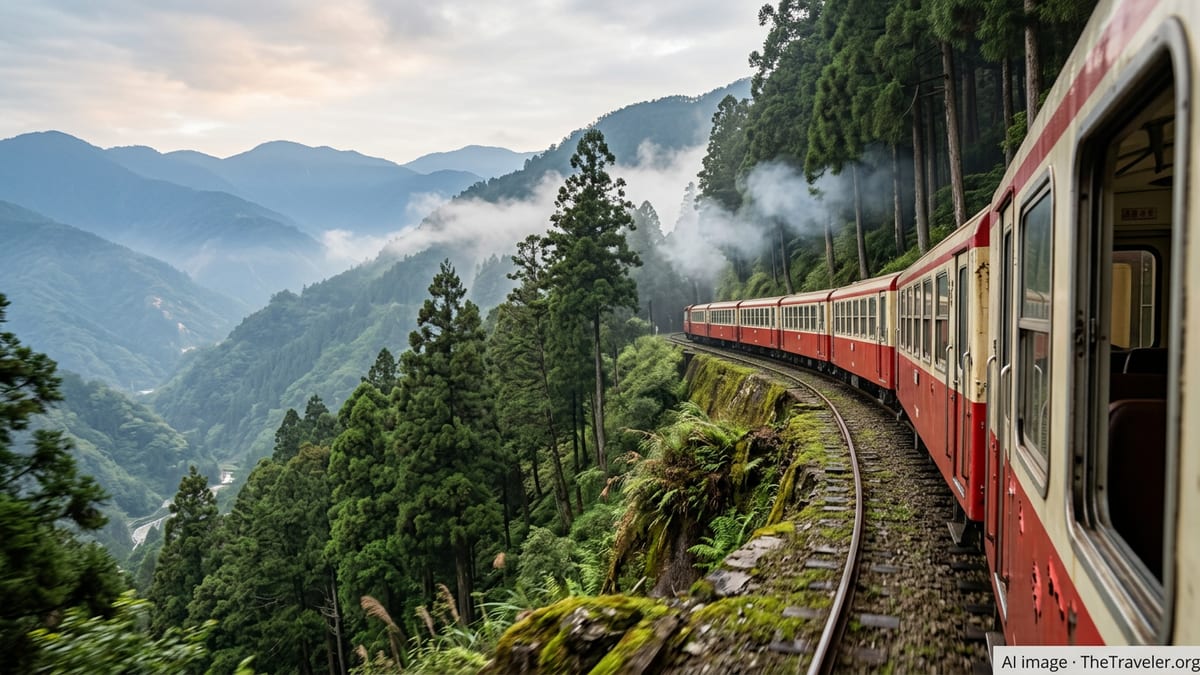
High in Taiwan’s central mountains, the century-old Alishan Forest Railway is once again drawing travelers to its steep switchbacks and mist-shrouded cypress forests, offering a renewed scenic journey that blends historic engineering, Indigenous heritage and some of East Asia’s most celebrated sunrise views.
A Historic Mountain Railway Back in Full Operation
After years of typhoon damage and partial closures, the narrow-gauge Alishan Forest Railway is now operating again along its full main line between the lowland city of Chiayi and the high-altitude resorts of Alishan and Zhushan. The reopening followed the completion of a new Tunnel 42 and stabilization works in 2024, restoring continuous service on one of the world’s great mountain railways.
Originally built during the Japanese colonial era to haul valuable cypress logs down from the mountains, the railway has evolved into a flagship tourism draw for Taiwan. Today its steep gradients, zigzag switchbacks and dramatic crossings over ravines serve sightseers rather than loggers, as restored diesel locomotives and themed sightseeing trains climb from tropical plains to cool cloud forests.
Over roughly 72 kilometers, the line ascends from near sea level to more than 2,200 meters, passing through rice paddies, bamboo groves and thick stands of Taiwan red cypress. For visitors who board at Chiayi’s Beimen Station, the ride offers a rare chance to experience a full climatic and ecological transition in a single journey, all from the window of a vintage mountain train.
Fenqihu, Forest Stations and Living Railway Heritage
Midway up the line, the railway’s character shifts from rural commuter lifeline to living museum. Fenqihu, once the temporary terminus while upper sections were under repair, has been repositioned as a key relay and heritage stop, with its locomotive shed carefully restored as a historic monument. The small mountain town, known across Taiwan for its bento lunchboxes, now serves as a popular break in the long climb.
Beyond Fenqihu, trains thread into cooler, denser forest. Historic halts such as Dulishan and Shizilu showcase the line’s engineering, where S-curves and switchbacks allow trains to gain height on steep mountainsides without rack-and-pinion mechanisms. At several viewpoints, passengers can look back to see multiple tiers of track stacked along the slopes, a visual reminder of the ingenuity required to build the line more than a century ago.
The Forestry and Nature Conservation Agency has invested heavily in preserving this heritage while modernizing operations. Restored cypress-wood carriages, information panels on logging-era history and partnerships with heritage railways overseas highlight the line’s cultural significance. A specially modified “Vivid Express” sightseeing set offers large windows and curated interiors designed by international teams, underscoring how the railway has become both a conservation project and a tourism showcase.
Sunrise Trains, Sea of Clouds and Seasonal Spectacle
At the upper end of the system, short branch lines within the Alishan National Forest Recreation Area provide some of the journey’s most iconic scenes. The best known is the pre-dawn service from Alishan Station to Zhushan, timed to deliver passengers to viewing platforms overlooking Yushan, or Jade Mountain, as the sun rises over waves of cloud filling the valleys below.
Departure times for the sunrise trains are adjusted daily to match the next morning’s first light, typically between 4 a.m. and 6 a.m. depending on the season. Travelers staying overnight in Alishan can check the posted schedule each afternoon at stations and visitor centers, then board in darkness for the short but atmospheric ride through sleeping forest to the ridge-top terminus.
Beyond the famous sunrise, the line is increasingly used to anchor seasonal tourism campaigns. In autumn and early winter, special maple-viewing excursions feature vintage steam locomotive No. 31 hauling classic wooden coaches through pockets of deep-red foliage near the higher stations. In spring, cherry blossoms brighten station platforms and forest clearings, while summer’s cooler mountain air draws domestic visitors escaping heat and humidity on the plains.
New Trains and International Partnerships on the Horizon
Authorities are not only restoring the past but also reshaping the future of the Alishan Forest Railway. A new premium “EVI” train set, unveiled in Chiayi and painted in a deep black and red livery with sunrise motifs, is undergoing testing ahead of its planned introduction on the main line in 2026. The train is expected to offer reserved seating, upgraded interiors and panoramic windows tailored for long-distance sightseeing.
Additional locomotives and carriages ordered in recent years are expected to bolster capacity, a response to surging demand as Taiwan’s domestic travelers and international visitors return to the mountains. Tourism officials report that peak-season tickets on the main Chiayi–Alishan runs and the Zhushan sunrise services can sell out quickly, prompting calls for more services and better integration with buses and high-speed rail.
Internationally, the Alishan Forest Railway has pursued a growing network of “friendship railway” agreements with heritage lines abroad. Recent twinning ceremonies with Australia’s Zig Zag Railway and Japan’s Oigawa Railway have led to themed trains, joint promotions and technical exchanges on issues such as slope stabilization and rolling stock restoration. For Taiwan, these partnerships position Alishan as part of a global circuit of iconic mountain rail journeys.
Planning the Journey: From Chiayi Plains to High Mountain Forests
For travelers, the journey typically begins in Chiayi City, a stop on Taiwan’s conventional and high-speed rail networks. From the historic Beimen Station, morning departures wind slowly into the foothills, with the full climb to Alishan taking around three to four hours depending on the service. Seats on popular dates are often released weeks in advance, and rail enthusiasts recommend securing reservations as early as possible, especially during weekends and holiday periods.
Once in the Alishan recreation area, visitors can combine short train rides on the internal forest lines with marked walking paths through towering cypress stands and along ridges overlooking Jade Mountain. Many choose to stay at least one night in local hotels or guesthouses to catch both the famed sunrise and late-afternoon scenes when the lowering sun sets the forest canopy glowing and rolling mists drift through the trees.
As Taiwan continues to promote sustainable, rail-based tourism in its mountain regions, the Alishan Forest Railway stands as both a working transport system and a moving viewpoint. From the clatter of wheels on vintage tracks to the sight of valleys disappearing beneath a sea of clouds, it offers a rare, slow travel experience that connects the island’s modern cities to its highland forests and longstanding Indigenous landscapes.