

More news on this day
Escalating conflict in the Middle East is rippling through global aviation, pushing up jet fuel prices, forcing airlines to redraw long-haul routes and leaving travelers facing higher fares and unpredictable disruptions when they fly.
Get the latest news straight to your inbox!
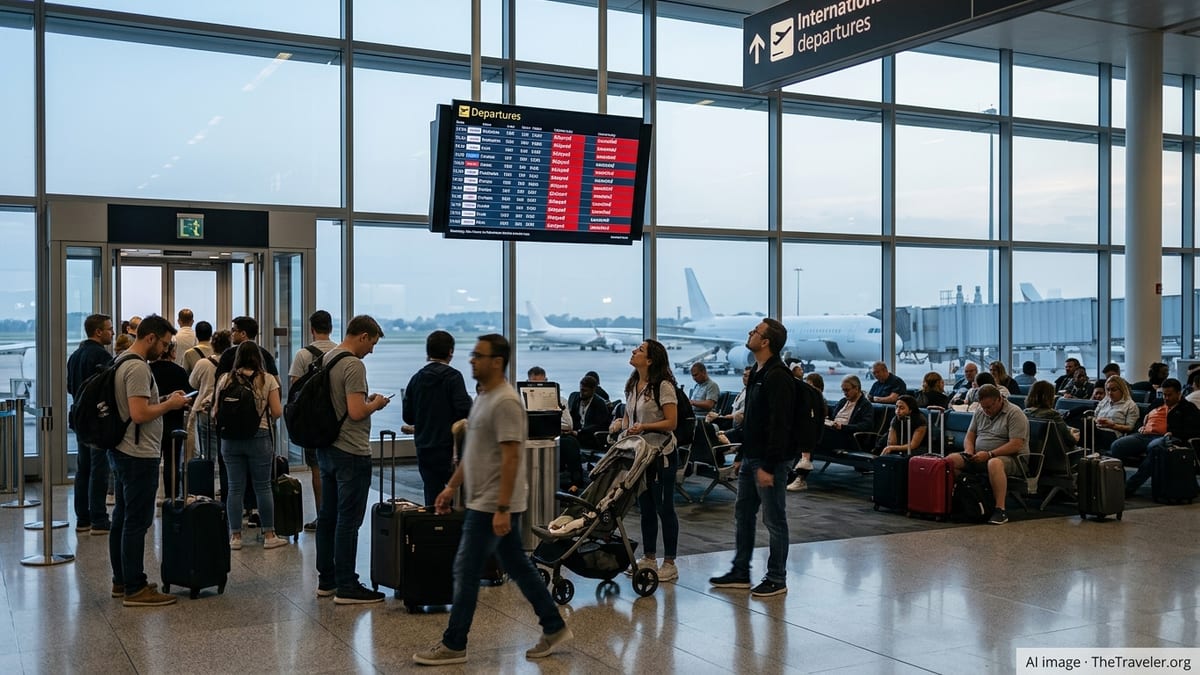
Conflict, Fuel Prices and Why Airfares Are Climbing
The latest war involving Iran is reshaping energy markets and aviation economics in real time. Publicly available data on oil and refined products indicates that crude benchmarks have jumped sharply since late February 2026, while analysts tracking the conflict say refineries are struggling to replace disrupted Middle Eastern supplies. This has driven up the cost of kerosene-based fuels worldwide at the same time airlines are trying to meet robust demand for international travel.
Recent coverage from Associated Press and Axios notes that jet fuel prices in the United States surged from roughly the mid-$2 per gallon range before the current war to more than $4 per gallon in mid-March, effectively adding hundreds of millions of dollars in operating costs for major carriers in a matter of weeks. Industry guidance from the International Air Transport Association and other economic trackers shows fuel normally accounts for about a quarter of an airline’s expenses, meaning a spike of this magnitude almost inevitably feeds through to ticket prices.
Despite the rising costs, demand has remained surprisingly resilient. Major U.S. airlines have reported record bookings for 2026, telling investors that strong advance sales are helping to offset fuel volatility. For travelers, that mix of high demand and higher operating costs is creating a market where last-minute bargains are scarce, especially on long-haul routes that must now detour around conflict zones.
Economic analysis of the conflict’s impact suggests that if energy prices remain elevated, airlines may respond with further capacity cuts on marginal routes, seasonal suspensions and tighter inventory in the lowest fare classes. That would reinforce upward pressure on average fares into the peak summer season, particularly for itineraries touching Europe, the Middle East and Asia.
Airspace Closures and Rerouted Long-Haul Flights
Closures and restrictions across swaths of Middle Eastern airspace are compounding cost pressures by lengthening flight times. Aviation advisories and flight-tracking data in early March 2026 show that key corridors over Iran, Iraq, Israel, Jordan, Lebanon and several Gulf states have been partly or fully closed at various times as the Israel-Iran conflict escalates. Airlines have responded by routing Europe–Asia services through narrower corridors over the Caucasus or along longer southern tracks via Egypt and the Arabian Sea.
Specialist aviation outlets report that these detours are adding two to five hours to some Europe–Asia journeys, increasing fuel burn and crew costs. With many carriers still unable to use Russian airspace because of earlier sanctions, options for efficient great-circle routing are increasingly constrained. Analysts describe a “layered” disruption in which each new conflict zone removes another set of viable paths from the global network.
According to operational updates from airline schedule providers and travel risk consultancies, a number of European and Gulf carriers have temporarily reduced frequencies or suspended selected routes into Israel, Jordan and neighboring markets. Others are operating with significant schedule padding to account for extended routings and potential last-minute airspace changes, which in turn reduces aircraft utilization and available capacity.
For travelers, the practical effect is a greater risk of missed connections and irregular operations on multi-leg itineraries. Flights that once transited fast via hubs such as Dubai, Doha or Abu Dhabi may now be subject to wide detours or short-notice cancellations if regional security conditions change. Even passengers not traveling to or from the Middle East can feel the impact when their long-haul flights rely on those hubs as transit points.
Stranded Passengers, Capacity Crunch and Shifting Tourism Flows
The sudden tightening of Middle Eastern airspace has already stranded travelers from Dubai to Bangkok, according to recent reporting by European and global newspapers. Limited evacuation and repatriation flights have operated from the United Arab Emirates and other Gulf states, but large numbers of passengers have faced days-long waits for available seats as commercial schedules were sharply reduced.
Tourism analysts at firms such as Tourism Economics and Oxford Economics warn that countries which recently marketed themselves as safe and convenient stopovers now face a sharp reversal. One recent report suggests that tourist arrivals to the wider Middle East could fall by double digits in 2026 compared with previous growth forecasts, as travelers either postpone trips or re-route through alternative hubs in Europe and Asia.
The capacity crunch is especially visible on popular “fifth freedom” routes and connecting services that used to rely on Gulf hubs as midpoints between Europe, Africa, Asia and Australasia. With fewer flights operating and aircraft diverted to higher-yield markets, leisure travelers in particular may find that affordable options for multi-stop itineraries have diminished, at least in the short term.
Some tourism boards in Europe and other regions are forecasting a partial benefit as travelers shift away from conflict-adjacent destinations toward perceived safe havens. At the same time, higher fuel costs and tighter capacity mean that any near-term gains in visitor numbers could be tempered by increased ticket prices and a more cautious outlook among long-haul travelers.
What Travelers Should Check Before Booking
The rapid pace of change means that conditions on a route can shift between the time a ticket is purchased and the departure date. Travel advisories from governments, airlines and independent risk consultancies emphasize that travelers should look beyond the marketing of a destination and examine the full routing, including transit hubs and overflight regions, for potential exposure to conflict-related disruptions.
Recent consumer guidance published by business and travel media stresses the importance of monitoring airline notifications closely in the days leading up to departure and re-checking flight status before leaving for the airport. Because reroutes and extended flying times can create knock-on delays, many experts now advise longer connection buffers, especially when a journey relies on a single daily service or a hub currently affected by airspace restrictions.
Travel insurance with robust trip interruption and delay benefits has taken on renewed significance in this environment. Policy comparisons by insurers and brokers indicate that coverage varies widely on issues such as missed connections, schedule changes due to airspace closures and accommodation for extended layovers. Travelers are encouraged to read terms carefully and confirm whether conflict-related disruptions are included or excluded.
Flexible booking options are also becoming more valuable. Many airlines have introduced or maintained fare families that allow date or routing changes for a fee, and some are offering waivers on specific routes when advisories are in force. While these tickets are often more expensive upfront than the lowest promotional fares, they may reduce overall risk and cost if plans need to change at short notice.
Planning Ahead in an Uncertain Flight Environment
Industry updates from airline associations, regulatory agencies and Eurocontrol indicate that global air traffic volumes remain close to or slightly below pre-pandemic levels, even as route maps grow more complex. That suggests travelers should prepare for a period in which the skies are busy but less predictable, with more congestion on remaining corridors and a higher likelihood of operational bottlenecks.
Experts in aviation management note that airlines have become more adept at managing crises after the pandemic, rerouting aircraft quickly and restoring connectivity where possible. However, the current mix of overlapping conflicts and climate-related disruptions means that crews, air traffic controllers and ground operations are operating under sustained pressure, which can translate into longer days for passengers when things go wrong.
For those planning international trips in the coming months, especially between Europe and Asia or via Middle Eastern hubs, the emerging consensus is to budget extra time, extra money and extra flexibility. That may mean booking earlier to secure seats on preferred routings, allowing for longer connections, and considering alternative gateways that are less exposed to current flashpoints.
While most flights are still operating and aviation remains one of the safest modes of transport, the recent upheaval underscores how quickly a regional conflict can redraw global air routes and household travel budgets alike. Staying informed, reading the fine print and building contingencies into itineraries can help travelers navigate the rising costs and disruptions shaping the new era of conflict-affected air travel.