

More news on this day
Global tourism is entering 2026 with record visitor numbers but also mounting strain, as higher travel costs, extreme-weather flight cancellations and fragile consumer confidence collide to test the resilience of the post-pandemic rebound.
Get the latest news straight to your inbox!
Record Demand Meets a More Expensive Trip
International tourism set a new record in 2025, with UN Tourism estimating around 1.52 billion cross-border arrivals worldwide and forecasting further growth of 3 to 4 percent in 2026. Behind those headline numbers, however, the cost of getting away continues to creep higher. Industry forecasts for 2026 point to modest but persistent airfare inflation, particularly in business and premium cabins, as airlines grapple with higher wages, maintenance costs and financing expenses.
Data from the International Air Transport Association show airlines moving back to stable profitability in 2025 and 2026, even as they absorb elevated labor and fuel costs. Executives say that while base fares may ease slightly in real terms compared with the sharp spikes seen in 2022 and 2023, the overall cost of air travel for consumers remains significantly above pre-pandemic levels once ancillary charges and peak-season surcharges are included. For price-sensitive travelers, especially in emerging markets, those increments can be the difference between booking a long-haul trip and staying closer to home.
Hotel and ground costs are adding to the squeeze. In many popular European and Asian destinations, room rates remain buoyed by strong demand and constrained supply, while tour operators report higher prices for everything from local transport to attraction tickets. Even in regions where inflation is moderating, the cumulative impact of three years of rising costs is reshaping how and where tourists choose to spend.
For now, strong employment in key source markets is helping sustain demand. Surveys conducted in late 2025 found only a small minority of respondents planning to travel less in 2026. But travel planners warn that any renewed economic shock could quickly expose how dependent the current boom is on consumers’ willingness to absorb higher prices.
Winter Chaos Puts Reliability in the Spotlight
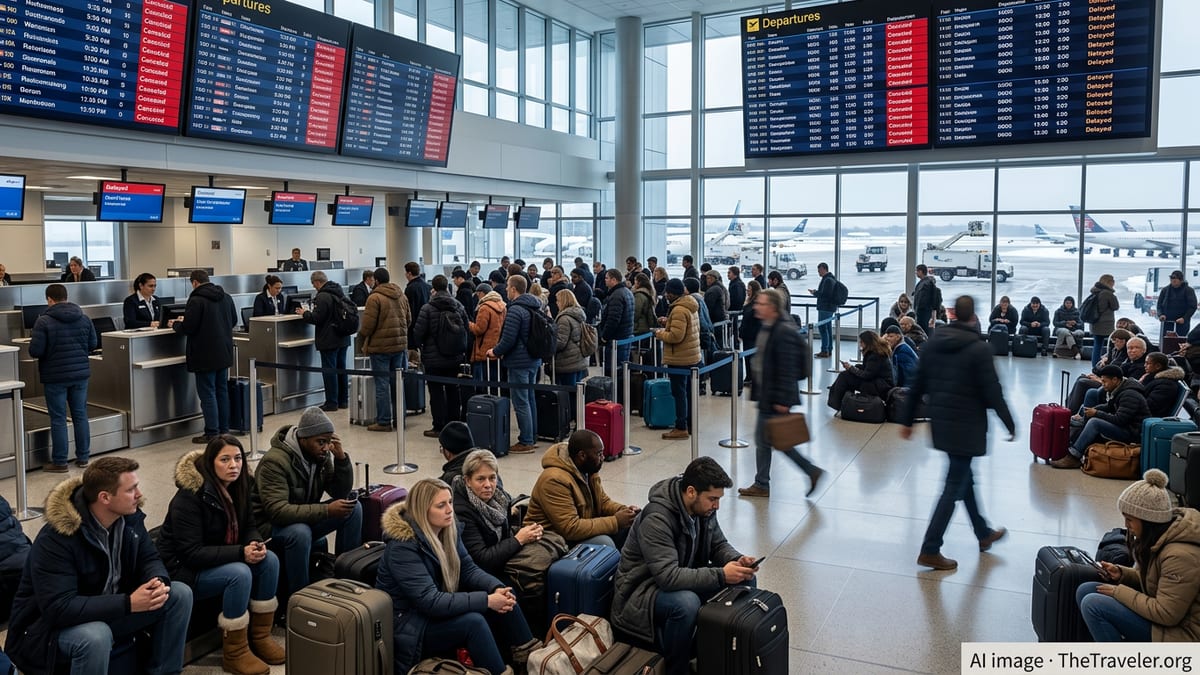
Beyond prices, reliability has emerged as a central concern for travelers in 2026. In late January, a sprawling winter storm system known as Winter Storm Fern swept from northern Mexico across the southern and northeastern United States and into Canada, triggering what aviation analysts called the worst day for U.S. flight cancellations since the pandemic. On January 25 alone, nearly three in ten departing flights in the country were scrapped as snow, ice and high winds overwhelmed airport and airline operations.
The disruption did not end when the skies cleared. Airlines spent days rebuilding schedules as crew rosters and aircraft rotations fell out of position, with more than 5,000 additional flights canceled on January 26 while carriers tried to reset operations. Routes concentrated in the Northeast corridor were particularly affected, as airports from Philadelphia to Boston struggled to de-ice aircraft and clear congested taxiways. Travelers reported sleeping on terminal floors, incurring unexpected hotel bills and, in some cases, abandoning trips entirely.
Less than a month later, a powerful blizzard barreled into the U.S. East Coast, closing roads, prompting travel bans in New York and New Jersey and forcing airlines to preemptively cancel thousands more flights. The back-to-back storms underscored how tightly scheduled networks leave little slack when major hubs are hit by extreme weather. Even as airlines point to safety as the overriding priority, consumer groups argue that the industry has not invested enough in resilience, from crew reserves to all-weather infrastructure.
Regulators have responded by reminding passengers of their rights, including cash refunds for canceled flights on U.S. carriers. Yet for many travelers, the deeper frustration is not financial but logistical: the growing sense that long-planned trips can be upended at any moment, with limited options to reroute in a global system operating near capacity.
Uneven Recovery Across Regions and Markets
The pressures of rising costs and irregular operations are not felt evenly across the world. According to UN Tourism’s latest barometer, 2025 arrivals surpassed pre-pandemic levels in much of Europe and the Middle East, with countries such as Spain and Türkiye posting solid gains. Several destinations in Central Asia, including Uzbekistan, recorded double-digit growth, buoyed by new air links and targeted promotion campaigns.
Asia and the Pacific, by contrast, entered 2026 still trailing 2019 benchmarks, with international arrivals estimated to be roughly 9 percent below pre-crisis levels. While air capacity into major hubs such as Bangkok and Tokyo is climbing, lingering visa hurdles, higher long-haul fares and shifting outbound travel patterns from China continue to slow a full normalization. Industry analysts expect the region to close much of that gap over the next two years, but warn that a weaker global economy or new geopolitical tensions could delay the timeline.
North America presents a more complicated picture. Overall global tourism reached fresh highs in 2025, yet inbound travel to the United States underperformed. Data compiled by national tourism authorities and private forecasters show international arrivals to the U.S. lagging global growth, contributing to a small decline in the continent’s share of worldwide tourism. Factors range from the strong dollar, which makes U.S. cities costly for many international visitors, to persistent concerns about visa processing delays and border wait times.
Within regions, the gap between high- and low-income travelers is also widening. Premium leisure and business travel remain robust, supported by corporate budgets and affluent households that continue to prioritize experiences. Mid-market and budget travelers, by contrast, are more likely to cut trip length, shift from hotels to short-term rentals or postpone international travel altogether as prices for flights, food and activities trend higher.
Airlines and Destinations Adjust Strategies
Under pressure from both costs and passengers, airlines are tweaking strategies as 2026 unfolds. Some large network carriers are trimming marginal routes and focusing on high-yield corridors, while low-cost airlines add capacity on short- and medium-haul leisure routes where demand remains strongest. Industry forecasts suggest global passenger demand will still grow this year, but at a more sustainable pace than the surges seen immediately after borders reopened.
To manage volatility, carriers have become more aggressive in making preemptive cancellations when severe weather looms, a policy shift that can reduce the scale of operational meltdowns but also frustrates travelers whose plans are disrupted days in advance. At the same time, airlines are investing in technology to improve rebooking and communication, pushing customers toward mobile apps and automated alerts rather than long call-center queues.
Destinations, too, are recalibrating. Tourism boards in Europe and Asia are promoting shoulder-season travel to relieve pressure on peak summer months, when limited capacity and high demand combine to push prices sharply higher. Some cities are using the current boom to introduce or increase tourism levies, arguing that additional revenue is needed to fund infrastructure and mitigate the environmental impact of surging visitor numbers.
Industry leaders at recent gatherings, including the ASEAN Tourism Forum in Cebu, have emphasized the need for coordinated regional responses to shocks, from health emergencies to extreme weather. Proposals under discussion range from shared crisis-communication platforms to standardized protocols for rerouting stranded tourists across borders when major hubs are knocked offline.
Travelers Change Habits in a New Era of Risk
For travelers themselves, the combination of higher costs and mounting disruption risk is driving behavioral change. Tour operators and online agencies report growing interest in flexible fares, comprehensive travel insurance and package deals that bundle flights with accommodation and support services. While such options add to upfront costs, they can soften the financial blow if plans are derailed by cancellations or delays.
Trip planning horizons are also shifting. Many consumers are booking long-haul journeys further in advance to lock in lower fares, yet waiting longer to commit to discretionary city breaks, watching both prices and news of potential disruptions. Business travel managers, facing tighter budgets, are consolidating trips, encouraging video conferencing for routine meetings and favoring carriers and routes with stronger reliability records, even when they are not the cheapest option.
At the same time, there are signs that some travelers are substituting distant destinations with nearer alternatives. Rail and road trips within Europe and parts of Asia are benefiting from frustration with airport congestion and the risk of long-haul flight disruption. In North America, domestic tourism remains strong, but a segment of travelers is opting for fewer flights and longer stays, in part to maximize value in a higher-cost environment.
How the industry navigates 2026 will help determine whether this is a temporary adjustment phase or the start of a more structural shift in global tourism. With demand still robust but tolerance for chaos and ever-rising prices wearing thin, airlines, destinations and policymakers face mounting pressure to make travel not just possible, but reliably and affordably so.