

More news on this day
Escalating violence in some of Mexico’s most visited tourist and business hubs, including Puerto Vallarta, Cancún, Mazatlán, Acapulco, Guadalajara and Tijuana, is forcing Canadian employers to urgently revisit travel guidelines, risk assessments and duty-of-care policies for staff heading south.
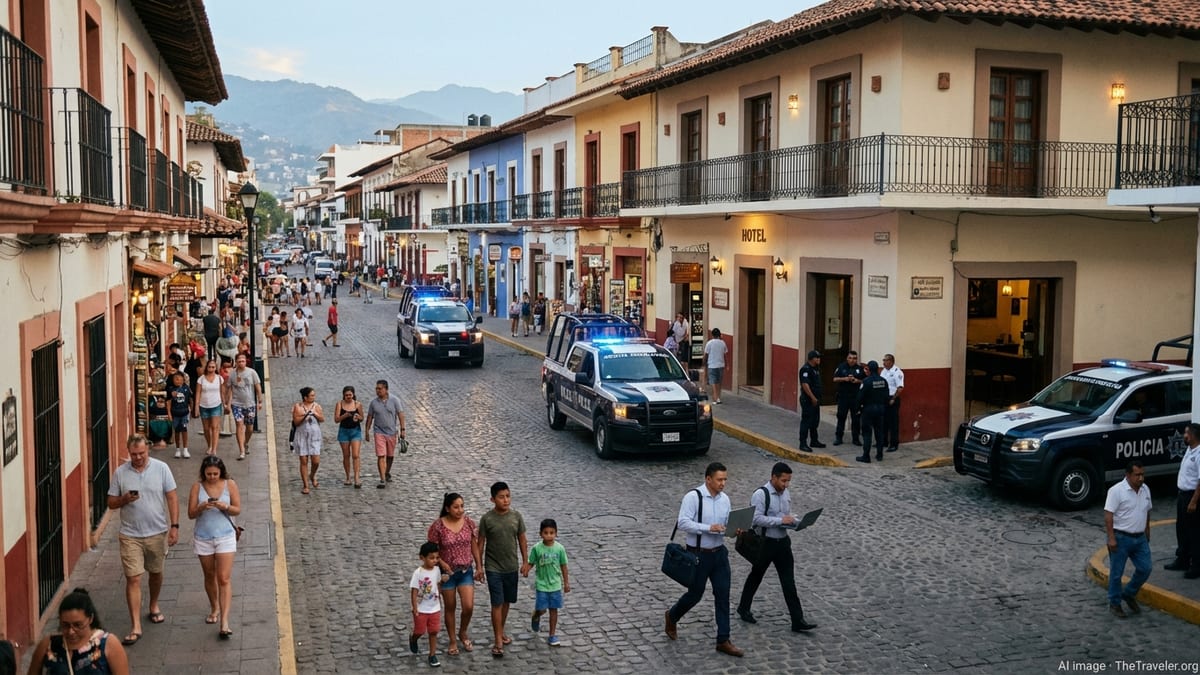
Fresh Violence in Mexico’s Tourist and Business Corridors
The security picture in Mexico shifted sharply over the weekend of February 22 to 23, 2026, after a major military operation in Jalisco killed alleged cartel boss Nemesio “El Mencho” Oseguera Cervantes and triggered retaliatory attacks across the state. Shootouts, arson attacks on vehicles and businesses, and road blockades were reported in and around Guadalajara and Puerto Vallarta, prompting local authorities and foreign embassies to advise residents and visitors to stay indoors.
The U.S. Embassy urged American citizens in Jalisco to shelter in place, while authorities in Puerto Vallarta warned that routes to the airport could be blocked and that intercity highways in affected states were experiencing intermittent closures. Almost all flights in and out of Puerto Vallarta’s airport on Monday were cancelled, underscoring how quickly violence linked to organized crime can spill into the tourism and transport systems that Canadian travelers rely on.
Although Quintana Roo, home to Cancún and the Riviera Maya, was operating “as usual” by February 23 according to updated U.S. advisories, the flare-up in Jalisco highlighted the uneven but persistent risk across Mexico’s main destinations. Recent years have seen sporadic gun battles, targeted assassinations and criminal roadblocks in and around resort cities including Cancún, Mazatlán and Acapulco, as well as urban centers such as Guadalajara and Tijuana.
Analysts note that while Mexico’s federal government points to a national decline in homicide rates compared with the late 2010s, cartel consolidation and shifting turf wars mean that violence can remain intense in specific states such as Sinaloa, Guerrero, Jalisco and Baja California. For Canadian companies, this mosaic of risk means that blanket assumptions of safety in “tourist zones” are no longer sufficient.
Canada’s Latest Advisories Signal Heightened Concern
Ottawa’s travel advice has been tightening in step with security developments on the ground. As of February 4, 2026, the Government of Canada’s official advisory for Mexico warns that levels of violent crime remain high countrywide, with specific regional advisories to avoid non essential travel in parts of Jalisco, Sinaloa, Guerrero, Nayarit and other states where organized crime is entrenched. In Sinaloa, where Mazatlán is located, Canadian officials caution that violent clashes between rival armed groups occur regularly outside the main tourist zones.
The advisory points out that fighting between criminal gangs and security forces has taken place in hotels, nightclubs and restaurants in popular destinations and that bystanders have been killed or injured. Canadians are urged to exercise a high degree of caution even in resort areas and to closely monitor local media and the guidance of local authorities, especially when violence erupts with little warning.
Fresh consular data released this month show why Mexico commands such scrutiny. In the 2024 to 2025 fiscal year, Mexico again topped the list of countries where Canadians required consular assistance as victims of violent crime, including assault, homicide and kidnapping. While the total number of such cases remains relatively small compared with overall visitor numbers, the trend is upward, with a double digit percentage increase in reports year over year.
The numbers do not capture every incident, nor do they distinguish between crimes targeting residents and visitors, but they underline the reality that Canada now views Mexico as a high risk destination that demands more rigorous pre travel planning, especially for corporate and institutional travelers.
Canadian Employers Tighten Duty of Care and Travel Policies
In response to the latest unrest, Canadian employers across sectors from mining and construction to education and tourism are reexamining how, when and where staff travel within Mexico. Risk consultants report that companies are updating destination matrices, with cities such as Guadalajara, Tijuana and Acapulco moving into higher risk tiers that trigger additional approvals, security briefings or outright travel bans for non essential trips.
Some firms are temporarily suspending discretionary travel to western Mexico, particularly Jalisco and neighboring states, until conditions stabilize and roadblocks and flight disruptions are resolved. Others are shifting meetings planned for Mazatlán or Acapulco to alternative locations such as Mexico City’s business districts or even to virtual formats, in order to reduce exposure to coastal highways and secondary roads where criminal groups sometimes set up illegal checkpoints.
Travel management policies are also being rewritten to reflect evolving government guidance. Employers are increasingly requiring employees to register their itineraries with internal security teams, to travel only during daylight on intercity routes, and to use vetted transportation providers instead of hailing taxis on the street. Alcohol and nightlife policies are tightening as well, with some Canadian organizations formally discouraging staff from visiting bars and nightclubs in high risk neighborhoods after dark.
For many companies, the current wave of violence has become a test of duty of care obligations, which in Canadian law and best practice standards require employers to take reasonable steps to protect staff from foreseeable risks while on business travel. Legal and human resources teams are aligning Mexican travel rules with those already in place for other complex environments, such as parts of South America and the Middle East.
What Canadian Travelers Need to Know Before Heading South
For individual Canadian travelers, including those visiting Mexico for work under an employer policy, the shifting security environment means more preparation and situational awareness are now essential. Experts recommend that travelers consult Canada’s official advisories for Mexico immediately before departure, as regional risk levels can change within days following a major law enforcement operation or cartel clash.
Travelers heading to Puerto Vallarta or Guadalajara in the short term should be prepared for potential disruptions to flights and road access, and should have contingency plans if authorities issue stay indoors orders or embassies extend shelter in place guidance. Those flying to Cancún, Mazatlán, Acapulco or Tijuana should confirm whether their hotel is within areas currently considered lower risk and ask about on site security measures and transport options from the airport.
Regardless of destination, Canadians are advised to avoid demonstrations, steer clear of any gathering of armed forces and to leave an area immediately if they observe military or police operations under way. Nighttime road travel, particularly on secondary highways and rural routes, carries higher risk because of sporadic criminal checkpoints and a slower emergency response capability.
Standard personal safety practices also matter. Keeping a low profile, not displaying expensive jewelry or electronics, using hotel safes where available, and sticking to well lit, populated streets can all reduce the likelihood of becoming a target for opportunistic crime. Travelers should also assess their appetite for visiting bars, clubs or late night venues in cities where previous incidents have taken place and consider limiting their movements after dark.
Balancing Mexico’s Appeal with a New Era of Risk Management
Despite the recent violence, Mexico remains one of the most popular foreign destinations for Canadians, prized for its beaches, culture and relative affordability. Tourist arrivals to hubs such as Cancún, Puerto Vallarta and Los Cabos remain strong, and many visitors complete their trips without incident, particularly when they remain in established tourist corridors and follow local advice.
Yet the events of February 2026 have reinforced that security dynamics can shift rapidly, and that cartel related violence in inland hubs like Guadalajara or along Pacific routes to Mazatlán and Acapulco can have knock on effects for the wider travel network. For Canadian employers and travelers alike, the challenge is no longer whether to visit Mexico at all, but how to do so within a more disciplined framework of risk assessment and contingency planning.
Corporate travel teams are working more closely with security advisers on destination specific briefings and are encouraging staff to think in terms of risk layers rather than binary safe or unsafe labels. That means understanding not just national homicide statistics, but neighborhood level patterns within cities like Tijuana and Guadalajara, as well as the latest guidance from Canadian, American and European consular authorities.
For now, Mexico’s major resort and business centers continue to welcome Canadians, but the onus is increasingly on travelers and their employers to stay informed, stay flexible and treat security as a core component of any itinerary, rather than an afterthought tacked on once flights and hotels are booked.