

More news on this day
Australian travellers are increasingly stitching together multi-stop itineraries through Asian hubs and holding backup bookings as higher Europe fares, currency weakness and geopolitical risks reshape long-haul travel from the region.
Get the latest news straight to your inbox!
Europe Trips Squeezed by Airfares and a Weaker Dollar
Published coverage of long-haul pricing shows that Australia to Europe remains among the most expensive corridor combinations in the global market, with return economy fares regularly sitting well above pre-pandemic norms even as capacity has gradually returned. While some airlines have announced periodic sales, including discounted Europe fares on select routes, these have been framed as short-lived relief against a backdrop of elevated base prices and strong outbound demand from Australia.
At the same time, the Australian dollar has weakened against major currencies, including the euro and the British pound, reducing Australians’ purchasing power once they arrive in Europe. Analysis in Australian and international media during 2024 and 2025 highlighted the way exchange rate shifts have eroded the value of travel budgets, with some commentators noting that the same Australian dollar spend now buys significantly fewer euros than a year earlier. Reports focusing on specific communities, such as Greek Australians, have underlined how this currency slide has turned annual family visits into far more expensive undertakings.
These twin pressures of high fares and a weaker currency are changing behaviour. Travel commentary indicates that many Australians are narrowing the length of their Europe stays, trimming secondary destinations and swapping peak-season itineraries for shoulder periods. Others are opting to route only part of their journeys to Europe, then pivoting to cheaper or better-value regions in Asia where the Australian dollar still stretches further.
Asian Hubs Gain as Strategic Stopovers
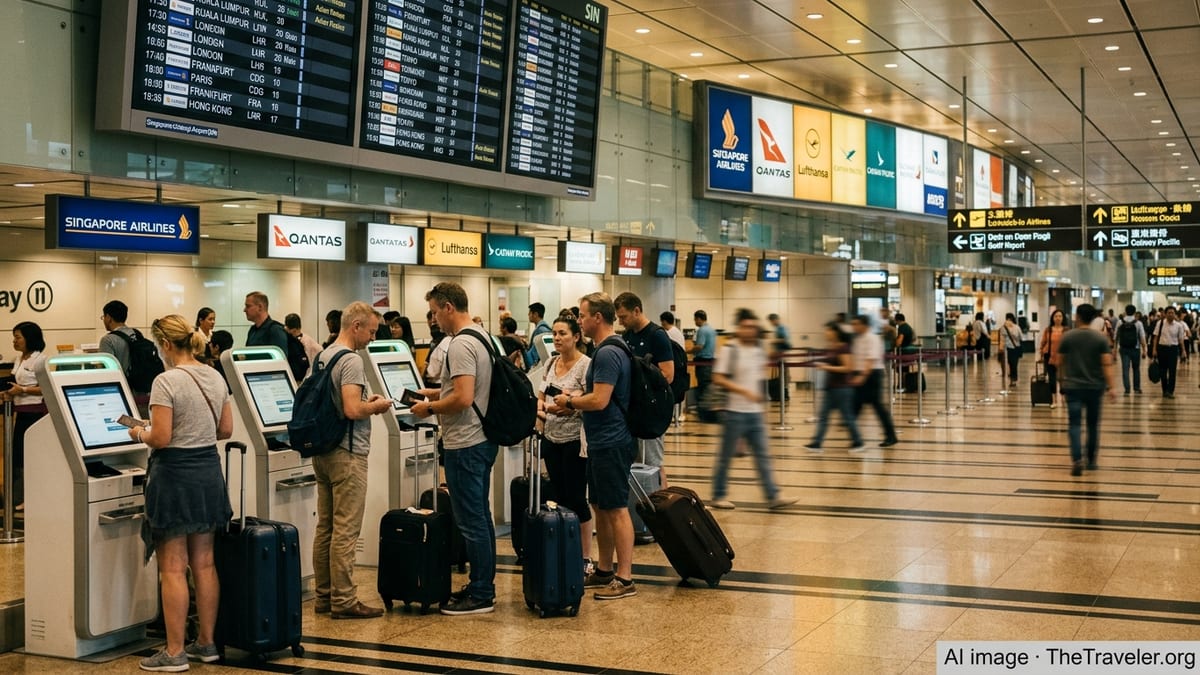
Against this backdrop, major Asian hubs are playing a larger role in Australian travel plans. Airports in Singapore, Bangkok, Kuala Lumpur, Hong Kong and the Middle East have all been cited in industry and aviation data as benefitting from rising connecting traffic, as travellers mix and match carriers to reach Europe at a lower overall cost. Asia-Pacific connectivity indices released by airport and airline associations in 2024 show a strong rebound in hub function across the region, with double-digit growth in connection options and frequencies through the year.
Australian government transport statistics for 2025 list Singapore Airlines, Emirates and other hub-focused carriers among the largest operators on routes to and from Australia, reflecting the continued importance of one-stop itineraries through Asia for long-haul journeys. Data on Sydney Airport’s international traffic shows significant passenger volumes to Hong Kong and Denpasar, both key stepping stones for onward long-haul travel. Aviation market analyses describe this pattern as a structural shift rather than a temporary response, with connecting traffic forming a growing share of total international journeys.
Travel media reports suggest that many Australians are consciously using Asian hubs as strategic stopovers rather than merely transit points. Short breaks in Singapore or Thailand on the way to or from Europe allow travellers to break up increasingly lengthy routings, recover from jet lag and offset high European costs by spending more days in lower-cost destinations. Dynamic pricing on multi-city tickets and the expansion of low-cost and full-service partnerships in Asia are further encouraging this trend.
Backup Fare Bookings Become a Risk Strategy
Alongside changes in routing, travellers are adopting more defensive booking behaviour. Online forums, financial discussion threads and travel columns feature growing numbers of Australians describing “backup” strategies, where they secure multiple refundable or semi-flexible itineraries well in advance in the hope of capitalising on later price drops or schedule changes. This practice is most common on high-cost routes such as Australia to Europe, where disruptions or sudden surcharges can significantly increase total trip expenses.
Reports on airline capacity and pricing in late 2024 and 2025 describe a market characterised by volatility, driven in part by fuel price swings and shifting demand patterns. Some travellers are responding by locking in a main Europe ticket through a traditional hub such as Singapore or Dubai, while simultaneously booking alternative routings through secondary hubs in East or Southeast Asia using points, vouchers or fully refundable cash fares. If conditions stabilise or better deals appear, they cancel the backup. If not, they retain the itinerary that offers the best balance of timing and cost.
Travel advisers writing in Australian outlets have noted that this approach can help hedge against sudden fuel surcharges or airspace disruptions, but warn that it requires careful attention to fare rules and deadlines. Many of the cheapest Europe fares remain heavily restricted, limiting changes and refunds, which pushes cautious travellers further toward flexible options and split-ticket strategies involving separate bookings between Australia, Asia and Europe.
Geopolitics and Airspace Closures Add to the Detours
Geopolitical tensions and airspace restrictions have added another layer of complexity for Australia to Europe travel. Publicly available discussions in aviation circles highlight that closures or constraints in parts of the Middle East and surrounding regions can force airlines to take longer detours, lengthening flight times and increasing fuel burn. When such route changes occur, they tend to hit Australia-Europe services particularly hard, as there are few truly direct great-circle options that avoid affected corridors without adding significant distance.
Commentary from industry-focused outlets suggests that these operational challenges are feeding back into higher fares and more circuitous routings. Travellers report receiving reissued itineraries that involve extended layovers in Asian hubs or additional stops in secondary airports, as airlines re-optimise networks in response to airspace changes. For many Australians, the practical outcome is that a “standard” Europe trip now almost automatically includes time in Asia, whether or not that was part of the original plan.
Combined with ongoing economic uncertainty, these geopolitical factors reinforce the value of flexible tickets and backup bookings. Travellers heading to Europe are increasingly weighing not just price but also the resilience of different routings to potential disruptions, which often leads them to prefer large, well-connected Asian hubs with multiple daily frequencies and alternative partner airlines.
Value-Driven Itineraries Redefine the Europe Dream Trip
As a result of these shifts, the classic Australian dream trip to Europe is being redefined. Instead of a single, seamless return ticket on one carrier, many itineraries now resemble modular journeys stitched together across multiple airlines and alliances, with nights in Asian cities on the way out or back. Travel reports indicate that this structure allows Australians to arbitrage fare differences between regions, take advantage of competitive pricing on Asia sectors and limit exposure to the highest-cost parts of the journey.
Economic analyses and travel features point out that Asia-Pacific remains one of the fastest-growing air travel regions, with international passenger demand outpacing global averages. This growth underpins a dense web of services that Australians can tap into when building Europe itineraries, from full-service network airlines to low-cost long-haul operators. For travellers willing to accept extra connections and carefully manage their bookings, the region provides an expanding toolkit to contain costs in an era of elevated European airfares and a weaker Australian dollar.
The net effect is a more complex but also more flexible travel landscape. Rising European flight costs and broader economic shifts have not dampened Australians’ appetite for overseas travel so much as redirected it, steering more journeys through Asian hubs and encouraging sophisticated booking strategies that reflect a new era of global aviation.