

More news on this day
Soaring jet fuel prices amid the escalating Iran war and disruptions around the Strait of Hormuz are now feeding directly into airfares and flight planning, as airlines worldwide race to recalculate the cost and safety of flying across the Middle East.
Get the latest news straight to your inbox!
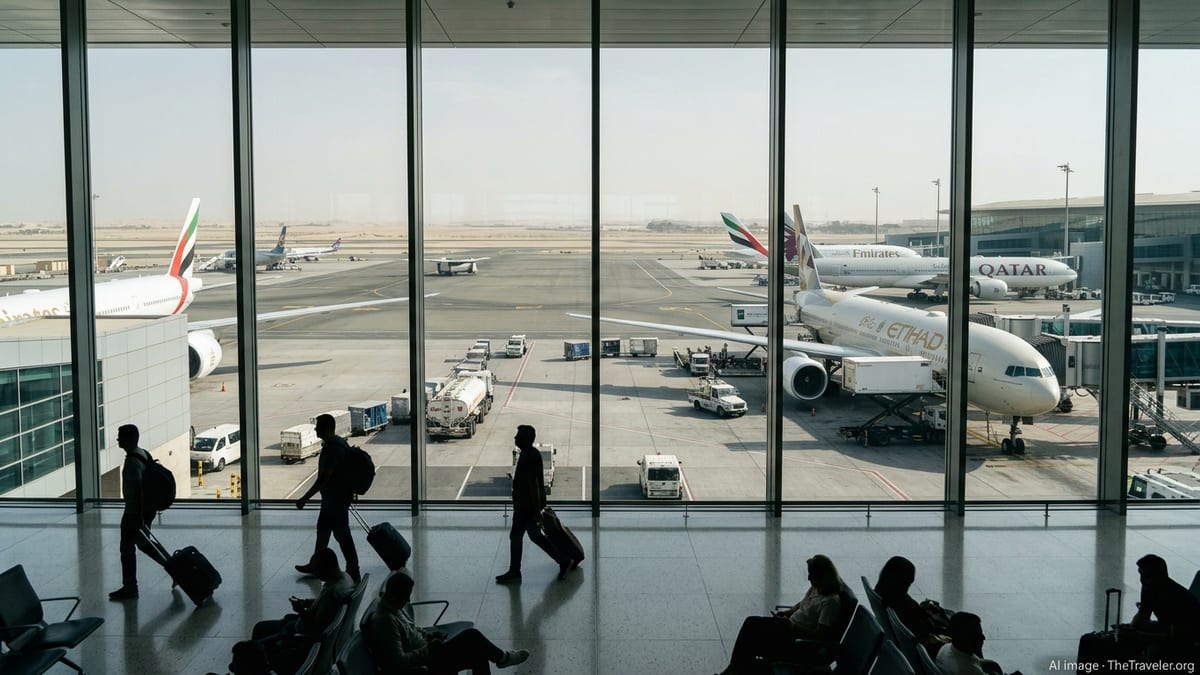
Jet Fuel Prices Spike as Oil Markets React to Conflict
Global jet fuel benchmarks have jumped sharply since late February 2026, when military strikes in and around Iran triggered a new phase of geopolitical tension across the Gulf. Industry monitors show jet fuel spot prices climbing far faster than anticipated in airline financial outlooks just a few months ago, reversing earlier expectations for relative stability this year.
Recent analysis from aviation and energy trackers indicates that jet fuel prices have moved well above the averages seen in 2025, with some reports pointing to triple-digit percentage increases since the start of 2026 in the wake of the conflict. In parallel, crude oil benchmarks such as Brent have swung toward levels last reached in the immediate aftermath of Russia’s invasion of Ukraine, tightening cost pressures for fuel-intensive sectors like aviation.
Data from jet fuel price indices and the International Air Transport Association’s fuel monitoring suggest that the crack spread between crude and refined aviation fuel has widened as refiners and traders price in heightened risk around Middle Eastern supply routes. This combination of higher oil prices and a richer jet fuel premium is feeding directly into airlines’ operating costs just as the northern summer booking season approaches.
Energy market commentary further indicates that refiners in North America and Europe are ramping up jet production to fill gaps left by disrupted exports from the Gulf and surrounding regions. While this may improve availability, the shift is occurring at higher price levels, limiting the potential relief for airline fuel bills in the short term.
Airlines Confront Longer Routes and War-Risk Costs
Alongside pricier fuel, airlines are facing a structural challenge: avoiding airspace seen as too risky to overfly. Since the late February escalation, parts of the skies over Iran, Iraq and neighboring states have been periodically closed or heavily restricted, forcing carriers to redraw some of the world’s most heavily traveled long-haul corridors between Europe and Asia.
Operational reports and flight-tracking analyses describe Europe–Asia services being pushed into narrower corridors over the Caucasus or diverted along longer southern arcs via Egypt, the Arabian Sea and the Indian Ocean. For many airlines, these detours add between two and five hours to a single roundtrip, significantly increasing fuel burn, crew costs and maintenance requirements.
Rerouting is compounded by sharply higher war-risk insurance premiums for flights that operate near conflict zones, especially in and around the Gulf. Trade and travel coverage notes that some carriers have had to pay markedly higher insurance rates or withdraw from certain routings altogether, reshaping hub traffic through Middle Eastern gateways and shifting flows toward alternative hubs in Europe and South Asia.
Industry assessments suggest that airlines with substantial fuel hedging programs, particularly some European groups, are temporarily insulated from the steepest cost shocks. By contrast, carriers that purchase most of their fuel on the spot market, including many in Asia-Pacific, are more exposed to the immediate surge in jet fuel prices and rerouting costs.
Fare Increases, Surcharges and Capacity Shifts
As the combined weight of higher fuel bills, longer flight times and increased insurance costs bears down on profit margins, airlines are starting to adjust their commercial strategies. Publicly available fare data and travel industry analyses show rising base fares and new or higher fuel surcharges on routes that cross or skirt the Middle East, particularly on Europe–Asia and Asia–Gulf sectors.
Coverage in European and Spanish-language business media indicates that airlines are preparing for ticket price increases that could reach high single digits on average if current fuel and routing conditions persist. Some airlines have already introduced conflict-related surcharges on itineraries touching the Gulf, while others are quietly raising fares through smaller, more frequent adjustments that may be less visible to casual buyers.
On routes directly linking to Gulf hubs, business press reports describe ticket prices that in some cases are several times higher than pre-conflict levels, reflecting both elevated operating costs and sharply reduced capacity. Suspensions of services by major Middle Eastern carriers and temporary airspace closures around hubs such as Dubai, Abu Dhabi and Doha have left fewer seats available, allowing remaining operators to command higher yields.
At the same time, some airlines are trimming frequencies or switching to smaller aircraft on routes where demand has softened due to safety concerns or government advisories. Others are reallocating capacity toward transatlantic and intra-Asia markets that avoid conflict-adjacent airspace, attempting to balance network resilience with continued passenger demand for international travel.
Regional Differences and the Passenger Impact
The effects of rising jet fuel prices and changing routings are not being felt evenly across regions. Analyses from aviation economics groups highlight that European and Middle Eastern carriers with extensive exposure to Gulf transit traffic are under particular pressure, given their reliance on long-haul connecting flows now subject to detours or outright disruption.
Asia-Pacific airlines are also significantly affected, especially on services to Europe and the Middle East that previously threaded through shorter, fuel-efficient routes over Iran and neighboring states. Trade research notes that Chinese, Indian and some Southeast Asian carriers are more reliant on spot fuel purchases and therefore more immediately impacted by day-to-day price movements. In contrast, North American airlines, which operate fewer flights crossing the conflict zone, are seeing a more indirect effect via higher global fuel benchmarks.
For travelers, the most visible result is a combination of higher prices and longer itineraries. Travel industry outlets report that economy-class fares on certain Europe–Asia routes have risen markedly in early March compared with the same period a year ago, with premium cabins and last-minute bookings seeing the sharpest increases. Extended flight times can also mean more overnight connections, missed same-day links and tighter aircraft utilization, which further constrains capacity.
Consumer advocates caution that while competition and regulatory oversight may limit the scope of fare hikes in some markets, airlines have limited room to absorb cost surges when industry net margins are already thin. As a result, travelers may need to adjust expectations around what constitutes a “normal” price for long-haul travel while the conflict and fuel volatility continue.
Outlook: Volatile Fuel Costs and a Redrawn Global Map of Air Routes
Looking ahead, aviation analysts describe a landscape defined by uncertainty. Forecasts published before the latest escalation anticipated modest declines or stability in jet fuel prices through 2026, based on assumptions of steady oil supply and easing geopolitical risks. The Iran war and associated disruptions around the Strait of Hormuz have upended those projections, introducing a level of volatility that complicates both airline budgeting and ticket pricing.
Economic commentary suggests that the longer the conflict affects key oil and gas infrastructure, the more entrenched higher fuel costs could become. That prospect is encouraging airlines to revisit hedging strategies, reassess which hubs are most resilient to regional shocks and accelerate investments in more fuel-efficient aircraft that can mitigate exposure to price spikes over time.
Network planners are also weighing the possibility that some of today’s temporary detours may solidify into semi-permanent shifts in global air traffic flows. If specific airspace zones remain constrained, routes through alternative corridors in Central Asia, Africa or the Indian Ocean could gain lasting importance, potentially elevating secondary hubs and altering long-standing travel patterns between Europe, Asia, Africa and Australasia.
For passengers, this evolving environment may mean that elevated long-haul fares and altered routings persist well beyond the immediate news cycle. While short-term discounts and competitive promotions will continue to appear, the structural realities of higher fuel prices, longer flight paths and increased operational risk are likely to remain key forces shaping the cost and convenience of international air travel in 2026.