

More news on this day
Oil’s latest price spike, driven by conflict around the Strait of Hormuz and wider Middle East instability, is rippling through global aviation, lifting airfares and intensifying financial pressure on the weakest airlines just as the industry was beginning to stabilize after the pandemic.
Get the latest news straight to your inbox!
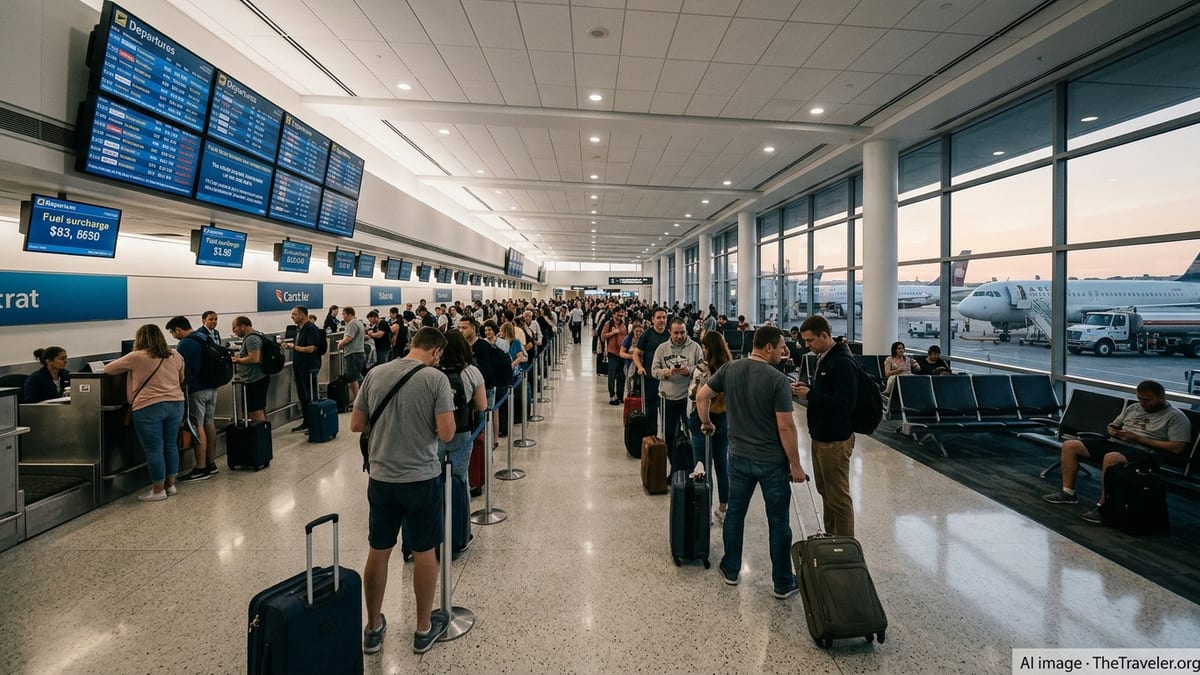
Oil Shock Reignites Fuel-Cost Fears
Recent turbulence in energy markets has pushed crude benchmarks sharply higher, with Brent crossing 100 dollars a barrel in March 2026 after shipping disruptions around the Strait of Hormuz. Aviation fuel, which typically tracks crude with a premium, has climbed even faster, adding a sudden and significant cost burden for airlines that rely on jet fuel as their single largest operating expense.
Publicly available industry data indicate that jet fuel prices have more than doubled in some wholesale markets since the start of the year, eroding the benefit carriers briefly enjoyed from softer fuel costs in 2024 and early 2025. Analysts tracking airline balance sheets note that fuel, which can account for a quarter or more of total costs in normal times, is again edging toward levels not seen since the energy shock that followed Russia’s invasion of Ukraine in 2022.
The timing is difficult for many airlines. After several loss-making years, carriers entered 2025 with cautiously improving profitability, helped by strong travel demand and lower fuel bills. The latest oil surge threatens to reverse part of that progress, and it is already influencing how airlines price tickets, schedule routes, and manage capacity for the coming peak travel seasons.
Airfares Climb as Carriers Pass on Higher Costs
Early signs of fare pressure are appearing in both leisure and corporate markets. Forecasts from travel management companies and industry associations published over late 2025 suggested that airfares in 2026 would rise only modestly, by around 1 to 2 percent globally, after a period of post-pandemic catch-up pricing. Those projections are now being reassessed in light of higher fuel costs and renewed geopolitical volatility.
In Europe and parts of the Middle East, published coverage in March 2026 has highlighted airline expectations of mid-single to high-single digit airfare increases tied directly to jet fuel’s jump. Some carriers have reintroduced fuel surcharges on long-haul itineraries, a tactic that had largely disappeared when oil prices were lower. Others are quietly adjusting base fares on high-demand routes, particularly where competition is limited and travelers have fewer alternatives.
Budget airlines, which typically advertise low base fares while charging for extras, face a difficult trade-off. Their business model depends on high seat density and low costs, leaving limited room to absorb sustained fuel inflation. Industry observers report that several low-cost carriers have raised ancillary fees for baggage and seat selection instead of headline fares, in an attempt to protect load factors while still recouping higher operating expenses.
For travelers, the impact is uneven but noticeable. Popular holiday corridors in Europe, the Middle East, and parts of Asia are seeing faster price gains than some domestic markets in North America, where strong competition and long-term fuel contracts are helping damp increases for now. Nevertheless, many analysts expect the global average ticket price to climb further if oil remains elevated into the summer of 2026.
Hedging Strategies Create Winners and Losers
One reason the impact of higher oil prices varies so widely is the different approach airlines take to fuel hedging. Hedging allows carriers to lock in future fuel costs using financial derivatives, smoothing out volatility but also exposing them to losses if prices fall. Over the past decade, many North American airlines scaled back hedging, preferring to pay spot prices, while several European and Asia-Pacific carriers maintained or revived hedging programs.
Recent disclosures from listed airlines show that some European low-cost and network carriers entered 2026 with more than 70 percent of their fuel needs hedged for at least part of the year, often at prices well below current market levels. Public information on these contracts suggests hedge prices in the range of the high 600s to low 700s dollars per metric ton of jet fuel, compared with spot levels that have surged far higher during the latest oil spike.
That protection buys time. Hedged airlines can hold fares steadier in the short term, using their temporary cost advantage to gain market share or at least avoid shocking customers with sudden increases. However, as hedges roll off and new contracts must be secured at higher market prices, those same airlines could face a delayed hit to profitability, especially if demand softens.
Carriers without substantial hedging, including some in North America and emerging markets, feel the pain more immediately. For them, the rise in fuel costs flows straight into operating expenses, forcing faster fare adjustments, capacity cuts, or both. Industry economists note that this divergence in hedging strategies is likely to widen performance gaps between airlines over the next 12 to 18 months.
Weaker Airlines Face Renewed Survival Questions
Higher fuel costs are particularly dangerous for airlines that entered 2026 with already stretched finances. Several ultra-low-cost carriers in the United States and Europe have spent recent years juggling restructuring plans, debt burdens, and intense fare competition. In this context, the latest oil shock adds another layer of stress that some balance sheets may struggle to absorb.
Public filings in the United States over 2024 and 2025 detailed how one prominent budget carrier cycled through multiple Chapter 11 restructurings and repeated warnings about its ability to continue as a going concern. Although the airline has continued to fly, its experience illustrates how fragile some business models remain after the pandemic and how vulnerable they are to any renewed spike in operating costs.
In Europe and parts of Asia, analysts have drawn parallels with earlier fuel-driven downturns that triggered waves of consolidation. Smaller regional and niche airlines, often dependent on a limited set of routes or charter contracts, have less flexibility to redeploy aircraft or tap new revenue streams when fuel prices surge. Travel industry consultants suggest that further mergers, takeovers, or orderly wind-downs are plausible if oil remains elevated and financing conditions tighten.
Regulators and consumer advocates are watching closely, since abrupt airline failures can leave travelers stranded and upend competition in key markets. While there is little sign of systemic collapse, the combination of higher fuel costs, rising interest rates, and slowing economic growth is once again separating stronger airlines from weaker rivals, with survival prospects increasingly tied to balance sheet resilience.
Travel Demand Holds, but Risks Mount for 2026
Despite the cost pressures, global demand for air travel remains relatively robust. Industry outlooks published by international aviation bodies in late 2025 projected record passenger numbers and solid profits for 2026, helped by pent-up leisure demand and a gradual return of corporate travel. Those forecasts assumed stable or gently easing fuel prices, however, and analysts are now revisiting their assumptions as geopolitical risks reshape the energy landscape.
So far, bookings data cited in business travel and tourism reports suggest that many travelers are absorbing higher airfares rather than canceling trips altogether. Households that have prioritized travel in their budgets since the pandemic continue to do so, even as they face broader cost-of-living pressures. For airlines, that willingness to pay offers a cushion against rising costs, but it may not be enough if fuel expenses remain elevated for an extended period.
Industry economists warn that the longer oil prices stay high, the greater the risk that airlines will be forced into deeper capacity cuts and more aggressive fare hikes, which could eventually deter discretionary travel. Routes that are marginally profitable today, particularly long-haul flights with thin yields, could be trimmed or suspended, reshaping connectivity for secondary cities and smaller tourism markets.
For travelers planning 2026 and early 2027 trips, the emerging reality is a more expensive, potentially less connected aviation landscape. While larger, well-capitalized airlines may navigate the turbulence, a subset of carriers faces an uncertain future, and the latest oil shock could be the factor that ultimately decides which airlines remain in the skies.