

More news on this day
Riverside Luxury Cruises is sharpening its competitive edge in Europe by promoting shorter, flexible river itineraries that can be combined into longer voyages, positioning the luxury line to capture growing demand for modular, highly personalized cruise experiences.
Get the latest news straight to your inbox!
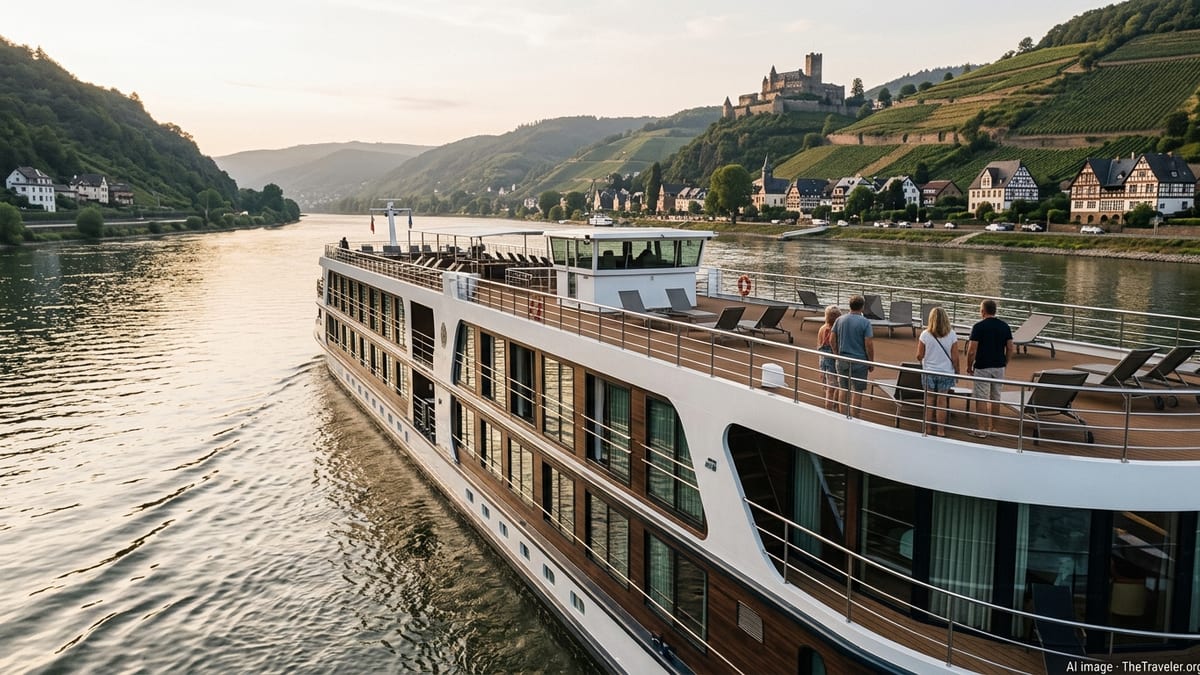
Shorter European Sailings Target Time-Pressed Luxury Travelers
Riverside Luxury Cruises has been steadily reshaping its product mix around shorter European river itineraries, typically ranging from three to five nights, in response to shifting traveler behavior. Publicly available information shows that the line now emphasizes compact journeys on rivers such as the Danube, Rhine, Main, Moselle, Rhône, and Saône, appealing to guests who want immersive city and culture experiences without committing to traditional one or two week cruises.
The company’s official materials highlight three to 14 day sailings that can start or end in marquee destinations like Vienna, Budapest, Amsterdam, or along the wine regions of France, signalling a deliberate move toward flexibility. These shorter sailings are designed as stand alone luxury getaways, often focused on a specific stretch of river or theme, yet they also function as building blocks that can be stitched together into longer trips.
Industry coverage indicates that this approach is arriving at a moment when time poor but affluent travelers are looking for more control over trip length. Rather than a single fixed itinerary, guests are being presented with a menu of shorter modules that can be selected and sequenced based on vacation days, flight schedules, or pre and post cruise land stays in major European cities.
Travel trade reports also link Riverside’s strategy to broader demand for short breaks that can be slotted around remote work and family commitments. By promoting three to five night journeys as an accessible entry point to river cruising, the line is reducing the perceived barrier to trying a high end river product for the first time.
Combinable Itineraries Create Customized Long Journeys
A hallmark of Riverside Luxury Cruises’ European program is the ability for guests to combine back to back sailings into extended itineraries that feel bespoke. According to the company’s published descriptions, three to 14 night segments can be linked to create longer journeys along connected rivers, allowing travelers to design multi week trips without sacrificing continuity of ship or service.
This combinability is particularly evident on the Danube and Rhine, where travelers can join a three or four night city focused segment with a second itinerary that ventures into wine regions or UNESCO listed landscapes. The result is a flexible network that supports anything from a quick long weekend to a multi country exploration lasting more than two weeks, all while remaining on the same all suite vessel.
Future program details for seasons through 2027, highlighted in trade media, point to an even wider range of voyage lengths from three to 23 nights across Riverside’s growing deployment. That breadth gives travel advisors greater freedom to tailor back to back routes around client preferences, whether the priority is seeing as many capitals as possible, lingering in a single region, or mixing river time with independent city stays.
By building its schedule around combinable segments rather than only fixed grand itineraries, Riverside is tapping into a broader cruise industry trend toward modular travel. This model allows the line to serve both first time river cruisers and repeat guests seeking fresh combinations of familiar rivers and ports.
Flexible Design Supports Personalized Onboard Experiences
Riverside’s move toward flexible itineraries is underpinned by onboard hardware and service designed for high levels of personalization. The company sails all suite ships with spacious accommodations that are marketed as suitable for multigenerational groups and extended stays, a configuration that supports guests who opt for multi segment voyages.
Public descriptions of the onboard experience emphasize an elevated culinary program, multiple dining venues, and a guest to crew ratio oriented toward individualized service. This environment lends itself to longer, customized trips where staff can adapt pacing, dining preferences, and excursion recommendations across consecutive legs of a journey.
The line’s focus on flexibility also extends to shore experiences, with programs that mix guided cultural touring, active options like cycling and hiking, and more independent exploration. As itineraries become more modular, travelers can choose different styles of touring on each segment, creating a varied portfolio of experiences without leaving the Riverside brand.
Industry observers note that such personalization is increasingly central to the upper end of the river cruise market. For Riverside, positioning its itinerary structure and onboard product as parts of a single flexible system helps differentiate the brand in a competitive field of European luxury river operators.
Strategic Expansion Across Europe’s Key Rivers
The emphasis on shorter, combinable sailings is closely tied to Riverside Luxury Cruises’ geographic expansion. Company information shows that its three ship fleet now operates on a broad network of European rivers, including the Danube, Rhine, Main, Moselle, Rhône, and Saône, giving planners significant scope to craft modular trips that cross borders and cultures.
Recent program announcements for upcoming seasons underline a strategy of extended operating periods from early spring through late December, opening up more departure dates for both short segments and longer chained itineraries. This expanded calendar allows guests to select their preferred season, from tulip time and early wine festivals to Christmas markets, and then align that with their desired trip length.
Media coverage of Riverside’s forthcoming European deployments highlights new routes and variations that add to the line’s combinable grid. Shorter itineraries between key hubs such as Amsterdam and Basel, for example, can be paired with additional segments on the Upper or Lower Rhine, or with Danube voyages that reach into Central and Eastern Europe.
By layering new options onto established river routes, Riverside is taking advantage of infrastructure and demand that already exist while offering something distinctly more flexible. This approach positions the line to capture both guests who prefer classic marquee itineraries and those seeking to explore lesser visited stretches that can be woven into longer, customized journeys.
Aligning With Broader Trends in European Cruise Tourism
Riverside Luxury Cruises’ itinerary strategy mirrors wider shifts in European cruise tourism, where operators across both river and ocean sectors are experimenting with shorter sailings, back to back options, and more varied seasonality. Travel industry analysis suggests that travelers are looking for ways to sample different regions in manageable segments, often returning to combine itineraries once they are comfortable with a brand.
As other river lines introduce more short and mid length voyages, Riverside’s focus on a modular, high luxury product helps it carve out a niche within this trend. Its use of former ultra luxury river vessels, all suite layouts, and full service inclusions such as fine dining and curated excursions are aimed at travelers who might otherwise choose luxury ocean or land based tours.
The growing prominence of Riverside’s flexible itineraries also has implications for European destinations. Shorter cruises that begin or end in major cities can encourage additional overnight stays in hotels, pre and post cruise touring, and repeat visits as travelers return to link new segments onto familiar rivers. That pattern supports the broader tourism economy while distributing river cruise activity more evenly across seasons and regions.
With reservations already open for seasons extending to 2027 and a program built around variable lengths and combinable routes, Riverside Luxury Cruises appears set to use flexibility as a primary growth lever in Europe. How effectively the line continues to refine this modular model is likely to be a key storyline in the ongoing evolution of the continent’s luxury river cruise market.