

More news on this day
European river cruise specialist Riviera Travel is accelerating its fleet expansion from the Rhine and Danube to the Mekong, rolling out new ships and upgraded itineraries that aim to redefine affordable luxury on three of the world’s most coveted waterways by 2028.
Get the latest news straight to your inbox!
New Tonnage, New Era on Europe’s Iconic Rivers
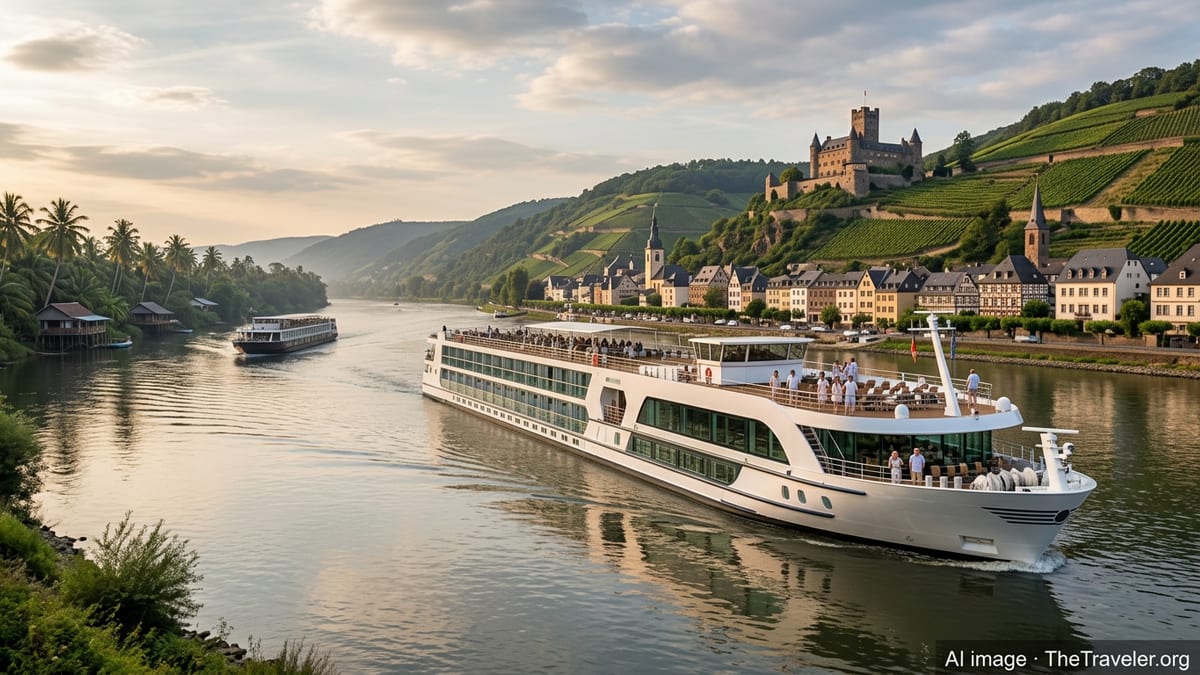
Riviera Travel has spent the past two seasons methodically growing and refreshing its river fleet, positioning the line for a stronger upper-premium play along the Rhine and Danube. Two cornerstone vessels, Riviera Radiance and Riviera Rose, entered service in 2025, bringing larger cabins, contemporary interiors and expanded dining spaces targeted at guests who want five-star design without traditional luxury price tags.
Riviera Radiance, carrying around 178 guests, was purpose-built for longer Danube sailings, including marquee routes such as Budapest to the Black Sea and festive New Year departures calling at Vienna and Budapest. Riviera Rose, a more intimate 114-guest ship, has focused on wine-rich itineraries and historic cities, complementing Riviera’s established presence on the Rhine and Douro with a quieter, boutique onboard atmosphere.
The company has paired its hardware investment with a push toward more immersive programming. Recent seasons have seen expanded back-to-back itineraries linking the Rhine, Moselle and Danube, along with a deeper calendar of themed sailings, from Christmas markets on the Rhine to culture-heavy Danube voyages that bundle classical music performances and UNESCO-listed city tours into the fare.
Riviera executives have framed these moves as the foundation for a multi-year expansion that keeps the brand firmly in Europe’s river heartland while preparing it for a broader intercontinental footprint by the end of the decade.
Design Upgrades Aim to Raise the Bar on “Accessible Luxury”
Across its European fleet, Riviera has been standardising a design language built around light-filled public spaces, larger cabins and a more contemporary palette intended to appeal to younger boomers and experienced cruisers trading down from big-ship ocean lines. On newer ships, cabins are among the largest in Riviera’s history, with French balconies on the upper decks and bathrooms finished with hotel-style fixtures and generous storage.
Public areas have followed suit. Lounges feature floor-to-ceiling windows for uninterrupted river views, while restaurants and bistros are laid out to offer more two-top tables and flexible seating for couples and small groups. The line has also invested in quieter engines, improved sound insulation and refined air-conditioning systems, responding to guest feedback seeking more comfort during overnight transits and hot summer sailings on the Rhine and Danube.
Culinary enhancements are a key piece of the upgrade story. Menus on newer ships lean into regional sourcing, featuring Riesling and Spätburgunder from vineyards that guests can see from the sun deck, along with seasonal dishes tied to the itineraries, such as goulash and strudel on Danube routes or hearty Rhineland fare between Cologne and Koblenz. Drinks-included packages, long a point of differentiation, have been refined with more premium options to keep pace with rivals in the upper-premium segment.
These design and service tweaks are intended to support Riviera’s claim that it offers “luxury without the label,” a positioning the company believes will gain traction as more travellers seek smaller ships, predictable pricing and culturally rich itineraries on Europe’s inland waterways.
Riviera Extends Its Reach to Asia on the Mekong
The biggest strategic shift for Riviera Travel is its move beyond Europe to Southeast Asia’s Mekong River, marking the company’s first long-haul river program. Its dedicated Mekong ship, Riviera Alba, is being introduced as one of the region’s most modern, eco-conscious vessels, designed to operate between Vietnam and Cambodia on itineraries that pair river cruising with in-depth land stays.
Mekong voyages are structured around classic highlights such as Saigon, the Cu Chi tunnels, Phnom Penh and the temple complex at Angkor, but Riviera is placing emphasis on slower-paced days in smaller river communities. Guests can expect excursions to family-run farms, markets and workshops, alongside guided visits to key historical sites that frame the region’s recent past and rapid modernisation.
Onboard, Riviera Alba mirrors the brand’s European styling while nodding to local culture through textiles, artwork and cuisine. Vietnamese and Cambodian dishes share the menu with Riviera’s more familiar European offerings, and the line is promising a relaxed dress code and informal ambience designed to encourage guests to linger on the open decks and observation lounges as the river landscape shifts from bustling delta to rural countryside.
The Mekong expansion allows Riviera to retain existing guests seeking new horizons while tapping into a growing cohort of international travellers who now see river cruising as a way to combine comfort with culturally dense, small-group exploration in Asia.
Sustainability and Technology Shape the 2028 Vision
As Riviera looks toward 2028, sustainability and operational resilience are emerging as central themes in its fleet planning. Like many river operators, the company has been forced to confront increasingly volatile water levels on the Rhine and Danube, prompting investment in shallower-draft hulls, more efficient propulsion, and logistics frameworks that support flexible itinerary adjustments when conditions demand.
Newer ships are being specified with advanced waste-water treatment, reduced single-use plastics and energy-efficient lighting and climate-control systems, aligning with tightening European regulations and growing consumer expectations. The Mekong program, meanwhile, has been designed with partnerships that aim to minimise local environmental impact and support community-based tourism where possible.
Digital enhancements are also filtering through Riviera’s fleet. Upgraded onboard Wi-Fi, app-based daily programs and more sophisticated navigation and hotel-management systems are intended to smooth operations behind the scenes while making the guest experience feel more seamless. The company has signalled that further ships introduced before 2028 will carry these technologies as standard, while older vessels are progressively retrofitted.
Analysts note that while Riviera is not alone in pursuing greener, smarter ships, the combination of expanded geographic reach, upscale design and comparatively accessible pricing could give the line a stronger competitive foothold as river cruising continues to mature on both European and Asian waterways.
Competitive Pressures on the Rhine, Danube and Mekong
Riviera’s expansion comes amid intense competition on its core rivers. Established players are adding tonnage on the Rhine and Danube, while newer entrants and ocean brands branching into river cruising are raising the bar on hardware and inclusions. In this environment, Riviera is leaning on its long-standing expertise with European source markets and its reputation for high-value pricing to differentiate its growing fleet.
On the Mekong, Riviera joins a relatively crowded but still evolving field of operators that blend Western comfort with local authenticity. Here the company is betting that its European-style service, combined with a purpose-built ship and itineraries that lean into cultural depth rather than rapid sightseeing, will resonate with guests who might otherwise default to more familiar brands.
Industry observers say that by 2028 the success of Riviera’s strategy will likely be measured not just in ship count, but in how effectively the line can maintain consistency of experience across an expanded network. With more capacity on the Rhine and Danube and a high-profile foothold on the Mekong, Riviera Travel is staking its claim that river cruising’s next chapter belongs as much to mid-size, quietly luxurious fleets as it does to the biggest names in the sector.