

More news on this day
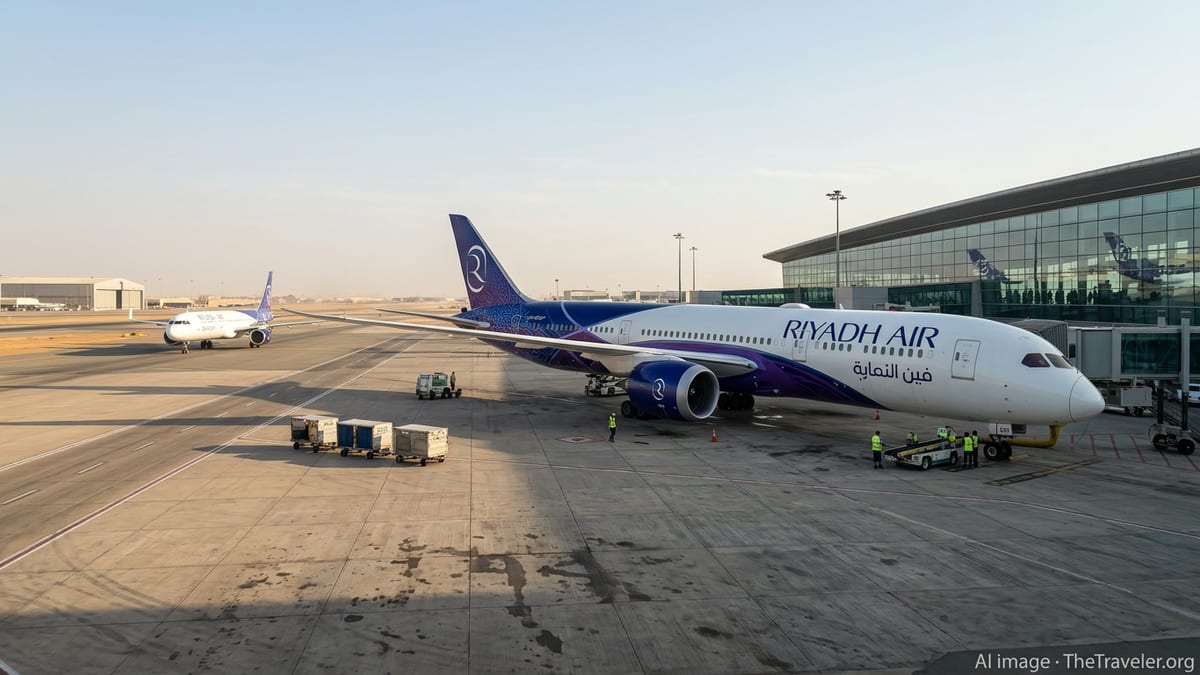
Saudi Arabia’s new carrier Riyadh Air is moving closer to its planned 2026 debut, with preliminary schedules and industry data indicating an ambitious spread of new international routes designed to position Riyadh as a global super-connector.
Get the latest news straight to your inbox!
Preliminary Network Points to Fast Global Expansion
Publicly available industry scheduling data for the Northern Summer 2026 season suggests Riyadh Air is preparing to open a broad mix of international routes from its Riyadh base, spanning key markets in Europe, Asia and Africa. Aviation coordination reports and specialist analysis indicate that the start-up intends to connect the Saudi capital to dozens of cities within its first full year of operation, rather than pursuing a gradual, route-by-route roll-out.
While exact launch dates and frequencies remain subject to regulatory approvals and aircraft deliveries, network outlines shared in recent months show a clear focus on high-demand business and leisure corridors. Major European capitals, South and Southeast Asian hubs, and select African gateways are expected to feature prominently in the initial wave of destinations as the airline builds toward a goal of serving scores of cities across six continents by the end of the decade.
The emerging route map aligns with Saudi Arabia’s wider aviation strategy, which aims to transform the country into a key transfer point between East and West. By anchoring its network around Riyadh’s King Khalid International Airport, the new carrier is expected to offer alternative one-stop options to established Gulf transit hubs while also boosting point-to-point traffic into the Kingdom.
Flagship Long-Haul Routes to Anchor the Brand
Early indications from fleet planning and industry commentary suggest that Riyadh Air will lean heavily on long-haul Boeing 787 aircraft for its first wave of flagship routes. Long-distance services to major European and Asian gateways are expected to be among the earliest launches, providing a high-visibility platform for the new brand and allowing the airline to quickly tap into premium and connecting traffic.
Reports on the carrier’s strategy describe a phased but rapid build-up, with new long-haul destinations added every few weeks as additional aircraft enter service. This approach mirrors the growth paths of other Gulf network carriers, which used early long-haul connectivity to establish global recognition before layering on regional and secondary destinations.
Industry analysis also points to an emphasis on schedules that facilitate smooth connections over Riyadh, particularly for traffic flowing between Europe and South Asia, as well as between Asia and Africa. By structuring departure banks around peak connection windows, the airline is expected to compete directly with other Middle Eastern hubs for time-sensitive business travellers and long-haul leisure passengers.
Regional Connectivity to Support Tourism and Vision 2030
Beyond marquee intercontinental routes, Riyadh Air’s planned network for 2026 includes a strong regional component designed to support Saudi Arabia’s fast-expanding tourism and events sectors. Short- and medium-haul services within the Middle East, to the wider Gulf, and into nearby parts of Asia and Africa are expected to feed traffic into new resorts, cultural attractions and sports venues across the Kingdom.
Saudi Arabia’s Vision 2030 agenda has placed aviation at the center of its tourism ambitions, with large-scale projects on the Red Sea coast, heritage destinations, and new entertainment districts all relying on improved air access. By adding new international routes into Riyadh and, in time, into other Saudi gateways, the new carrier is positioned to help channel visitors to these emerging destinations.
Analysts note that increased regional connectivity could also stimulate outbound travel for Saudi residents, providing new direct links to popular holiday spots and business centers. In combination with existing Saudi carriers, Riyadh Air’s entry is expected to significantly increase seat capacity in regional markets, heightening competition and potentially widening consumer choice on fares and schedules.
Cargo and Partnerships Strengthen Route Economics
Riyadh Air is not limiting its expansion plans to passenger services. Industry publications in 2026 highlight the launch of Riyadh Cargo, a freight-focused arm aimed at capturing a share of growing trade flows through the Kingdom. Early cargo operations on international sectors, including routes linking Riyadh with major European airports, are seen as a precursor to a wider freight network once passenger services commence at scale.
The development of a dedicated cargo platform is expected to improve the economics of long-haul routes by tapping into demand for high-value, time-sensitive shipments moving between Asia, Europe and Africa. With Saudi Arabia investing heavily in logistics infrastructure, the new airline’s cargo operations are viewed as an important link in ambitions to establish the Kingdom as a regional freight and e-commerce hub.
At the same time, Riyadh Air has been building its ecosystem of partners in areas such as in-flight technology and ground handling. Long-term agreements with global suppliers and service providers are intended to support reliability and consistency as the airline begins to scale its international route network, helping to underpin the performance of newly launched flights.
Competitive Middle East Market Braces for a New Player
The unveiling of Riyadh Air’s prospective international routes comes as Middle Eastern aviation enters a new phase of competition. Established network carriers in the region continue to add destinations and increase frequencies, while low-cost operators expand aggressively into secondary cities. The entry of a well-funded new airline based in Riyadh is expected to intensify this dynamic, especially on trunk routes linking Europe, Asia and Africa.
Industry observers suggest that the new carrier’s success will depend on how quickly it can bring its planned fleet into service, secure airport slots at congested hubs and differentiate its product in a crowded marketplace. With a strong focus on digital services, modern cabin layouts and international-standard hospitality, the airline aims to carve out a premium identity that can attract both transfer passengers and travelers with Riyadh as their final destination.
As 2026 approaches, more detailed timetables and route announcements are expected to clarify the sequence and scale of Riyadh Air’s launch. For now, the emerging picture from scheduling data and strategic briefings points to a bold entrance, with a wide slate of new international routes poised to reshape how travelers connect through Saudi Arabia’s capital in the years ahead.